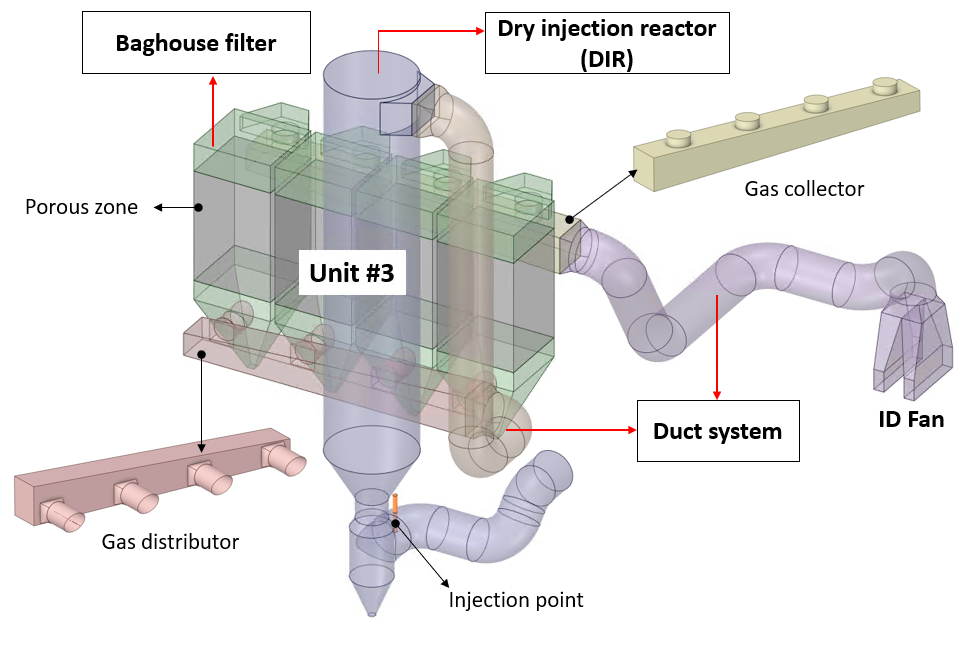
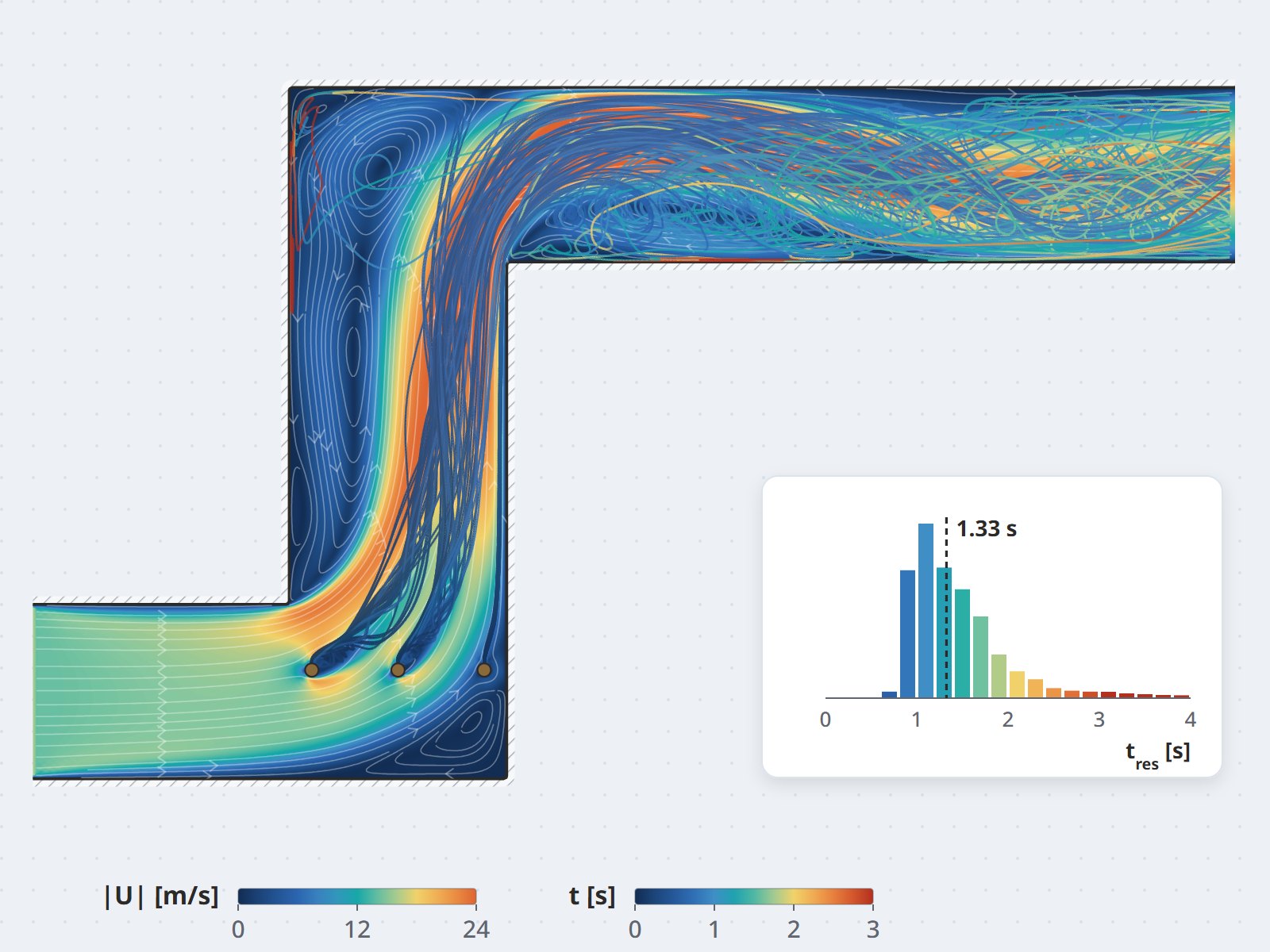
A dry desulfurization system injects sorbent into the flue gas ahead of the dust filter and must balance two conflicting requirements: low pressure loss and high removal efficiency. In the base design, poor gas–solid mixing reduced the removal efficiency, while uneven flow and several turning points increased the pressure loss, forcing the ID fan to run close to its limit.
Four steps: engineering calculations on the base design → building quantitative assessment criteria → CFD analysis of the base design → proposing and verifying improvement options on the same model.
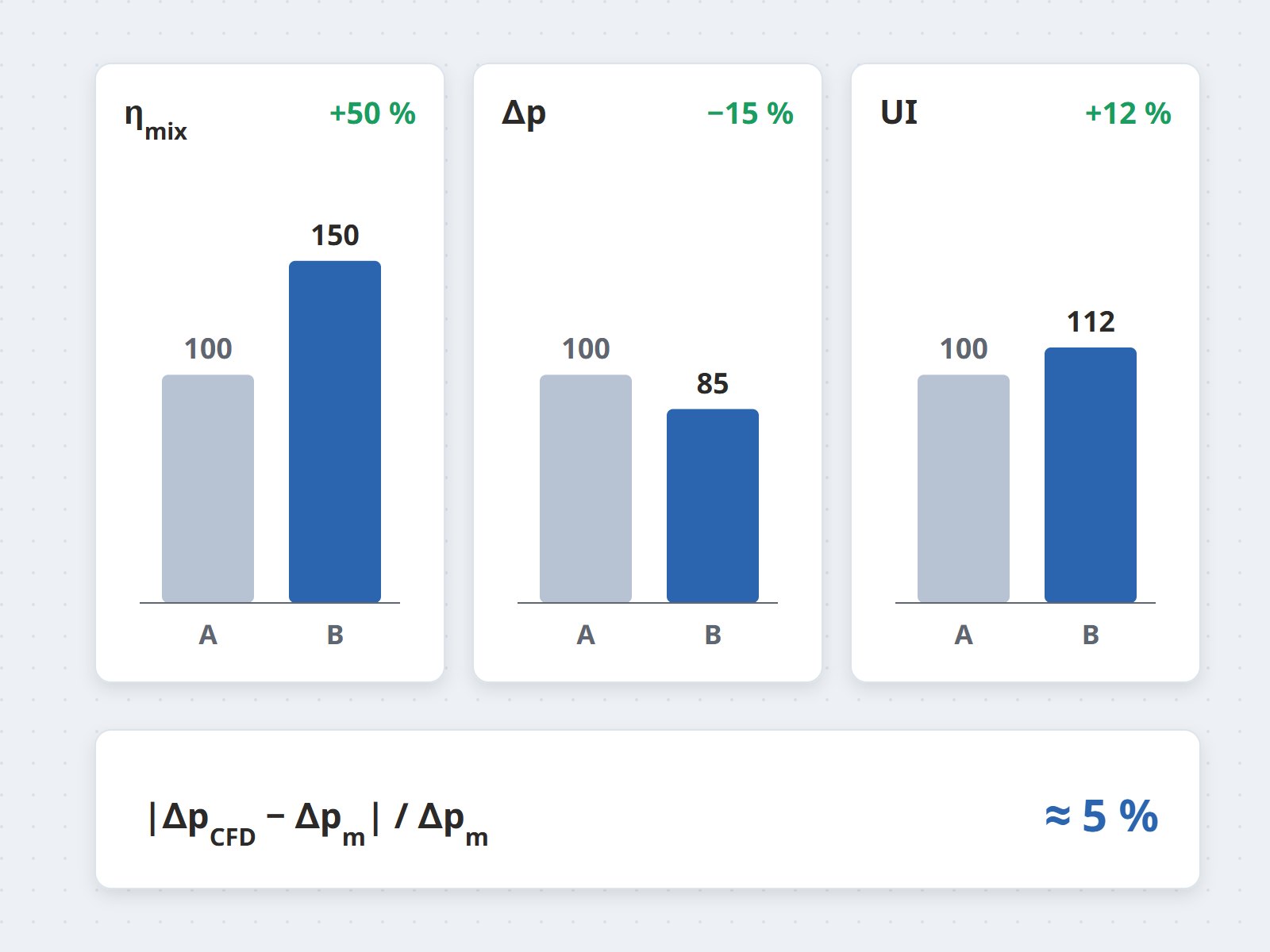
The retrofit decision rested on quantitative evidence rather than trial and error on site, reducing both the risk of the fan investment and the long-term operating cost. The validated model became the assessment tool for later adjustments.
Send the drawings and operating conditions — CFDWAYS will respond on how much pressure loss could be removed and how much removal efficiency could be gained through simulation.
Related projects: SNCR, 30 MW waste-to-energy plant · Ozone DeNOx · FGD capabilities

