Context & problem
The spray dryer consumes most of the plant's thermal energy; the design was not optimal and a change of fuel had
left the system mismatched. The cyclone train suffered high pressure loss, poor separation efficiency and rapid,
uneven erosion.
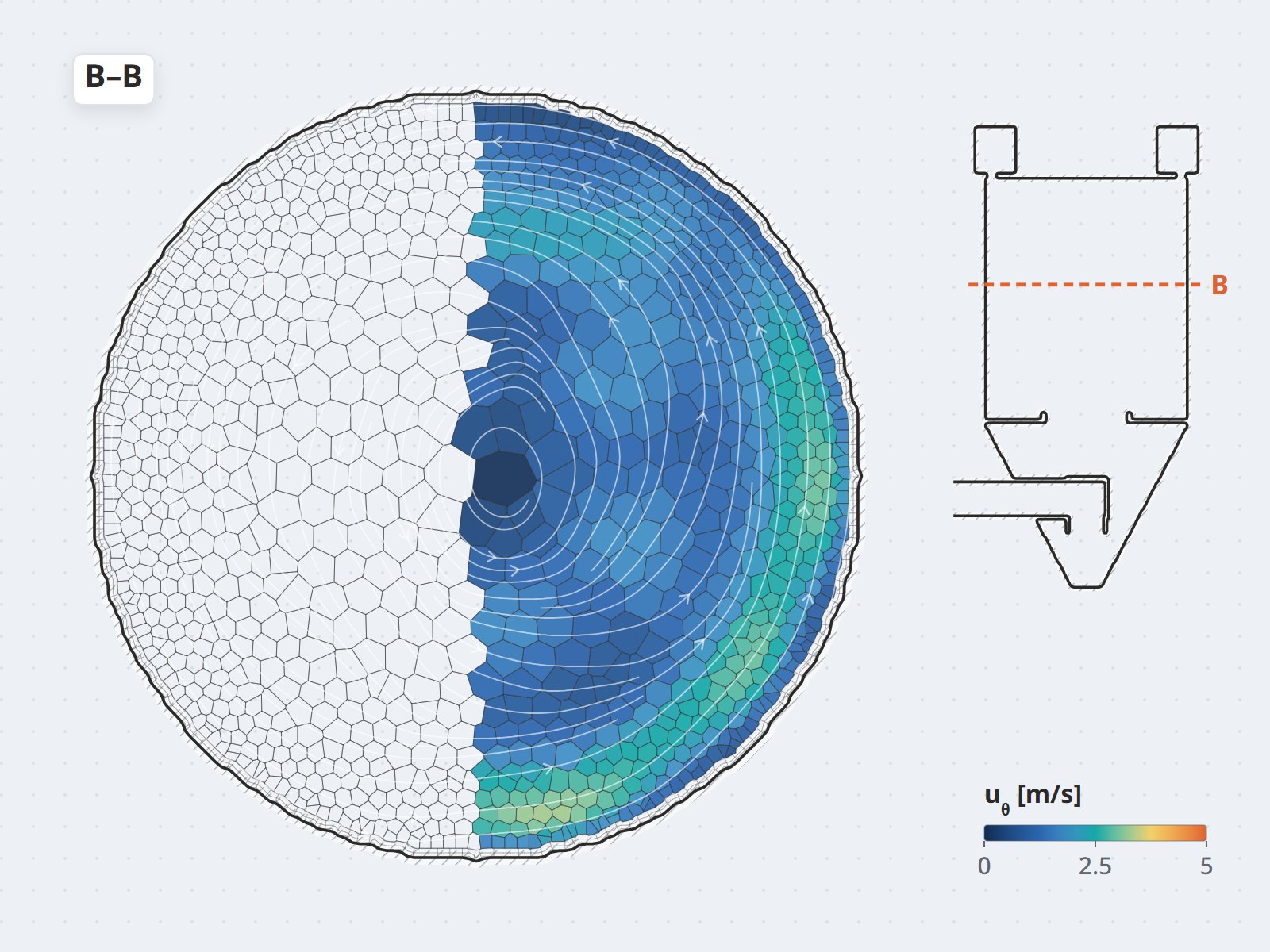
Once the plant switched to cashew shells, dead zones in the hot-air duct and the distributor collected dust and
cashew oil and caused local fires; hot air swept still-wet particles to the tower wall, causing build-up and
lumps of up to 20 cm falling off.
Approach
- An energy and performance audit of the whole system — the operational bottleneck identified from data.
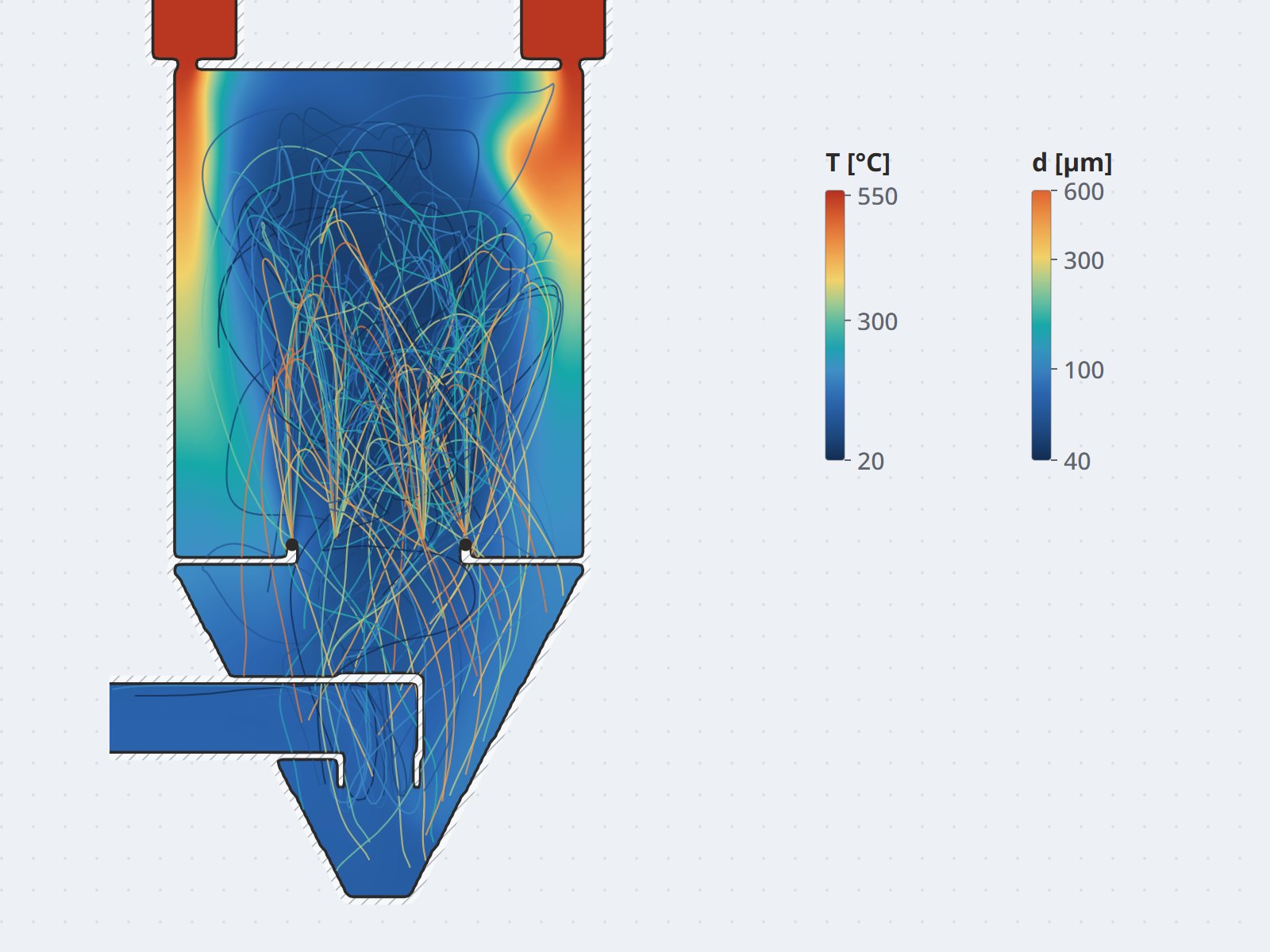
- CFD to locate the cause: flow distribution through the gas distributor, the cyclones and the outlet ducts.
- Design optimization and a KPI set for continuous assessment after the retrofit.
- Development of a reusable cyclone design tool and a digital twin platform monitoring energy use.
Results
- Payback period of the retrofit package: under 2 years.
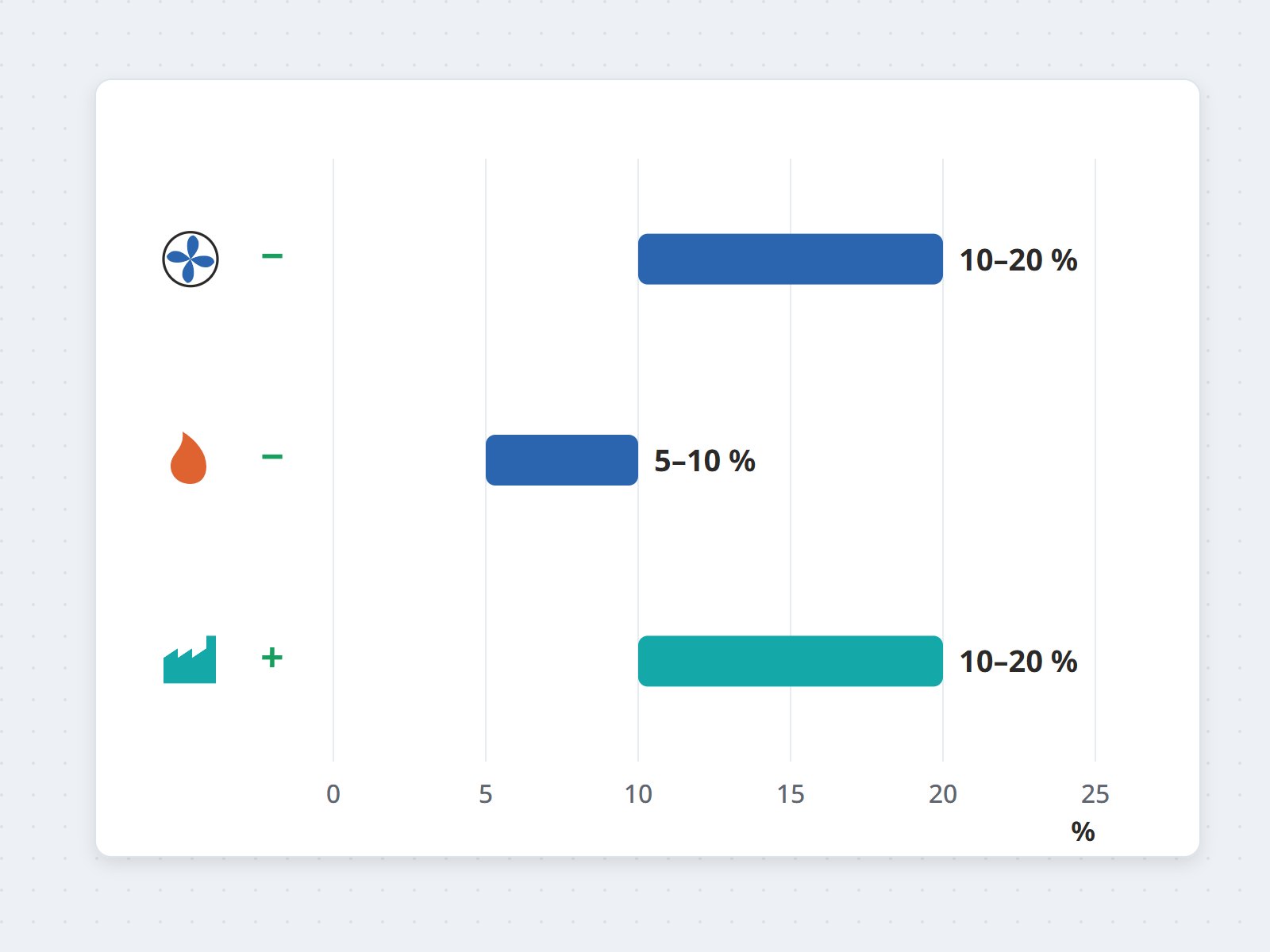
- Throughput improved 10–20%; 5–10% heat saved through better thermal efficiency; 10–20% fan power saved.
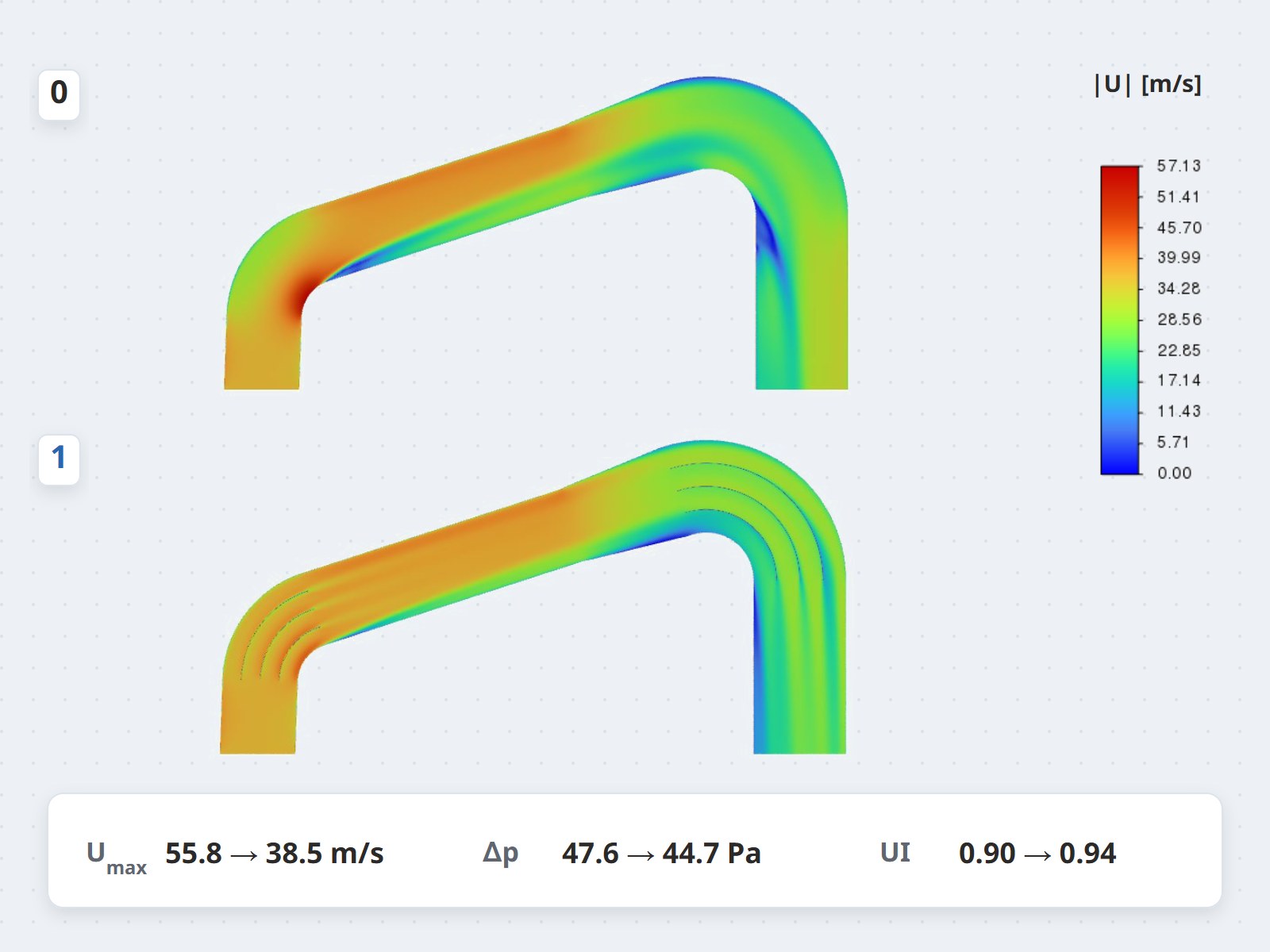
- Tower retrofit (2024): on the tower fired with coal-gasification gas, 3 guide vanes before and after the
hot-air bend — peak local velocity 55.8 → 38.5 m/s, reverse-flow pockets eliminated, outlet uniformity
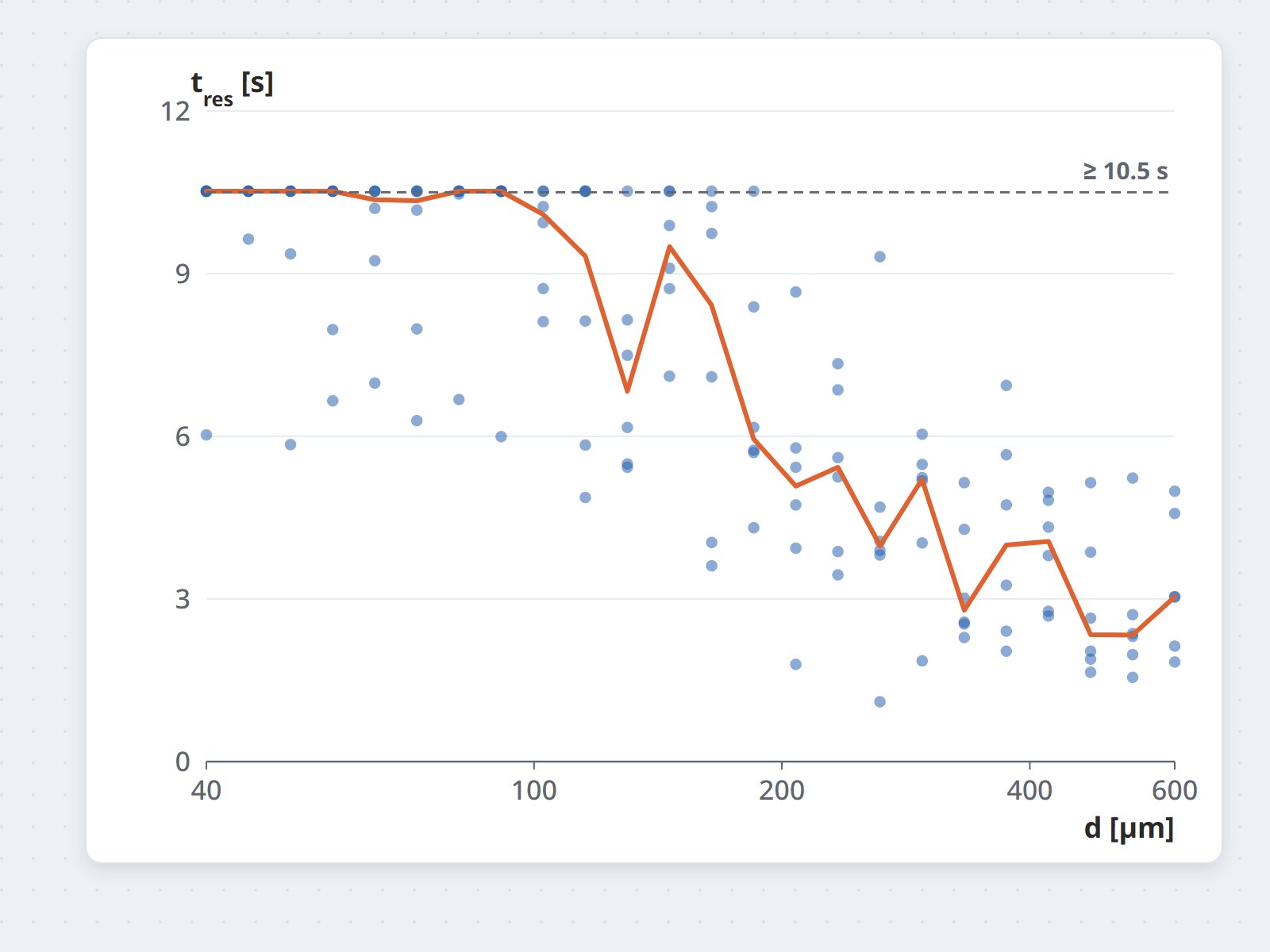
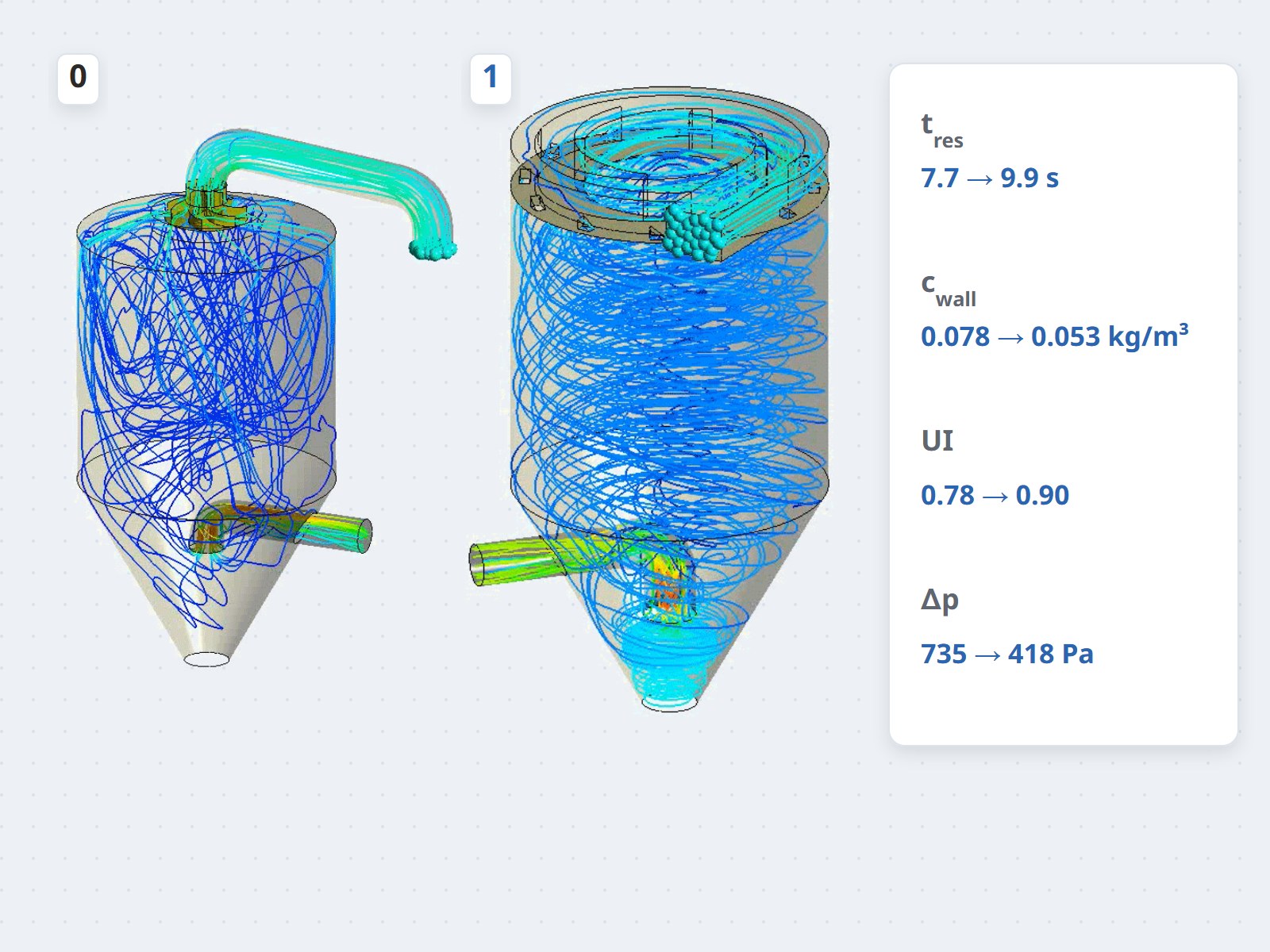
0.90 → 0.94; on the tower fired with cashew shells and wood chips, a cyclone-type hot-air distributor —
particle residence time 7.7 → 9.9 s, particle concentration at the tower wall −32%, hot-air uniformity
0.78 → 0.90, pressure loss 735 → 418 Pa. Both built in 310S steel instead of 304.
- Values guaranteed at acceptance of the new distributor: residence time up more than 20%, wall build-up in
the tower body down 20–30%; exhaust-duct pressure loss down 17%, cyclone train 620 → 490 Pa.
- The work received Best Presentation at the ICERE 2025 international conference.
Value
The chain of audit → simulation → monitoring tool turned a consultancy project into a lasting in-house capability:
the operations team has kept using the cyclone design tool and the monitoring platform since the project ended.