IndustriesEnergy, oil & gas
Group 1 · Energy & Utilities

Energy, oil & gas

The industry with the most CFDWAYS projects in 2022–2025: from desulfurization systems, SNCR and HRSG through to refinery condensers.

2022–25
our busiest industry
HRSG
waste-heat boilers
NH₃
alternative fuel co-firing
30 MW
scale already delivered

Common problems

  • Skewed gas flow into the HRSG — part of the tube bank takes far too much flow while the rest underperforms; heat recovery drops and the tubes wear unevenly
  • Incomplete combustion in the furnace — CO and unburnt fuel leaving with the flue gas, together with high NOx
  • Thermal stress in shells and tubes — large temperature differences cracking the joints
  • Condenser performing below design — uneven vapor distribution, pockets of non-condensable gas
  • Co-firing a new fuel — switching to NH₃, biomass or waste changes the entire temperature field and emission profile

Why simulation is needed

Equipment in this industry is very large and runs continuously, and downtime is extremely costly. Every change must be verified before it is made.

For alternative-fuel co-firing, simulation is very nearly the only way to assess the effect on the temperature field, emissions and equipment life in advance — trying it directly in the furnace is far too risky.
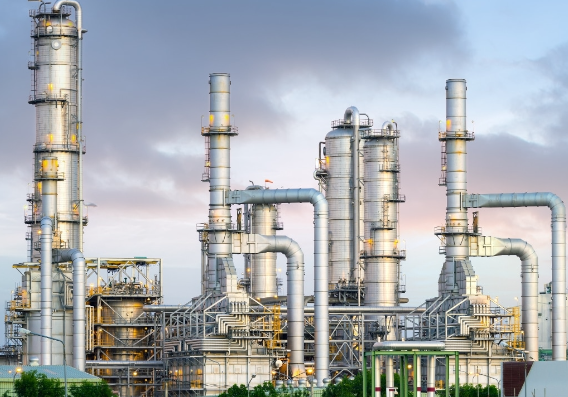
Simulation of a boiler and heat recovery equipment in a power plant
/image/nganh-nang-luong.jpg4:3 ratio (landscape)
Temperature field in heat recovery equipment — the basis for assessing flow uniformity.

Equipment & processes we handle

Heat recovery

Waste-heat boilers, HRSG, condensers and heat exchangers of all kinds.

Combustion & gasification

Coal combustors, NH₃ and alternative-fuel co-firing, gasification units.

Flue-gas treatment

SOx removal with FGD, NOx removal with SNCR — usually sitting immediately downstream of the combustor.

Refinery equipment

Multiphase separation, cracking, distillation and other refinery process equipment.

Simulation methods

  • Solid, liquid and gaseous fuel combustion with NOx emission models
  • Porous-medium approach for large-scale HRSG tube banks
  • Multiphase evaporation–condensation for condensers and boilers
  • Thermal radiation inside high-temperature furnaces
  • Coupling the temperature field into structural stress analysis

What you receive

  • Temperature, velocity and concentration fields at the key sections
  • Assessment of flow uniformity into the tube bank, with quantitative indices
  • Predicted NOx and CO emissions for each operating option
  • Thermal loads for the stress analysis, delivered together with the model files

How we work

Collect the data

Drawings, fuel properties, operating and emission figures.

Build & calibrate

The model checked against real measurements wherever they exist.

Test the options

Comparing retrofit options or a new fuel regime.

Hand over

Report, recommendations and support during implementation.

Projects delivered in this industry

Flue-gas desulfurization (FGD)

Flow distribution and phase contact inside a SOx removal system.

See the case study →

SNCR, 30 MW waste-to-energy plant

Optimizing injector positions within the reaction temperature window.

See the case study →

HRSG & condenser capabilities

Porous media, multiphase evaporation–condensation, thermal stress coupling.

See the capabilities →

Software used

Engineering notes

  • Combustion models need the real fuel composition, not the nominal specification
  • Large HRSG cases are solved with porous media rather than by resolving every tube
  • Emission results always need calibrating against stack measurements before they are used for decisions

Considering a fuel switch or a thermal equipment retrofit?

Send us the furnace and fuel data — CFDWAYS will make a preliminary assessment of the effect on temperature and emissions.

Send project details

Other industries: Environmental engineering · Chemical engineering · HVAC & building design
