Project-based simulation when you need an answer; training when your team will do the work; energy efficiency consultancy when the starting point is unclear. All three rest on the same foundation: a model validated against real data.
The three services differ in who does the work; the engineering team and the requirement to validate the model before drawing conclusions remain the same.
You have a specific problem and need a well-founded answer. CFDWAYS handles the full scope: building and validating the model, diagnosing the problem and proposing verified options.
Project-based simulation →You already have engineers and want the capability to stay in-house. Training built on your own problems, with model templates and a validation procedure.
Training & handover →You know the plant consumes more than it should, but not where. Start with an audit of the system in operation, then decide whether simulation is needed.
Energy efficiency consultancy →CFD is used as virtual testing: a digital model of the equipment is run at real operating conditions to observe quantities no sensor can measure, before any hardware is changed.
2D equipment drawings, piping ISO drawings, operating conditions. You supply them according to a checklist from CFDWAYS.
CAD → meshing → physics setup. Calibrated against design data or operating measurements before any analysis.
Velocity, temperature, pressure and phase distribution fields; bottlenecks and root causes located by quantitative criteria.
Improvement options are re-run on the same model, and the before/after KPI comparison forms the basis for the decision.
Flow distribution, pressure loss, heat exchange, shape optimization of flow guides.
Gas–solid, gas–liquid, evaporation–condensation; combustion and SOx/NOx removal reactions.
Process simulation (whole-system heat balance) coupled with detailed CFD; smart monitoring built on AI/ML.
The goal is for your engineers to run the simulation process on your own equipment independently; the software is only the means.
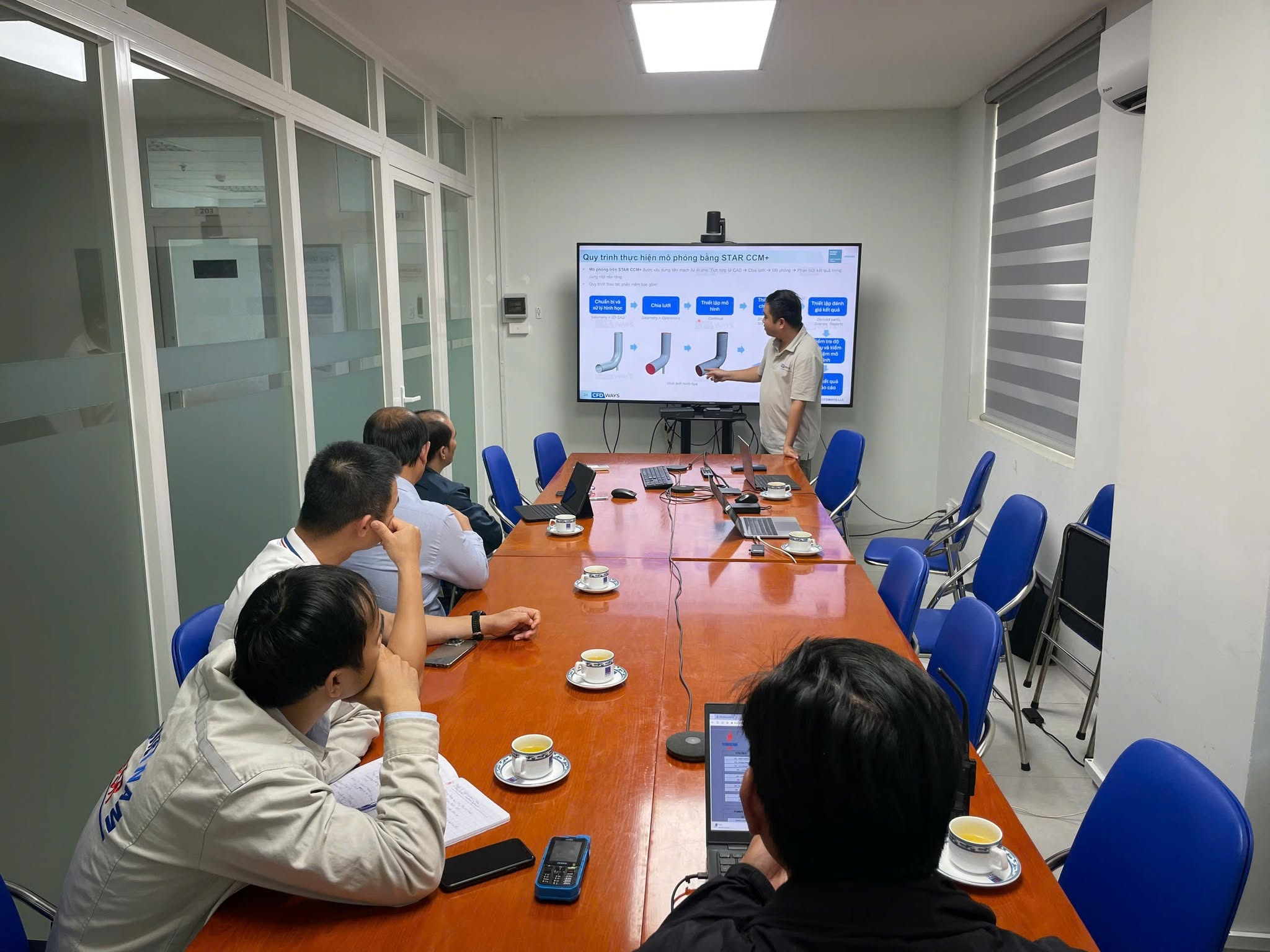
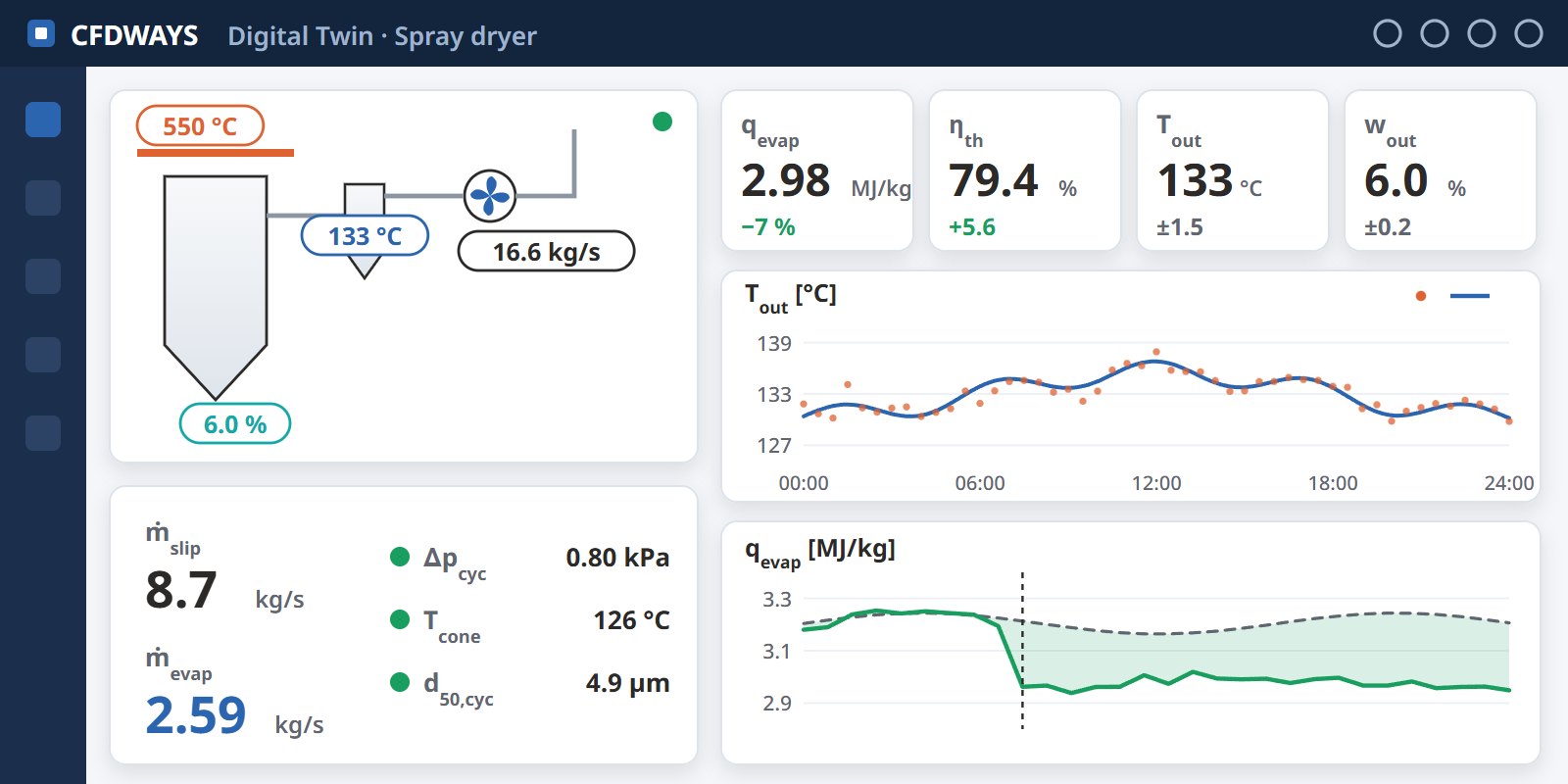
A three-step chain proven in the ceramic tile industry: energy audit → CFD diagnosis → improvement plan with KPIs to track.
The three services compared on the four questions that arise when defining a scope of work.
| Project-based simulation | Training & handover | Energy efficiency consultancy | |
|---|---|---|---|
| Suits | One specific, well-bounded problem that needs a well-founded answer | An existing engineering team that wants the simulation capability in-house | A plant consuming too much, with no idea which step is responsible |
| You provide | 2D or piping ISO drawings, operating conditions, existing measurements | A real company problem, the software in use, the team's current level | Energy consumption figures, operating logs, design parameters |
| You receive | A validated model, a diagnosis report, verified improvement options | Model templates, evaluation criteria, a working validation procedure | An audit report, a retrofit plan with KPIs and detailed design |
| Measured by | KPI comparison before/after on the same model | Your team running the whole process on their own equipment | Measured specific consumption and payback time |
The three services can be combined: many clients start with an audit, move to simulation where the root cause has to be traced, then take training so their team can take over.
2D equipment drawings (or piping ISOs) and the operating conditions. If data is incomplete, CFDWAYS specifies the minimum set to collect.
Every model is calibrated and validated against design data or real measurements before it is used to draw conclusions. On the 2022 FGD project, the client confirmed a pressure-loss prediction error of ~5%.
Send a description through the Contact page. Within 24 working hours, a CFDWAYS engineer replies on whether the problem can be solved by simulation and what data is needed. This preliminary assessment is free and precedes any discussion of scope and cost.
Drawings, parameters and results belong to you; CFDWAYS publishes nothing without written consent — exactly as the anonymized case studies on this site show.
Describe the problem in ten lines; CFDWAYS replies within 24 working hours on whether it can be solved by simulation, what data is required and the expected timeline.

