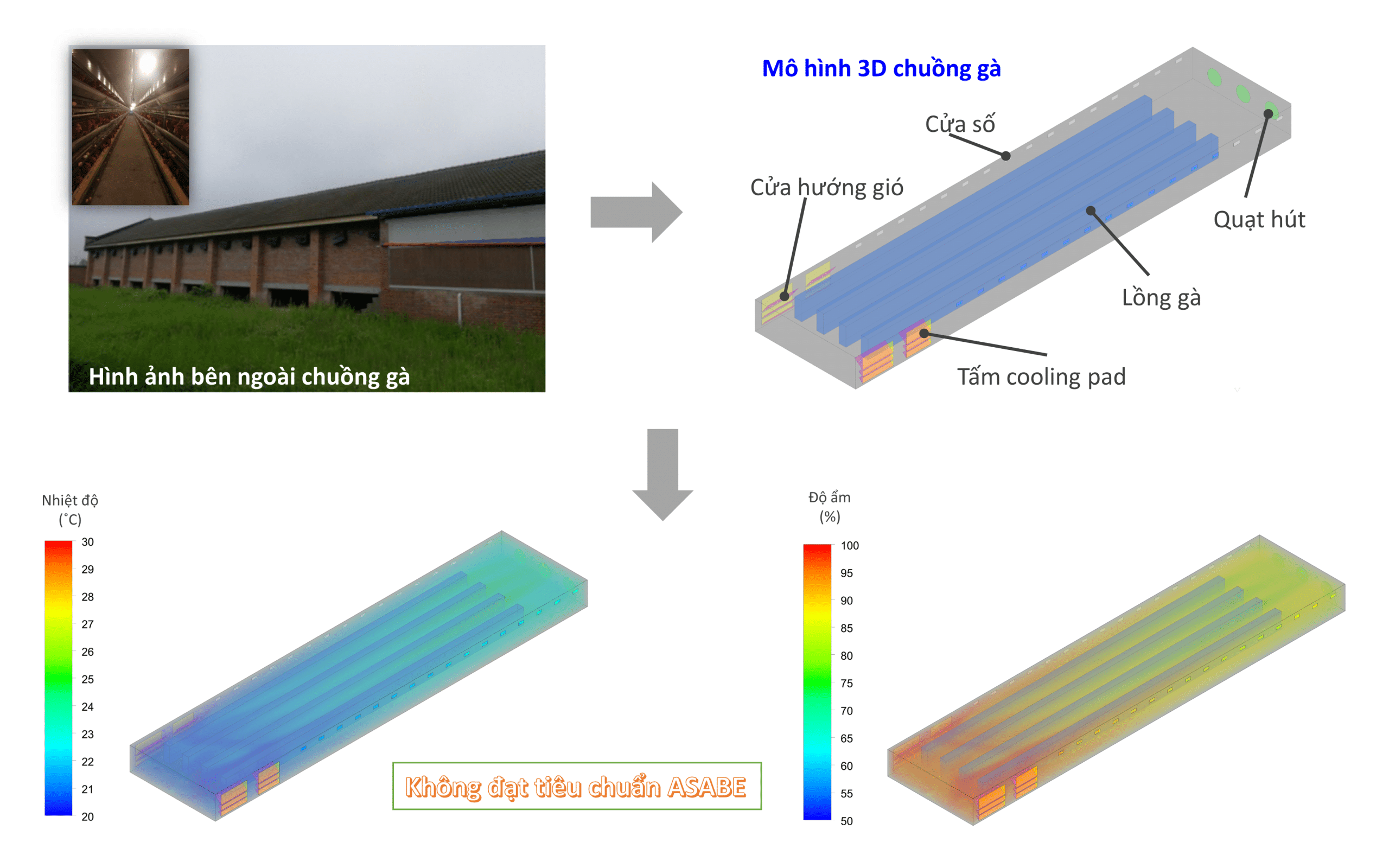
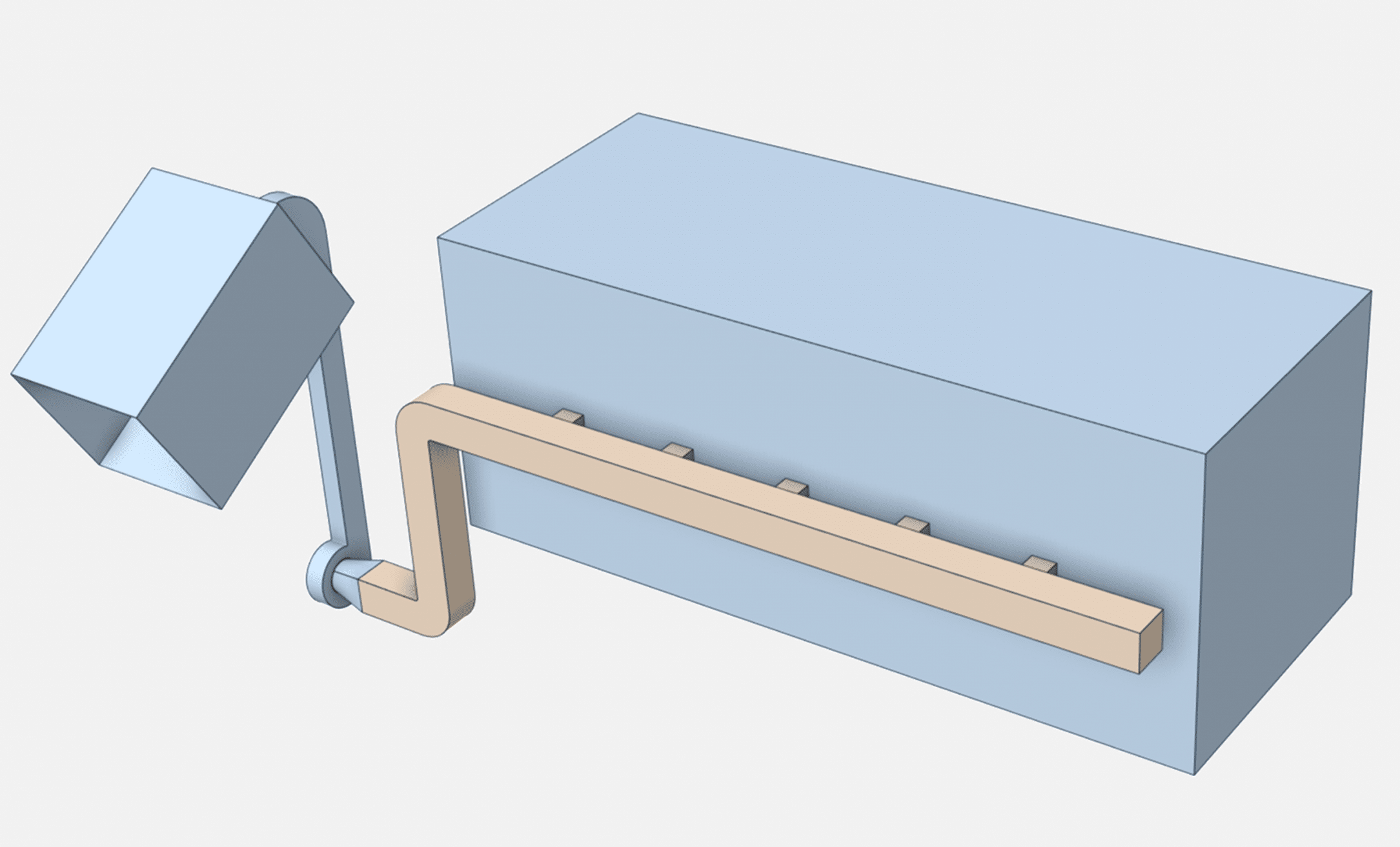
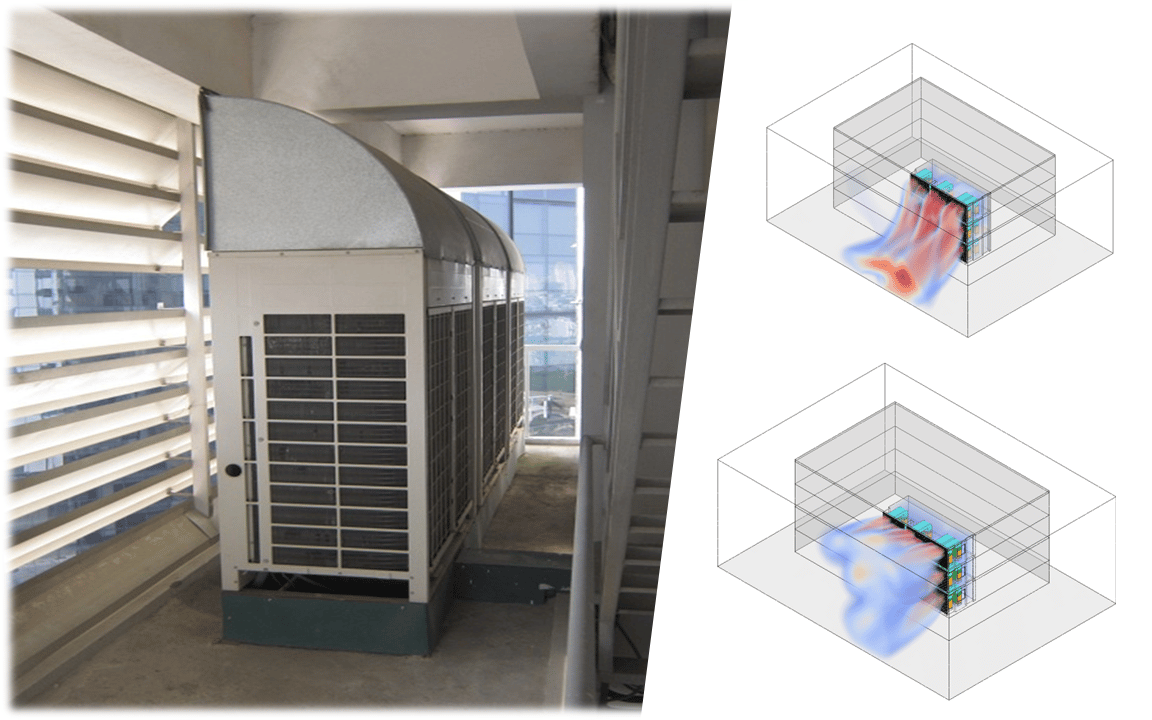
Applying energy-saving and emission-reduction solutions in the cement industry calls for a thorough engineering assessment, from laboratory scale to industrial deployment. Under high production pressure and strict environmental regulation, every improvement has to be technically effective while also being optimal in cost and time to operation. Simulation is the key tool that enables engineers to:
- Analyze process bottlenecks and identify what limits performance
- Predict equipment performance and assess the impact of improvement options
- Shorten timescales (testing, maintenance, production stoppages) and reduce development risk and cost
This article covers:
- Trends and challenges in cement manufacturing
- Simulation solutions for the cement industry
- Why simulation for cement in Vietnam is still very new, with a great deal of potential to exploit
Readers interested in simulation solutions for cement can watch the on-demand webinar or contact us by email for detailed advice.
Trends and challenges in cement manufacturing
Vietnam has abundant natural resources and is the world's third-largest cement producer by capacity, reaching about 100 million tonnes in 2022 [source]. The industry is energy-intensive and highly polluting, contributing about 5% of global CO₂ and consuming 2% of global energy [source]. A production line comprises conveyors, silos, calciners, the clinker kiln, combustion chambers, warehouse and workshop ventilation, conditioning towers, electrostatic precipitators, ducts, various mills and clinker coolers. Of the total consumption, thermal energy accounts for 88% and electricity 12%. Schneider Electric [source] puts the energy-saving potential of the main equipment as follows:
- Clinker kiln: 100% of thermal energy
- Cement storage & grinding: 42% of electrical energy
- Waste heat recovery: 33% of electrical energy
- Clinker mills: 25% of electrical energy
- Raw mills: 25% of electrical energy
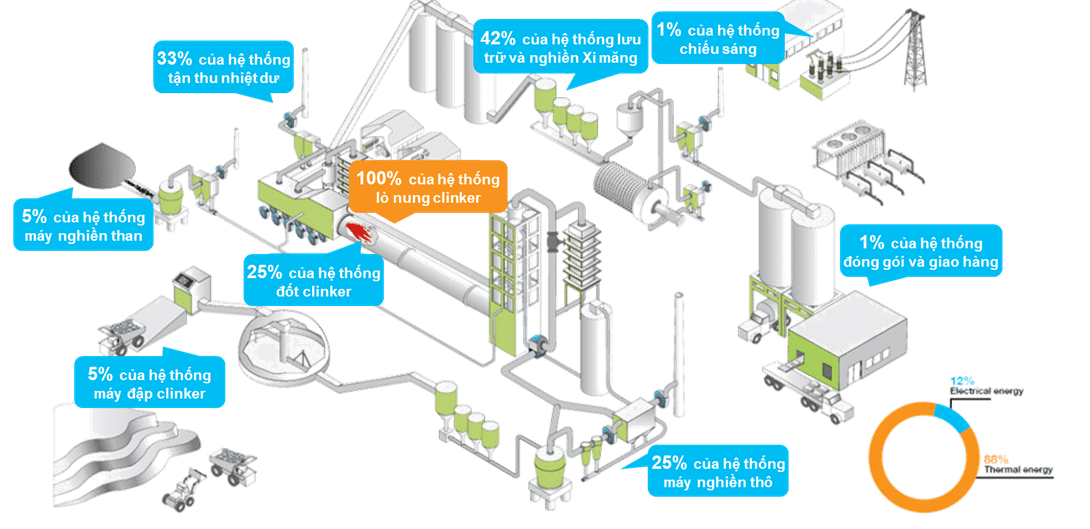
The main equipment in a cement production line and its energy-saving potential [source].
A summary of the solutions applied in the Vietnamese cement industry.
| Solution | Description | Typical project | Benefits |
|---|---|---|---|
| Waste heat recovery (WHR) for power generation | Recovers heat from the exhaust gas of clinker production to raise steam for a power turbine, cutting grid electricity use. | Do Luong Cement Plant (Vissai): a 100 million kWh/year WHR system | 39% lower electricity cost Environmental protection Higher production efficiency |
| Upgrading kiln and grinding technology | Improves equipment and adopts new technology to raise efficiency and cut energy and raw material consumption. | Quan Trieu Cement JSC: combustion technology and reuse of ash and slag (ximang.vn) | Higher output, lower energy consumption, lower production cost. |
| More automation and digitalization of production | Automatic control and digital process monitoring to optimize operation and reduce wasted energy. | Many plants have adopted energy monitoring systems (ximang.vn) | Higher production efficiency, lower energy consumption, better product quality. |
| Tight control of dust, NOx and SOx emissions | Retrofits electrostatic precipitators and adopts NOx and SOx reduction technology to meet environmental standards. | Do Luong Cement Plant: modern electrostatic precipitator technology | Less pollution, regulatory compliance, a better corporate image. |
| Developing “green cement” with a low clinker content | Uses additives to replace part of the clinker, cutting CO2 emissions in production. | Many Vietnamese cement producers are researching and producing green cement. | Lower CO2 emissions, in line with market trends, more sustainable products. |
Competitive pressure and environmental requirements are pushing Vietnamese cement plants to optimize energy and cut emissions. Under Decision 1266/QĐ-TTg on the Building Materials Development Strategy, 100% of production lines of 2,500 tonnes of clinker per day or more must install heat recovery for power generation [source]. Decision 01/2022/QĐ-TTg additionally requires greenhouse gas inventories and upgraded electrostatic precipitator technology to meet the new emission limits. Reaching the energy-saving and sustainability targets requires continuous monitoring from equipment level up to the whole production process, combining conventional engineering solutions with digital transformation and multi-level data analysis to optimize performance. The industry is already deploying waste heat recovery (WHR) for power generation, using alternative fuels (waste, biomass), upgrading kiln and grinding technology, pushing automation and digitalization, tightly controlling dust and NOx/SOx emissions, optimizing raw material logistics and moving toward “green cement” with a low clinker ratio. These measures reduce energy cost and also help the Vietnamese cement industry meet international emission standards and move closer to carbon neutrality.
Simulation solutions for the cement industry
Deploying energy-saving and emission-reduction technology in cement runs into many engineering challenges. High operating temperatures, turbulent flow and the heterogeneity of raw materials and fuels make heat recovery and flue-gas treatment complex. Existing systems at many plants, older kilns especially, were never designed for heat recovery (WHR) or CO2 capture (CCS), so retrofitting costs are high and additional infrastructure — space, electricity, water — is needed. A shortage of experience operating and maintaining new technology, together with a large initial investment, raises project risk, lengthens payback and limits how far green solutions can be replicated. Overcoming those barriers requires a thorough understanding of the process, from the chemical reactions inside the reactor to the movement of gas and solids, so the system design can be optimized and unplanned downtime minimized.
Simulation plays a key role in dealing with these challenges. CFD simulation with STAR-CCM+ gives a detailed analysis of the flow, pressure and temperature fields inside equipment before anything is implemented, while 1D simulation with Amesim assesses whole-system performance, including energy consumption and operating cost. Multiphysics simulation combined with automated optimization and AI/ML-based analysis allows the design and operating strategy to be refined through R&D, basic and detailed design, testing, operation and maintenance.
The approach suits both retrofits of existing systems and the integration of new technology, and aligns with the Vietnamese government's policy on science, technology and innovation [source]. Amid digital transformation and the development of high-quality human resources, simulation will drive innovation, raise competitiveness and meet the requirements of energy saving, emissions reduction and sustainable green production.
Deploying simulation in practice
Deploying a simulation strategy in cement manufacturing aims at higher energy efficiency, better processes and the innovation that leads to operational excellence. Simulation allows detailed analysis of the flow, thermal and pressure fields in ducts to optimize gas distribution; simulation of grinding to raise capacity and equipment life; separation, erosion, service-life and predictive-maintenance models for cyclone systems to improve material recovery; calculation of flow and pressure in ventilation systems; and simulation of combustion and heat exchange together with in-depth index analysis. The result is shorter field testing, lower investment cost and quantitative data for refining the design, finding the optimal operating point and raising the reliability of the whole system.
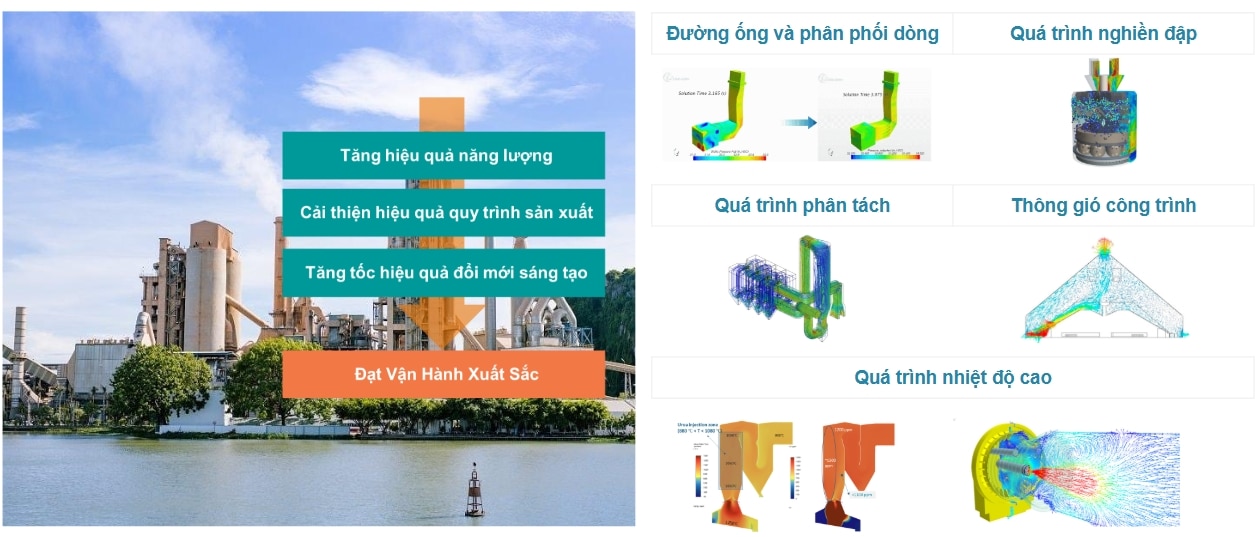
A simulation strategy and its typical applications in cement manufacturing
Saving energy by optimizing air supply ducts
A typical example is optimizing the air supply duct to a boiler at a cement plant, prompted by hydraulic shock that raised resistance and reduced air flow, degrading performance. The engineering team used CFD to analyze the pressure distribution in detail and identify the recirculation zones inside the duct, then proposed guide vanes and a perforated plate to condition the flow, reducing swirl and pressure loss. The new configuration holds the outlet pressure more steadily, raises the air flow into the boiler and improves transport efficiency; the whole analysis and design correction took two weeks, cutting dynamic resistance and securing a steady air supply for continuous operation.
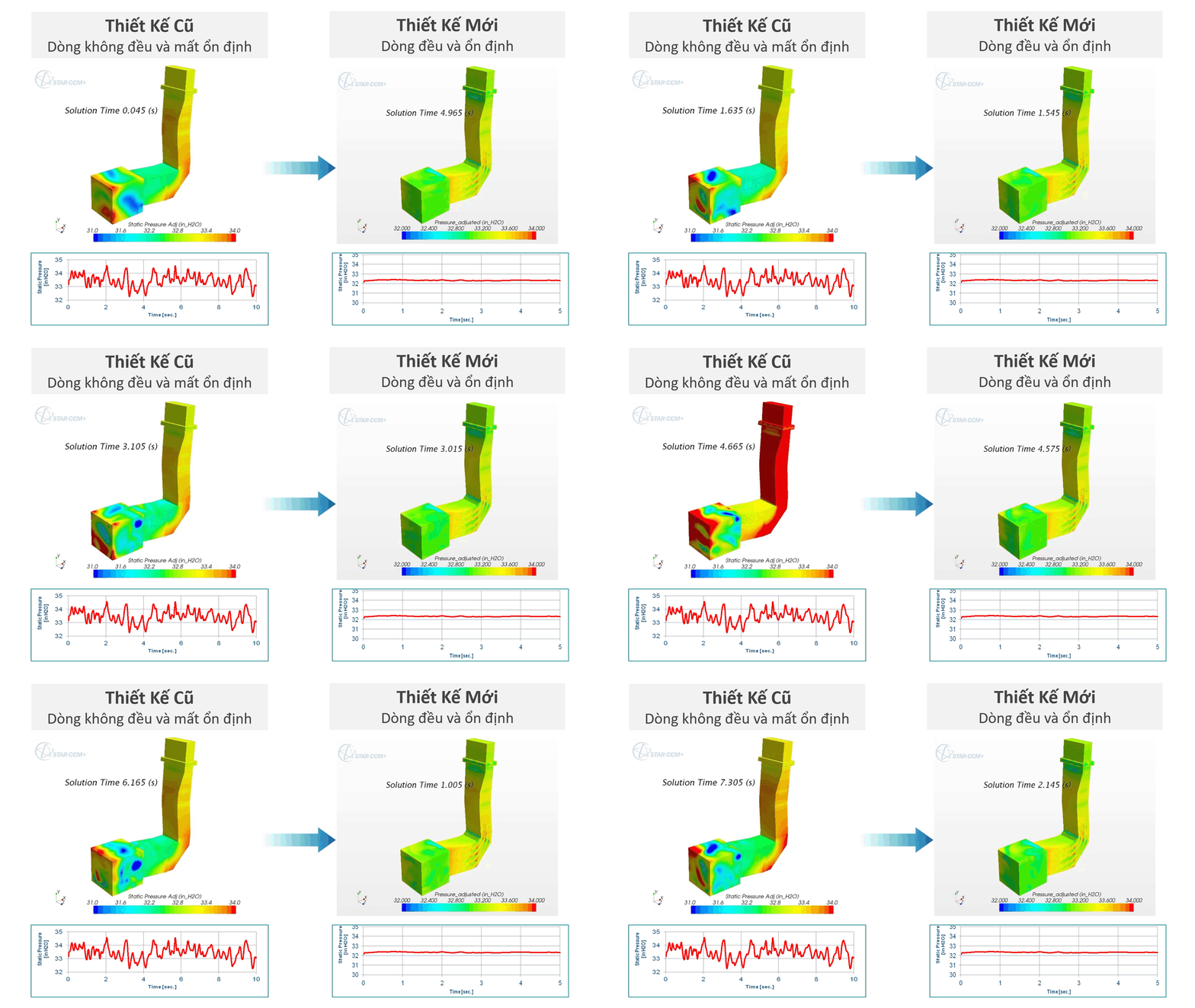
The new duct design reduces energy consumption (source: Siemens).
Retrofitting and optimizing a non-compliant electrostatic precipitator
Retrofitting an electrostatic precipitator that fails the emission limits can take three routes: (1) Replacing it entirely with a bag filter, reusing the existing frame and adding an exhaust fan to lower the static pressure and so raise filtration efficiency. (2) Running electrostatic and bag filtration in parallel, by improving the bag structure in the final modules and adding a gas distribution plate to optimize the flow field — reusing the existing technology while saving investment. (3) Upgrading the electrostatic system alone by installing high-technology modules into the existing casing, raising dust capture without increasing resistance or changing the gas path.
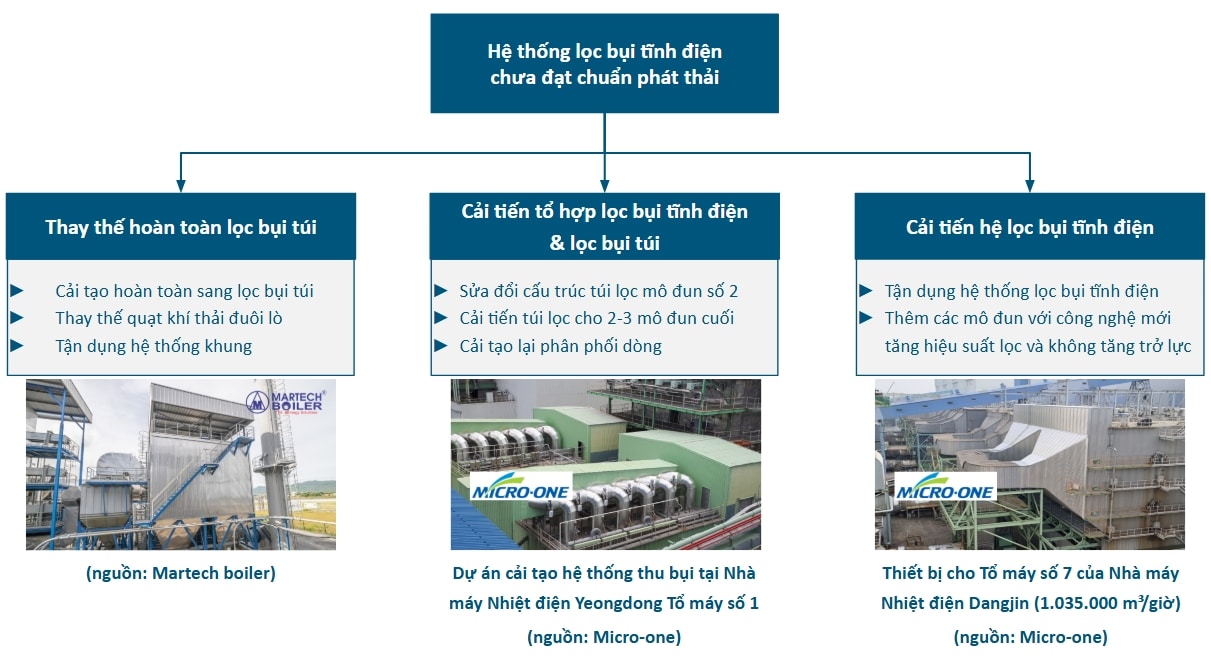
A summary of the ways an electrostatic precipitator can be improved.
To compare and optimize those options, CFD is used to analyze the flow distribution and size the gas distribution plate accurately. The figure below, for example, shows that a correctly designed distribution plate can improve flow uniformity by up to 20%, reducing bypass flow and markedly raising dust collection efficiency.
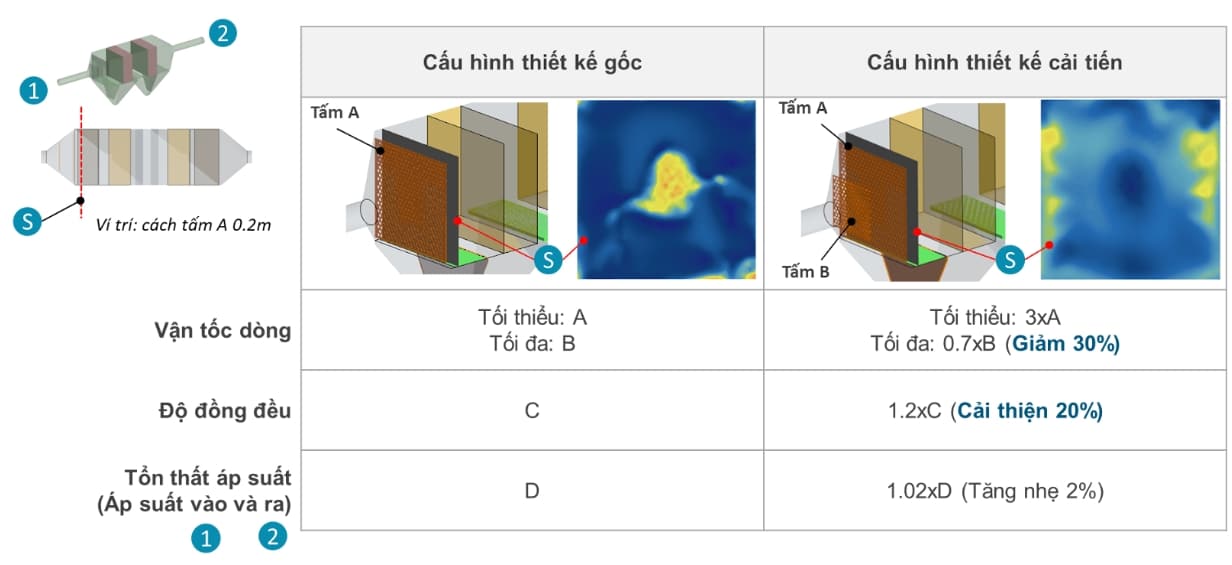
CFD used to re-assess the flow distribution of a high-technology electrostatic precipitator test module (source: CFDWAYS)
Reducing erosion in cyclone separation systems
In cement production, cyclones erode quickly because fine particles impact the duct walls. A sub-optimal swirl reduces separation efficiency, driving maintenance costs up and interrupting operation. CFD identifies the erosion zones and computes local pressure loss inside the cyclone system. On that basis engineers can refine the geometry — new guide vanes, rounded discharge corners, repositioned valves to reduce swirl and limit erosion. The automated design exploration in STAR-CCM+ makes it fast to assess many optimization options with quantitative erosion data. The result is an optimized cyclone design with higher separation efficiency, longer service life, steadier operation and lower maintenance cost.
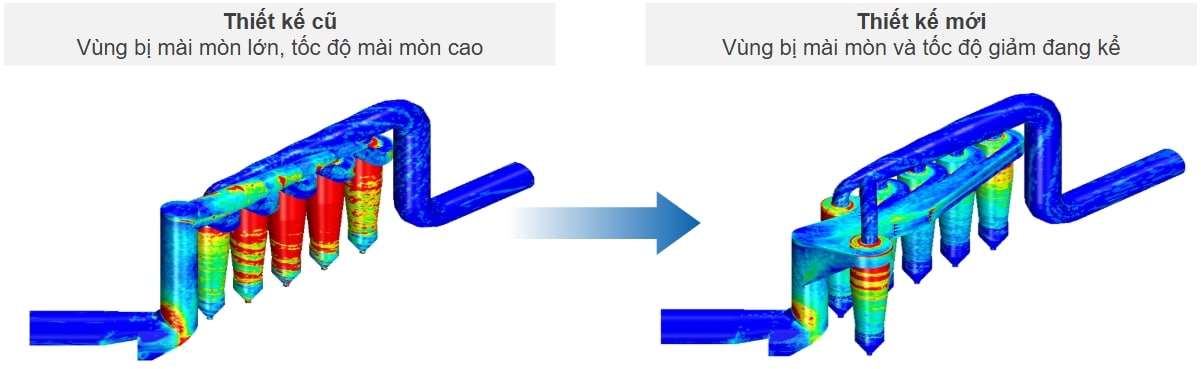
Simulation used to optimize cyclone design (source: Siemens)
A complete solution for assessing and retrofitting high-temperature processes, toward digitalization in operation and maintenance
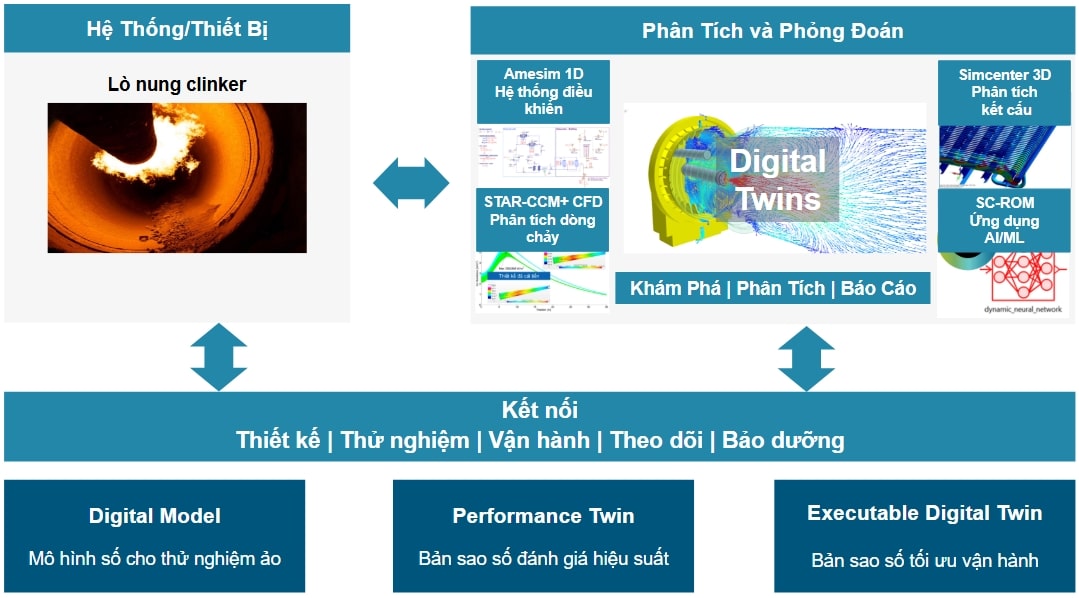
From digital model to digital twin for design, intelligent monitoring and operational optimization
High-temperature combustion in a clinker kiln raises many challenges: the burner has to suit the fuel, the flow and heat transfer fields have to be held stable, material corrosion has to be reduced and emissions limited. To meet the full design and operating requirements, digital twin technology integrating 1D simulation, CFD and AI/ML is built on real data, allowing visualization, real-time monitoring and the deployment of virtual sensing, predictive maintenance (PdM) and model predictive control (MPC). This secures continuous optimization of operating performance and raises system reliability. With the trend toward alternative fuels, it also allows burner feasibility and performance to be assessed before an option is chosen.
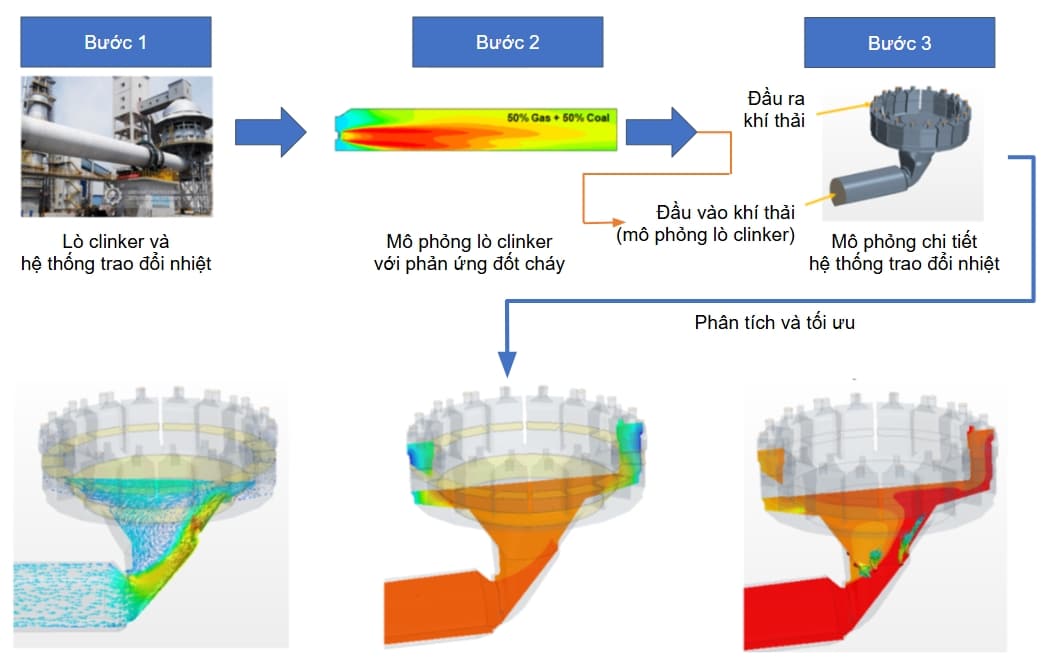
Optimizing the heat exchange system that treats kiln tail gas (source: Siemens).
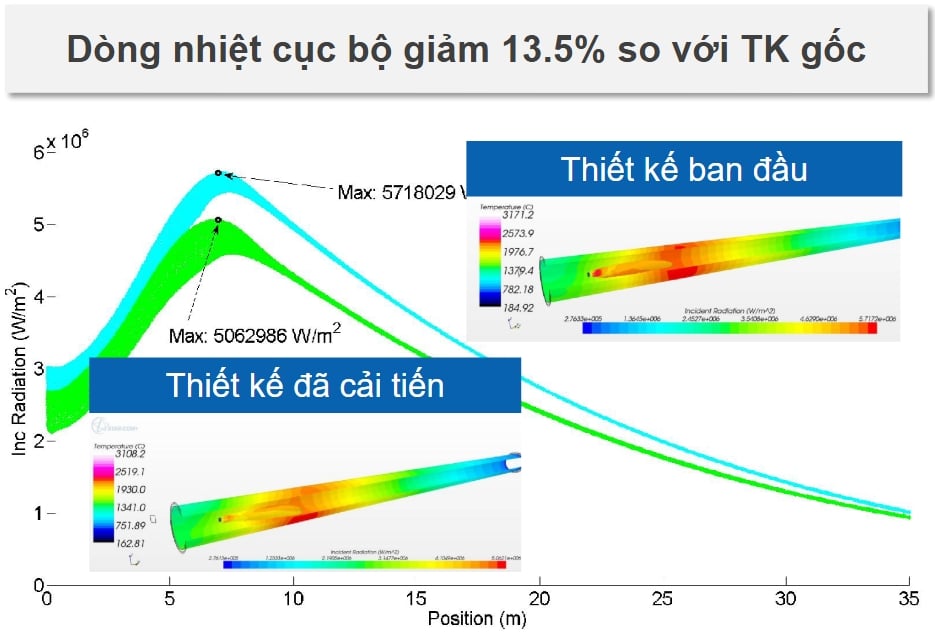
Radiative heat output compared between the original and improved designs along the length of the clinker kiln (source: Siemens)
This example concentrates on bottleneck analysis and optimizing the combustion conditions in a clinker kiln. The system involves multiphase gas flow, high-temperature chemical reactions and NOx removal reactions, all of which have to be handled at once. The engineering goals are lower fuel consumption, maintained refractory durability and no blockage from fine powder or crystalline deposits. Field testing each operating configuration takes time, costs a great deal and carries operational risk. To address this, the heat distribution has to be optimized by adjusting the air velocity, reducing local swirl and securing even heat transfer both radially and along the kiln's thermal profile — avoiding local overheating and the formation of rings on the kiln shell. Simulation also computes the flue gas composition in detail, giving realistic inputs on concentrations, flow rates and velocities. CFD combined with design exploration makes it possible to simulate heat transfer and the SNCR NOx removal reaction while automatically assessing variations in injector configuration, injection position and operating parameters. The results identify the optimal NOx reduction while preserving thermal efficiency and material life. Companies such as Kiln Flame Systems, Shree Cements and Bühler AG have applied this process to raise performance and reliability and to shorten design time.
Conclusion: simulation for cement in Vietnam is still new, with a great deal of potential
Under pressure to cut CO2 and optimize operation, simulation not only reduces cost, time and energy but also lets a company master its own process, drive innovation and keep pace with digital transformation. Applying simulation from design and bottleneck analysis through to operational monitoring builds a solid foundation for a digital model, real-time monitoring and continuous improvement, moving toward green, intelligent and sustainable production. Used well, simulation resolves engineering challenges thoroughly, shortens payback, raises performance, cuts maintenance time and improves working conditions. It is a strategic lever for modernizing the Vietnamese cement industry, carrying out the innovation policy, exploiting the digital transformation trend and contributing actively to the carbon neutrality goal.
Follow the CFDWAYS Blog for further applied research, real case studies and advanced solutions that help industry optimize technology, raise efficiency and develop sustainably.
*1D simulation (Amesim): 1D simulation in Amesim models a whole multi-domain system — hydraulic, pneumatic, thermal, electro-mechanical — as a network of simple one-dimensional elements, making it quick to build and reconfigure and to follow the dynamic behavior of parameters such as pressure, flow rate and temperature.