Optimizing a dioxin soil treatment system — TP1
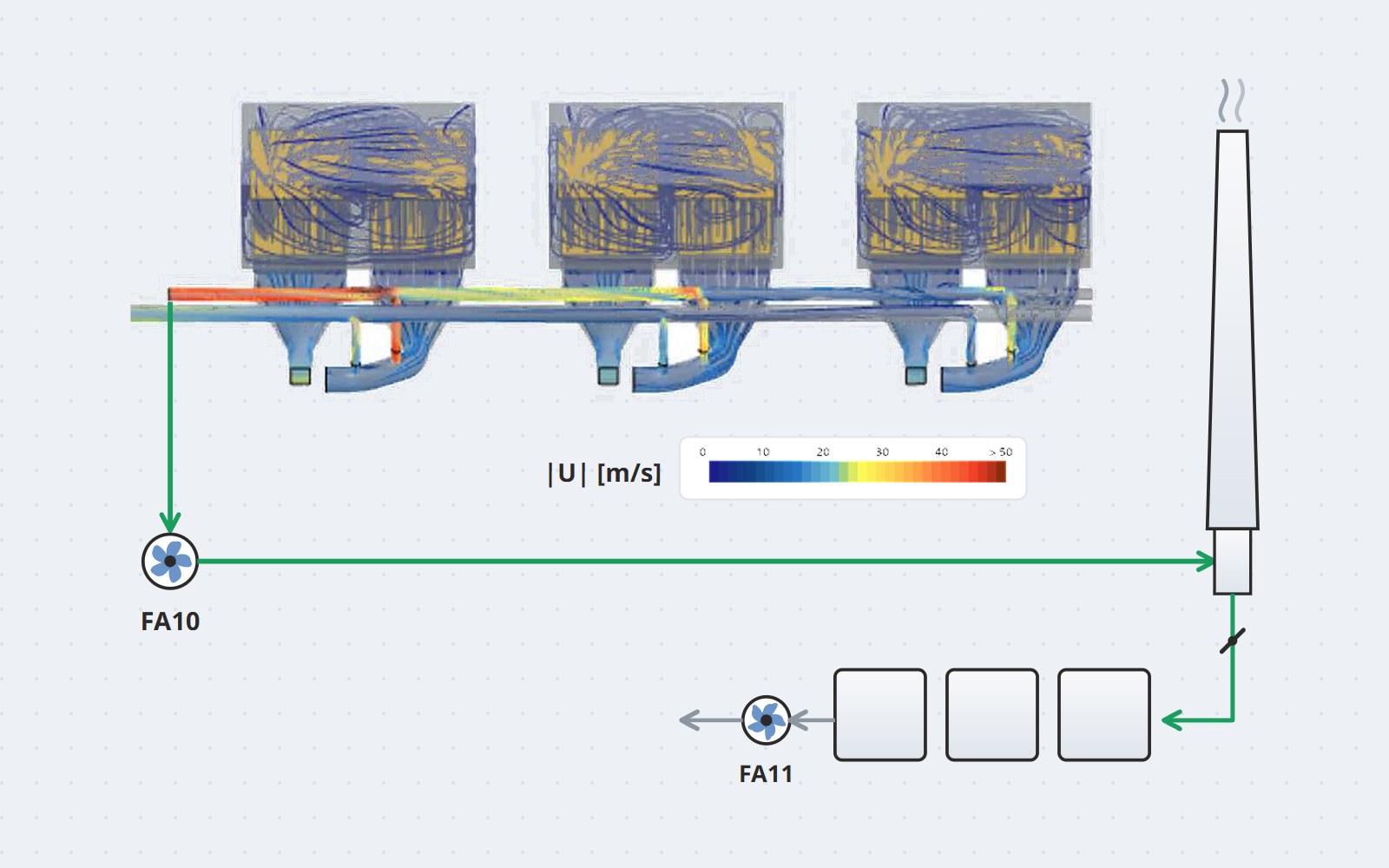
Several fans in series across branching ducts: pressures depend on each other, so fixing one cluster relocates the problem.
Read the case study →Every project states the data the model was validated against before any conclusion was drawn.

Several fans in series across branching ducts: pressures depend on each other, so fixing one cluster relocates the problem.
Read the case study →
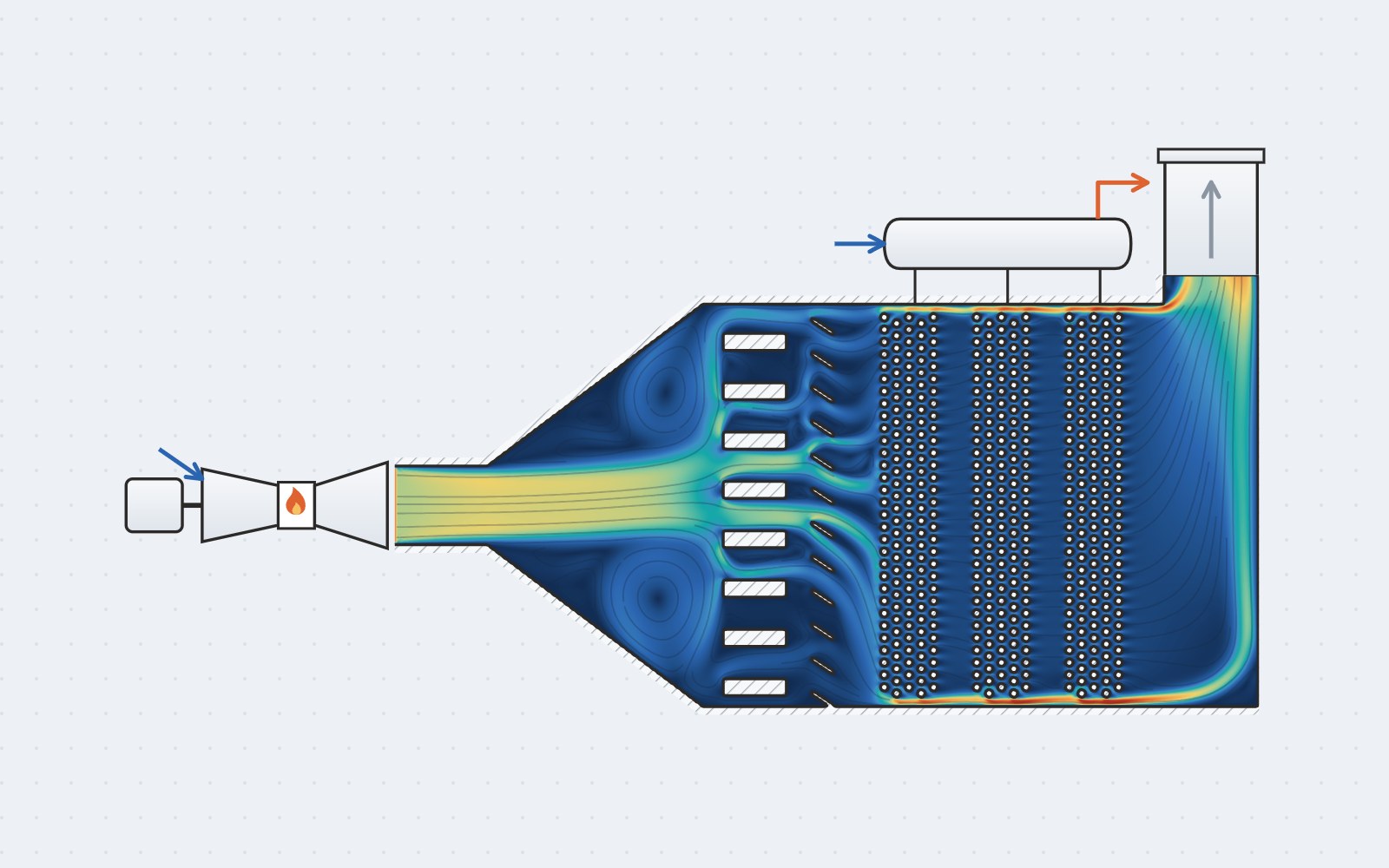
The diffuser duct, silencer and damper bend the flow right before the finned tube bank: part of the bank takes far too much flow while the rest works below capacity.
Read the case study →
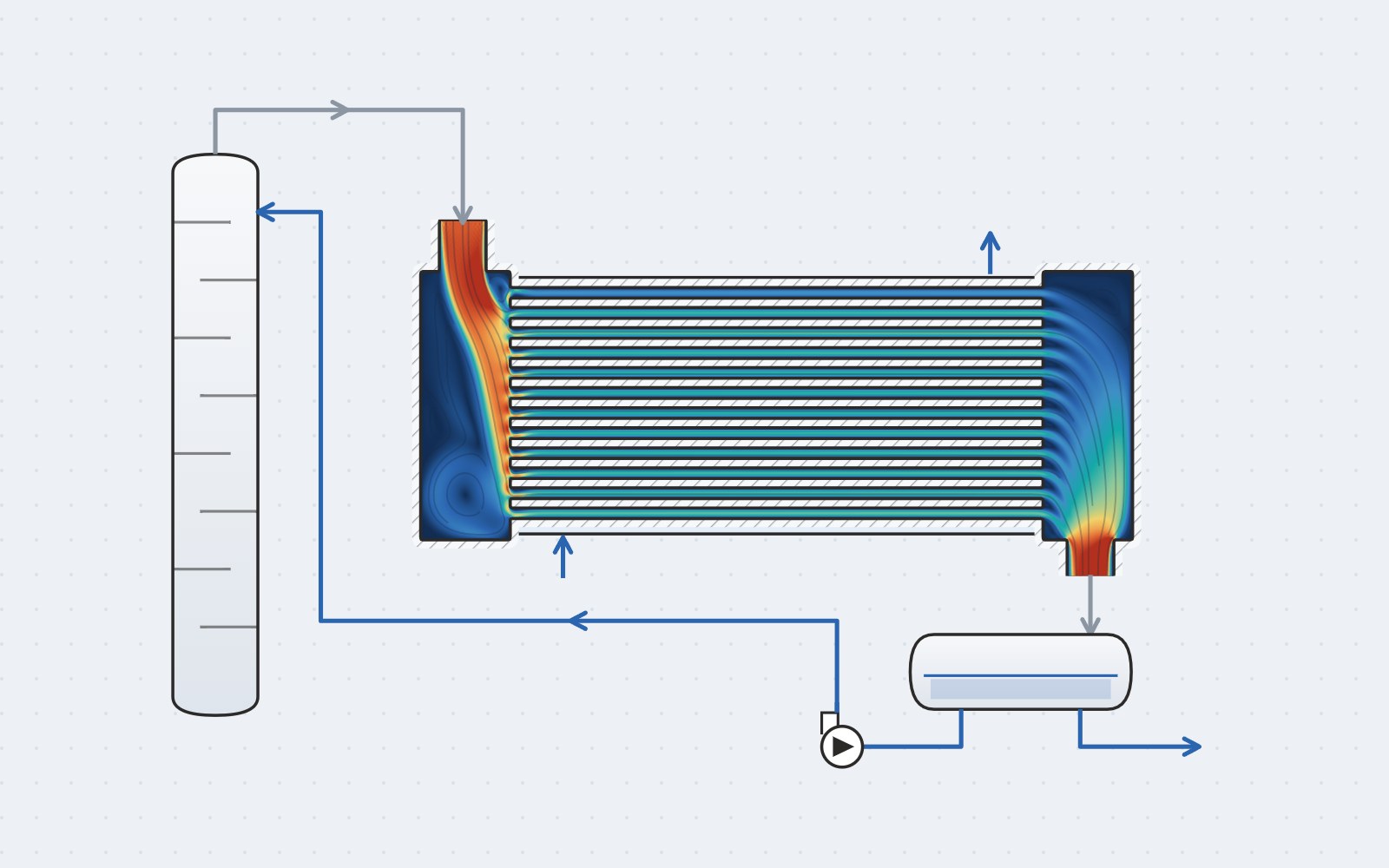
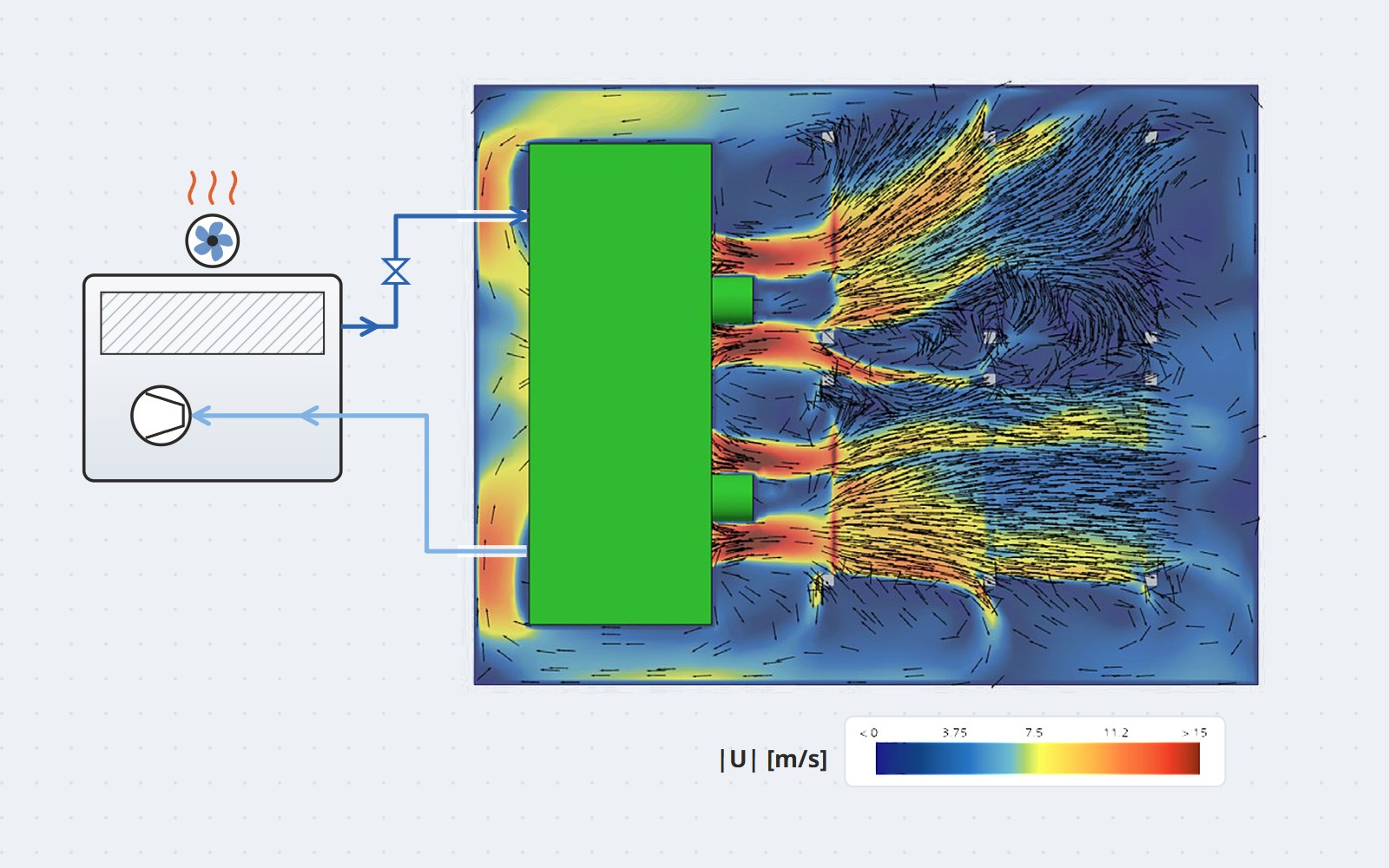
An uneven distribution header floods some tube rows and leaves the rest as dead zones; local corrosion there sets the retubing interval of the whole unit.
Read the case study →
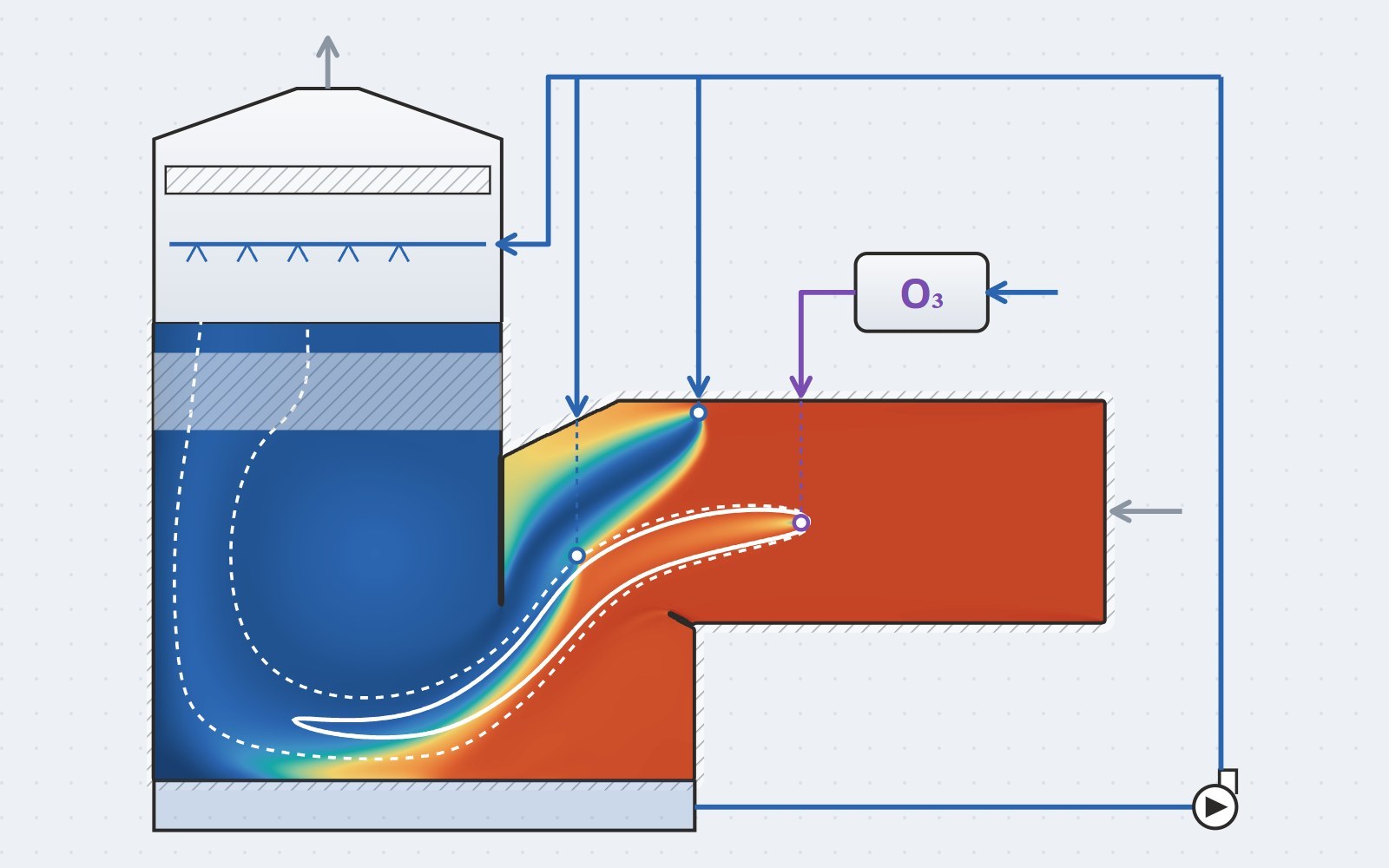
The cooling spray curtain and the ozone injection point constrain each other: mixing, residence time and the reaction temperature window pull the injector position in three different directions.
Read the case study →
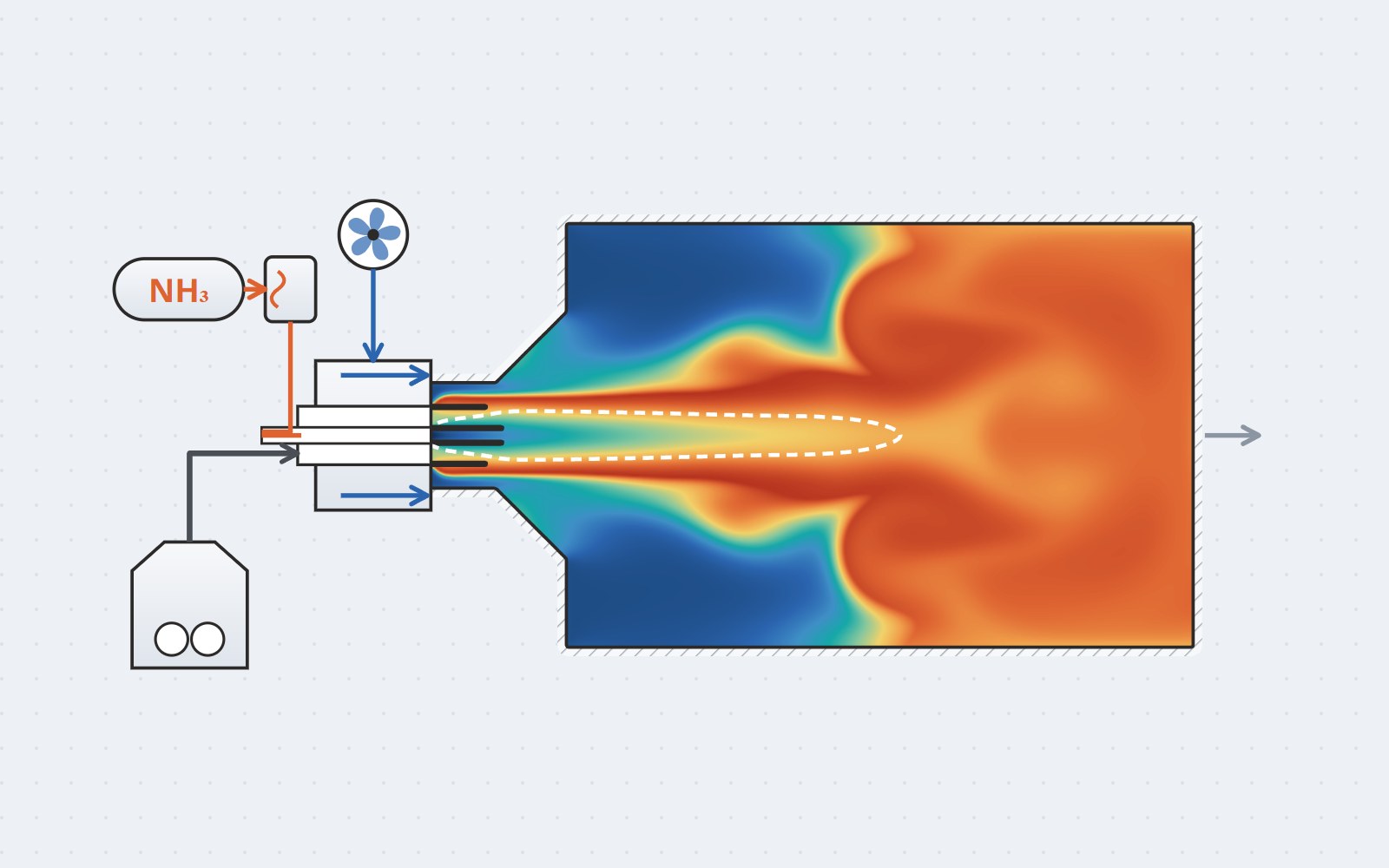
Ammonia co-firing cuts CO₂ but readily raises NOx and approaches combustion-safety limits; these three constraints surface only after installation, so simulation must resolve them first.
Read the case study →
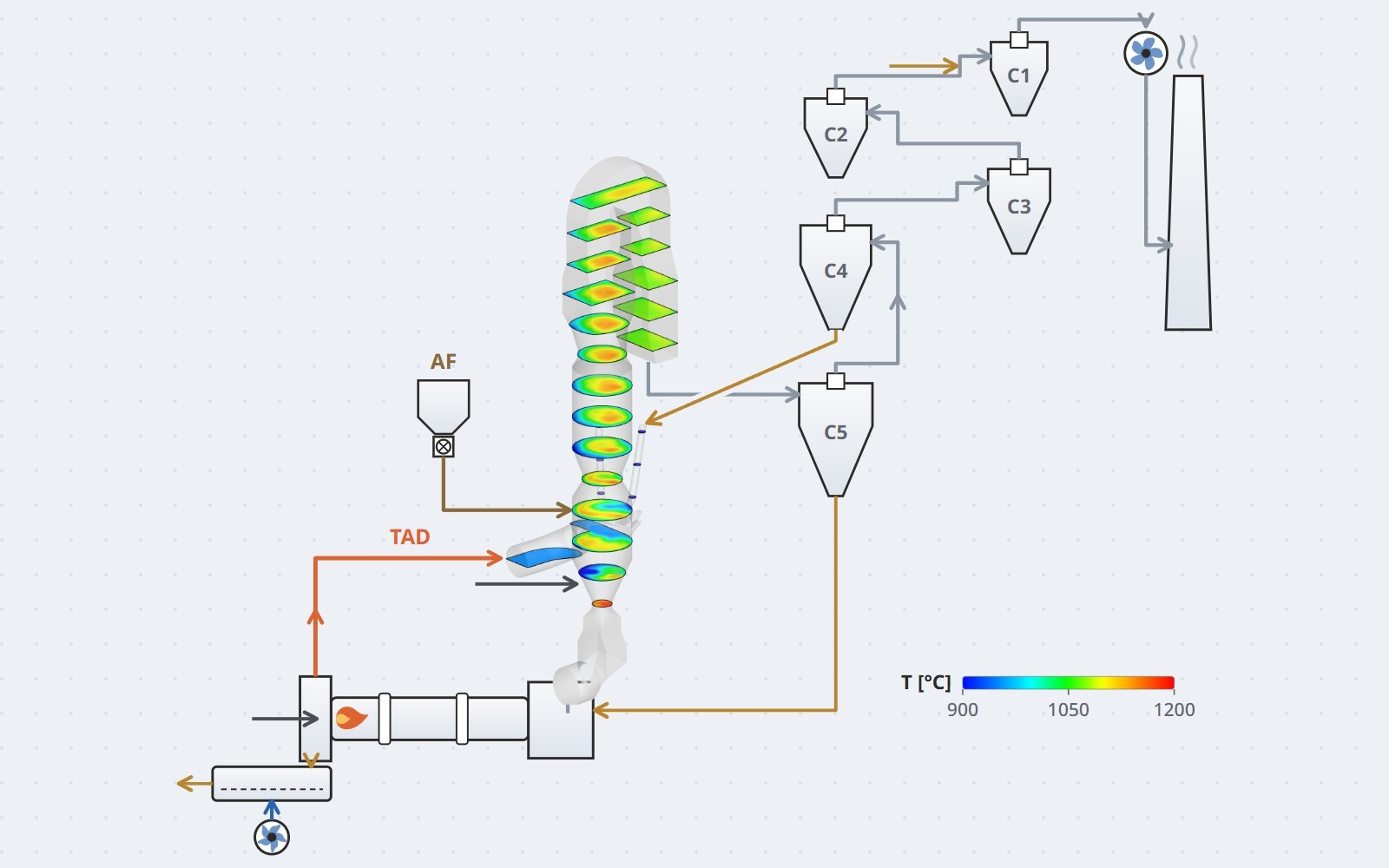
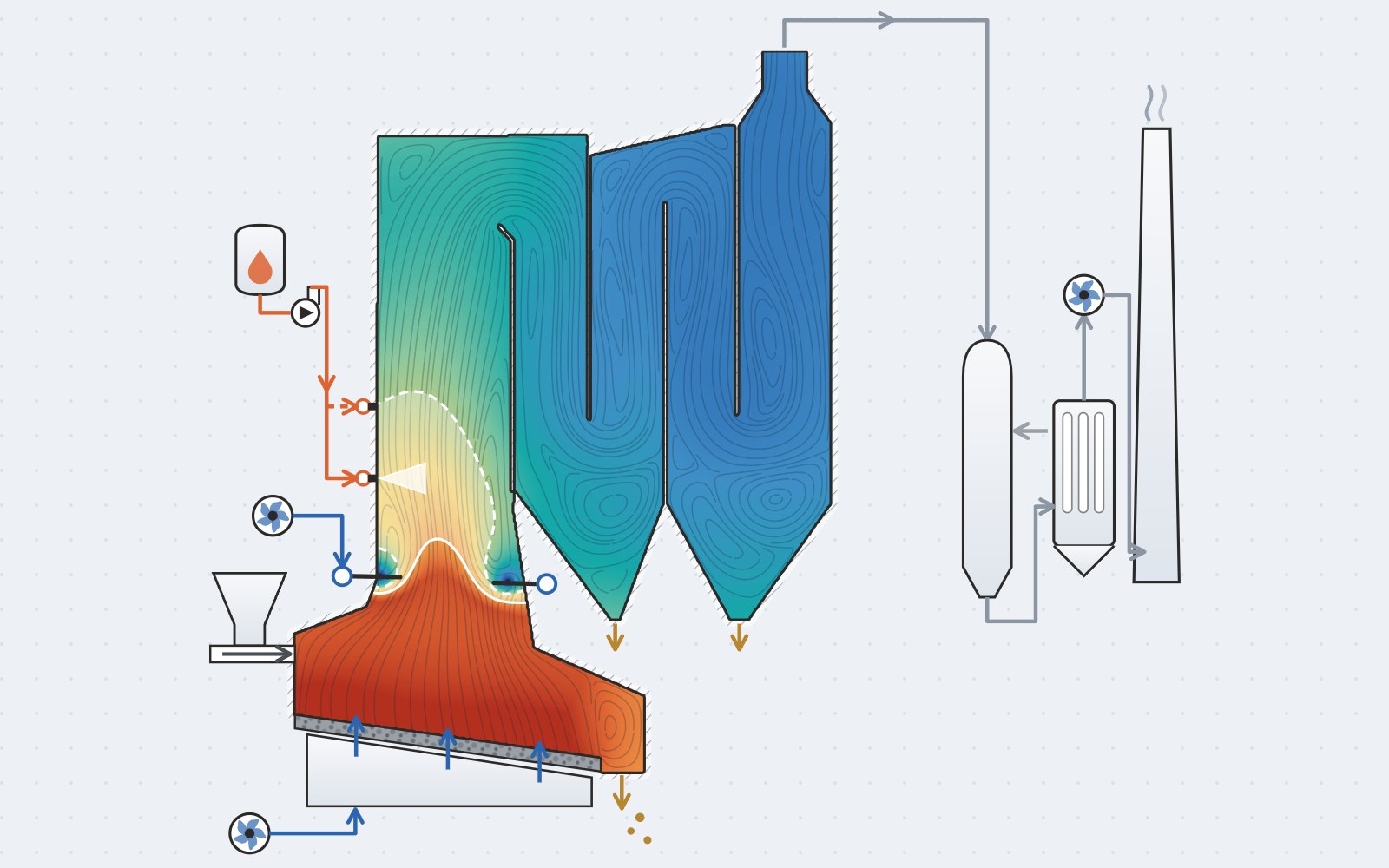
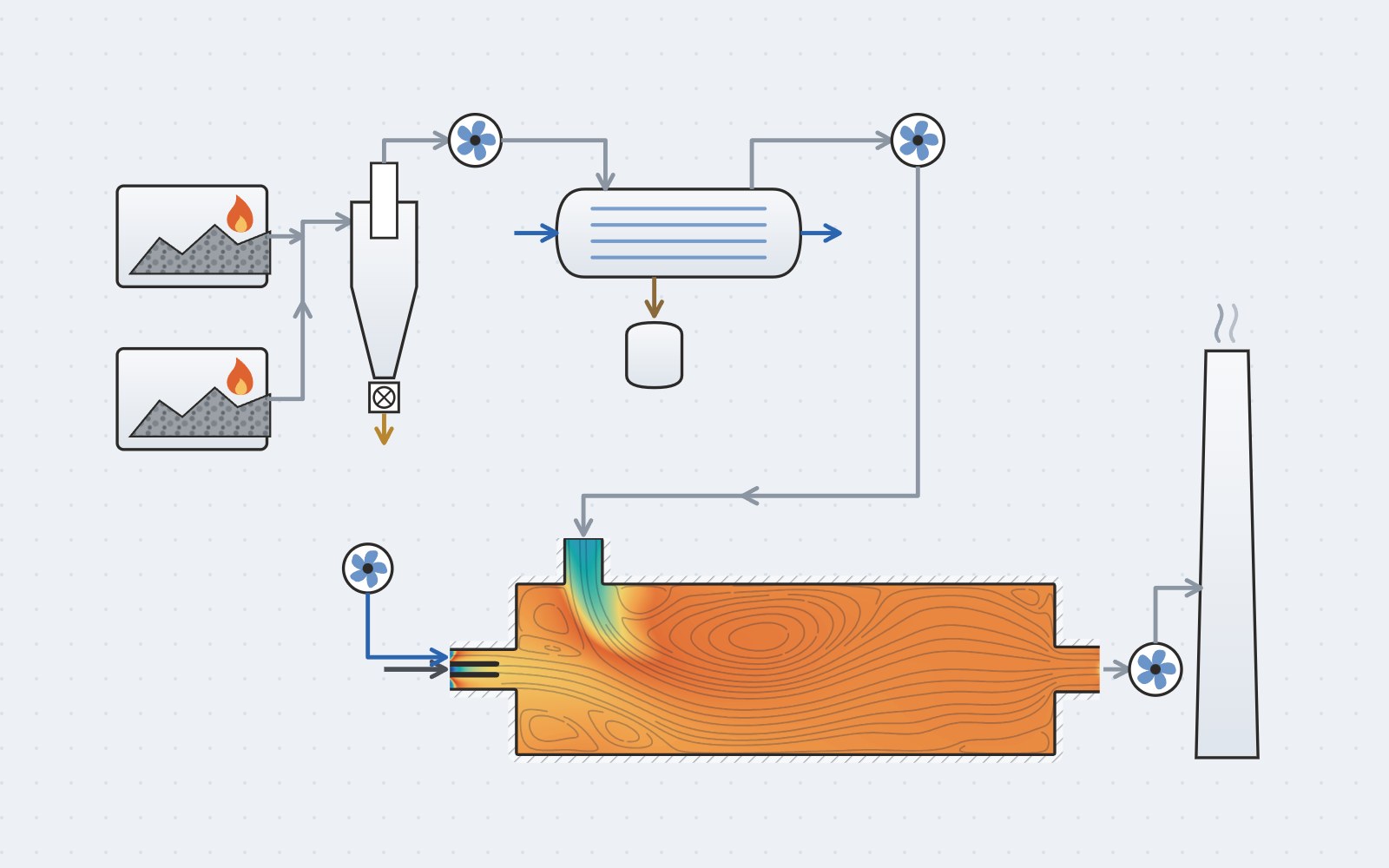
27.5 t/h of alternative fuel must burn out inside the calciner; feeding it at the wrong point raises CO and lets fuel fall back into the kiln.
Read the case study →
Running a fourth furnace lengthens the batches; the gas balance shows the exhaust fan short of flow in every high-load case.
Read the case study →
The slowest tray takes 167 minutes, twice the fastest — most of the cold air goes around the trays straight back to the evaporator.
Read the case study →
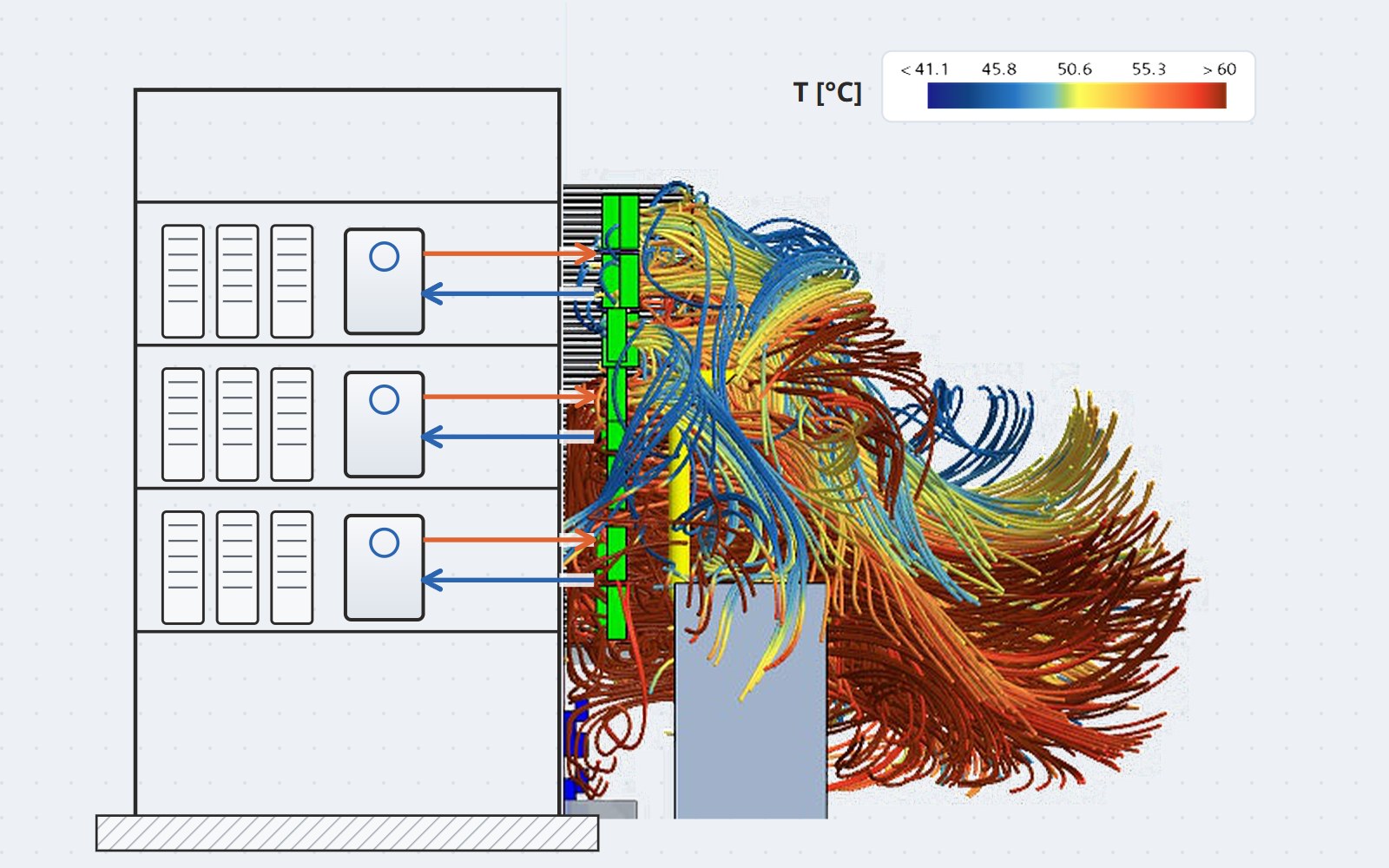
Downward louvers trap the lower tiers' warm air, causing the condensers to draw back their own exhaust when it is already 41 °C outside.
Read the case study →
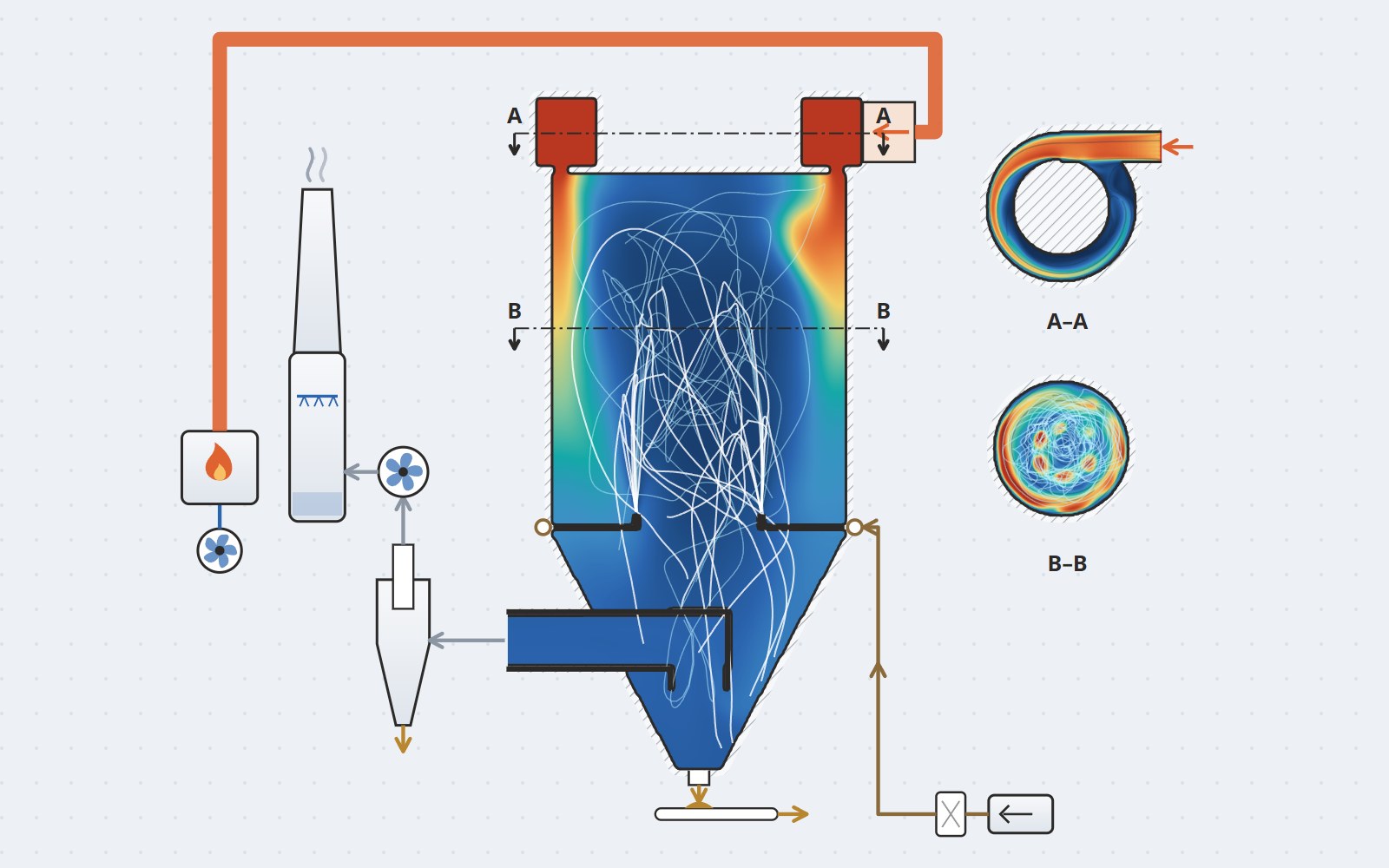
The spray dryer consumes most of the plant's thermal energy; the cyclone train suffered high pressure loss, poor separation and rapid, uneven erosion.
Read the case study →
The SNCR reaction works only within a narrow temperature band, yet the injector positions must be fixed before installation, and a wrong choice means costly correction on site.
Read the case study →
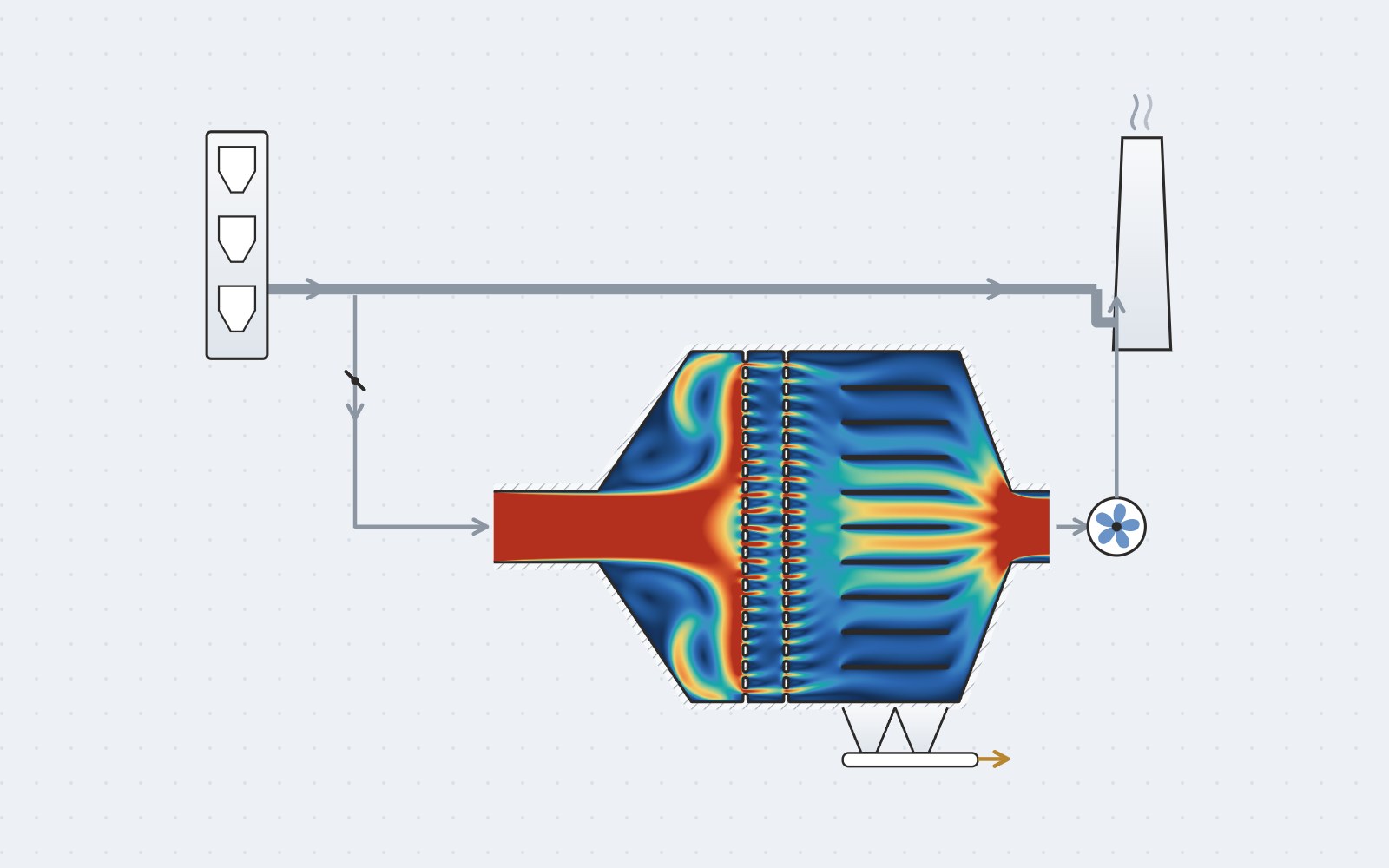
Outlet dust exceeded the standard; the bottleneck lay in the flow entering the module, which only simulation could reveal.
Read the case study →
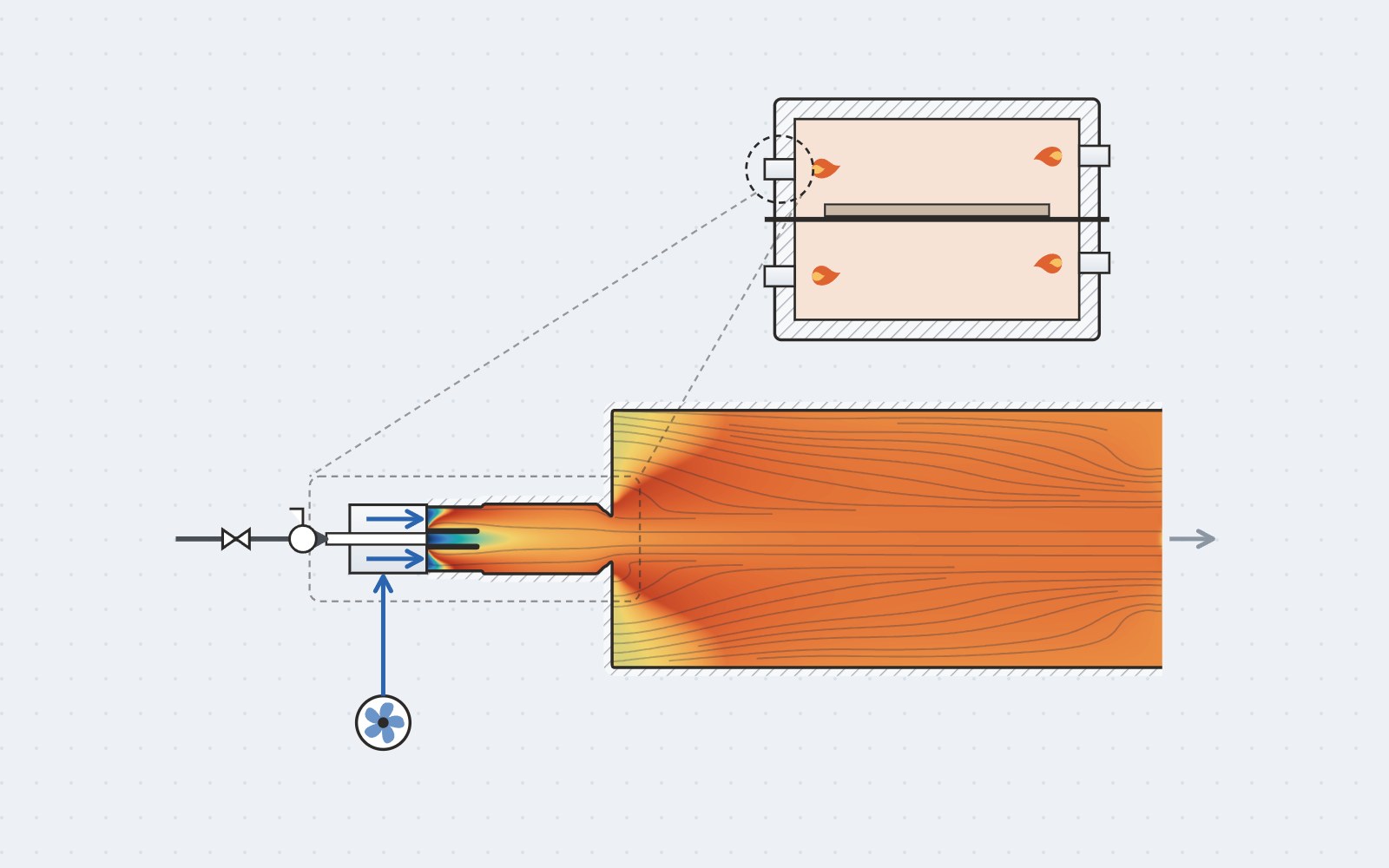
A catalogue cannot show which burner suits a given kiln, and trialling every candidate on the actual kiln is impractical.
Read the case study →
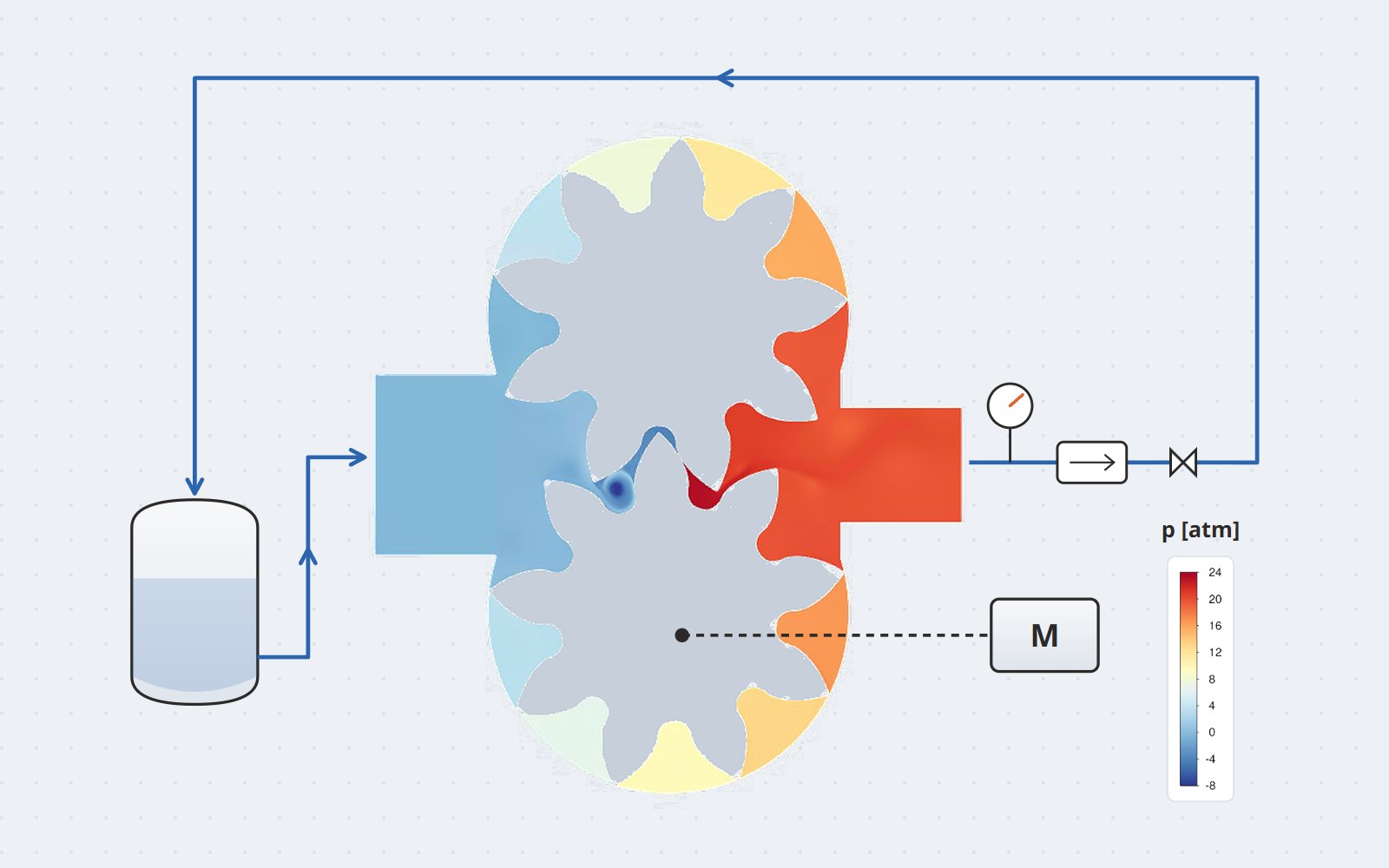
Micrometre gaps and the pressure trapped between two teeth determine the pump's flow and service life; a dynamic-mesh model captures both.
Read the case study →
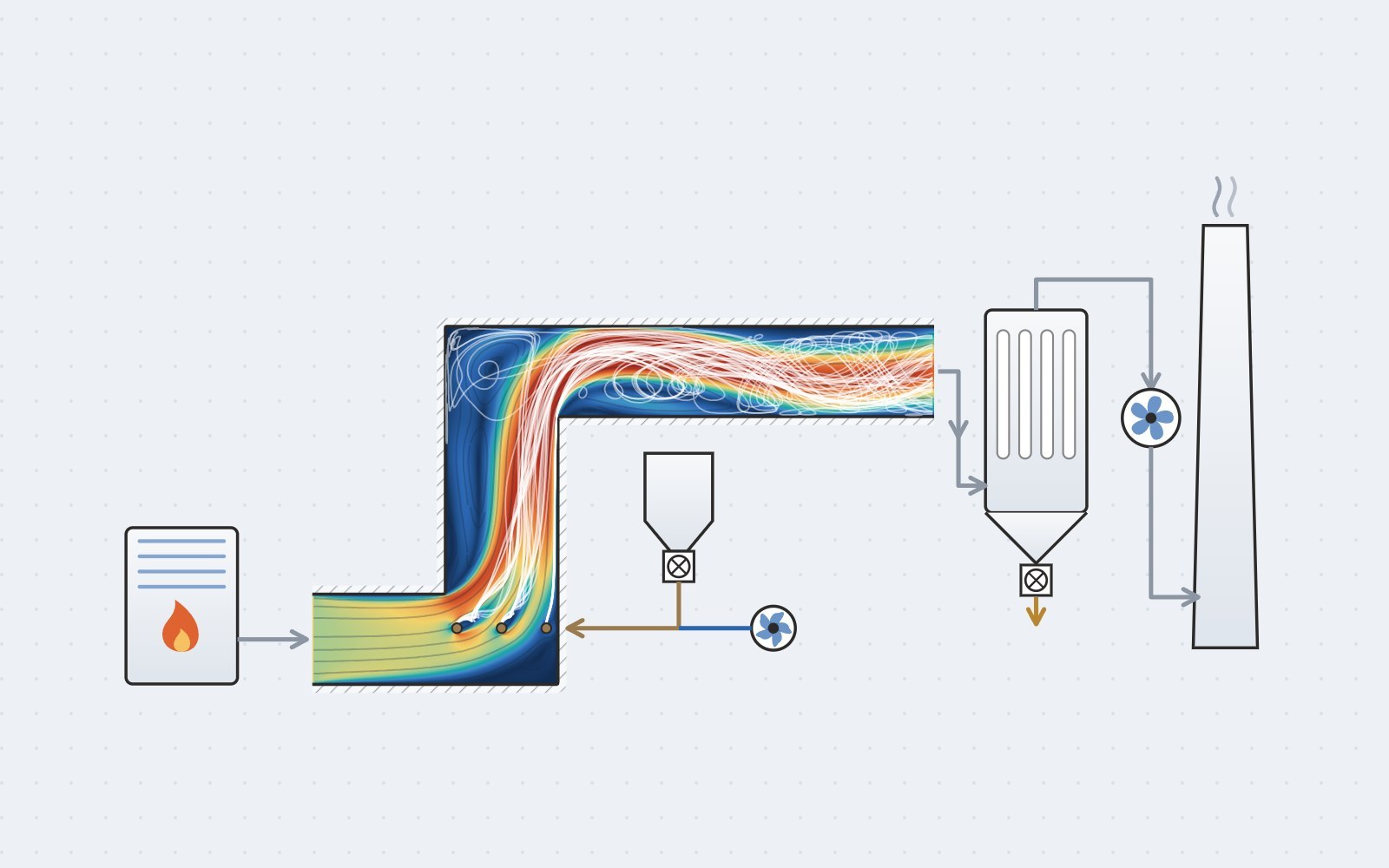
Poor gas–solid mixing reduced removal efficiency, while skewed flow and multiple bends pushed the ID fan to its limit: two opposing requirements on one system.
Read the case study →
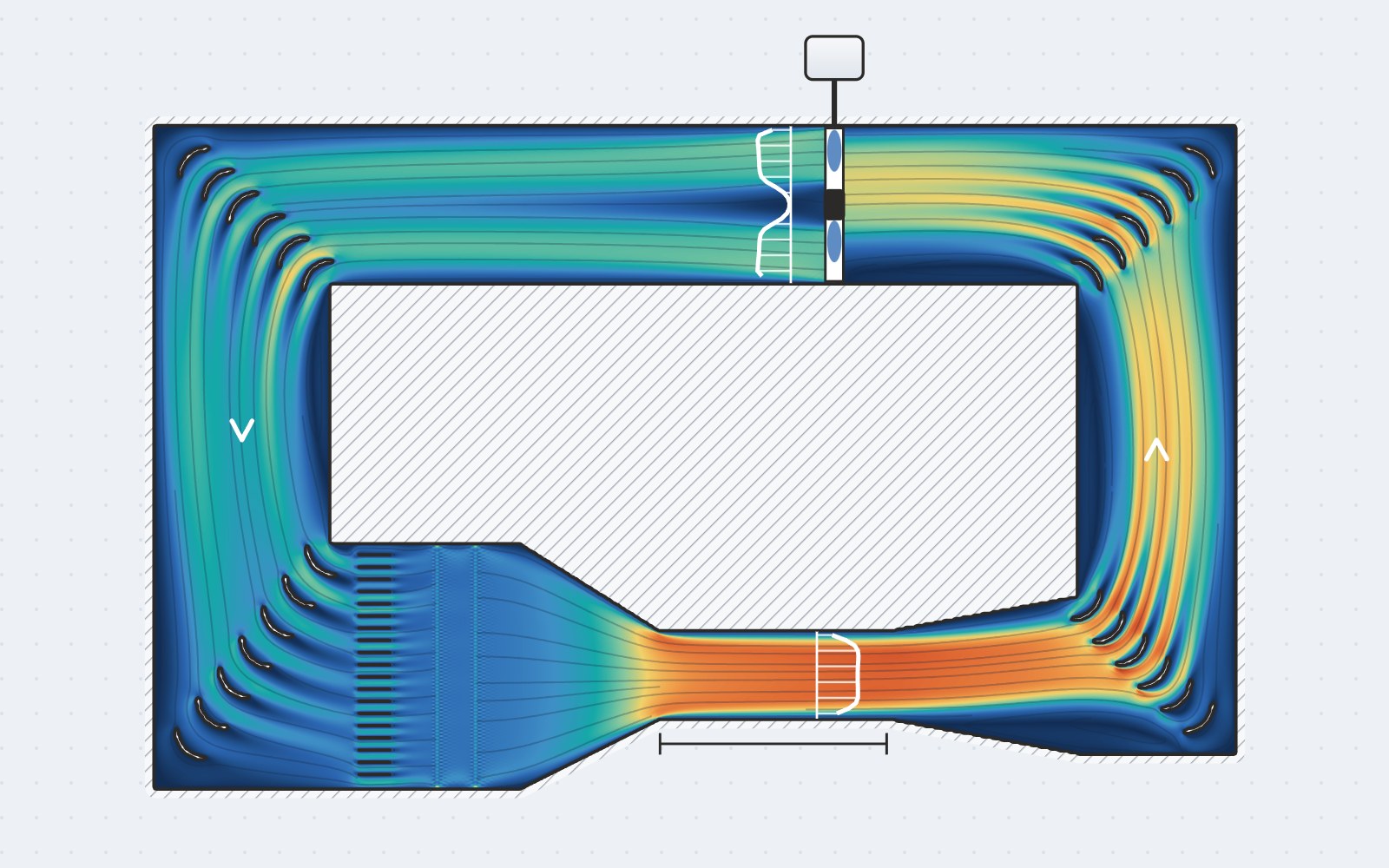
A wind tunnel's output is the flow quality in its test section, which depends on dimensions fixed at the outset; correcting them afterwards means cutting and re-welding the tunnel body.
Read the case study →This page lists only the projects clients have agreed to publish. A project dossier for your specific industry is sent by email on request.
18 further projects from 2021 to 2025 — mostly ceramic tile plants, alongside thermal power, HVAC and biomass fuel work.
The HVAC & building projects appear in the table above. Capabilities and articles on other problems in this area (cinema ventilation, car park smoke control, workshop return air) are on the HVAC & Buildings industry page.
Need to look deeper? A detailed project dossier for your industry, including method, validation and full results, is sent by email on request.
Request the capability dossierDescribe the equipment and the symptoms. CFDWAYS replies within 24 working hours with a suitable approach, the data required and an expected timeline.