Siemens softwareSimcenter 3D
Siemens Digital Industries Software · Simcenter

Simcenter 3D

Structures, vibration and acoustics on the same platform as CFD — so thermal stress is computed directly from the CFD temperature field, with no manual data transfer between packages.

12
analysis disciplines on one platform
CFD coupling
thermal stress from the temperature field
1 mesh
reused across analysis types
VN
local engineering support

Benefits of a shared platform

Thermal stress from the CFD temperature field

The temperature field from STAR-CCM+ is mapped directly onto the structural mesh, so stresses in heat-loaded equipment such as HRSGs and combustion chambers are calculated instead of estimated.

One model, many analyses

The same geometry and mesh serve structural, vibration and acoustic analyses, with no remeshing for each case.

Strong pre-processing

Robust meshing and geometry clean-up tools for complex assemblies imported from NX.

The problems it handles

Simcenter 3D is a multi-discipline mechanical analysis suite running on one shared pre/post-processing platform: one mesh built once, reused for structures, thermal, vibration and coupled problems.

  • Structural analysis — static and nonlinear strength, contact, stability. Used regularly.
  • Structural dynamics — natural frequencies, forced response, random vibration. Used for rotating equipment and piping.
  • Thermal analysis — conduction, convection, radiation; this is the bridge to the CFD results. Used regularly.
  • Multiphysics — thermal–structural and fluid–structure coupling in one case. The main reason CFDWAYS uses Simcenter 3D.
  • Durability & fatigue — life under cyclic loading, important for equipment running thermal cycles
  • Acoustics — noise radiated by equipment casings, fan and duct noise
  • Mechanism dynamics — multi-body motion, loads on joints and bearings
  • Electromagnetics — for equipment with motors, magnets and coils
  • Flexible pipes, wires and cables — routing and behavior of flexible runs in an assembly
  • Metal additive manufacturing simulation — distortion and residual stress during deposition
  • Simulation–test correlation — comparing the model against test data for calibration
  • Design space exploration & optimization — sweeping options inside the analysis environment

In industrial equipment projects the first four disciplines account for most of the work. The remaining disciplines are available when a problem requires them, without purchasing software from another vendor.
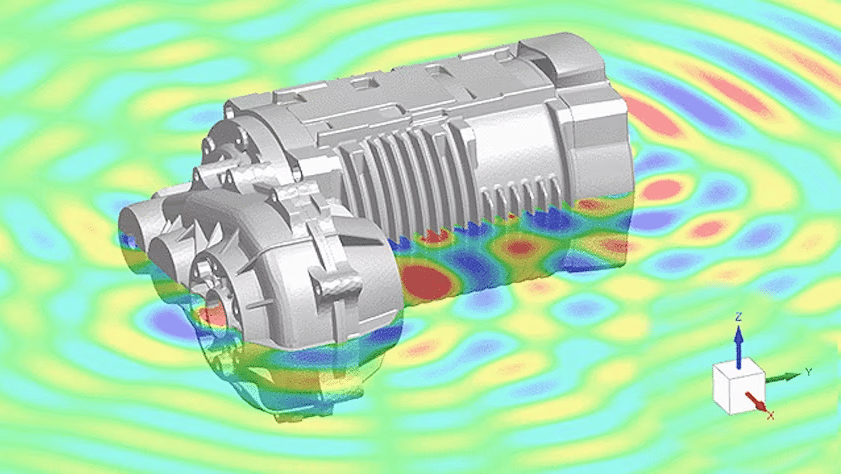
Thermal stress analysis of industrial equipment with Simcenter 3D
/image/phan-mem/simcenter-3d.jpg4:3 ratio (landscape)
Thermal stress computed from the temperature field supplied by CFD.

Coupled tools

Simcenter STAR-CCM+

The source of the temperature field and pressure loads for thermal stress cases.

View details →

NX CAD

The geometry platform; Simcenter 3D shares its data with NX.

View details →

Simcenter Amesim

Loads from the 1D system model fed into the 3D analysis.

View details →

HEEDS

Sweeping structural options to optimize mass against strength.

View details →

Applications at CFDWAYS

  • Checking shell and tube strength in HRSGs and waste-heat boilers once the CFD temperature field is available
  • Assessing flow-induced vibration of piping and supports
  • Natural frequency analysis of rotating equipment: fans, impellers, pumps

Industries served

Licensing & support

Simcenter 3D is sold by module: the platform plus analysis packages. CFDWAYS advises which modules match your type of problem.

  • A pre/post-processing platform shared by every analysis type
  • Modules as needed: structural, thermal, vibration, acoustics, multiphysics
  • Data coupling with STAR-CCM+ must be configured correctly from the start; CFDWAYS handles this setup

Indicative system requirements

Operating systemWindows 10/11 64-bit or Linux
RAM32 GB or more for large assembly models
GraphicsA discrete OpenGL-capable GPU
StorageSSD — nonlinear cases write a great deal of intermediate data

Frequently asked questions

We already have another FEA package — do we need Simcenter 3D?

For purely structural problems, it may not be needed. The value of Simcenter 3D lies in its direct coupling to CFD results, which matters most for heat-loaded equipment.

Is thermal coupling with STAR-CCM+ complicated?

The workflow exists, but it has to be set up correctly the first time. CFDWAYS usually builds a reference workflow for the client's team and hands it over.

Does your equipment have a thermal problem coupled to a structural one?

Send us the operating conditions — CFDWAYS will assess whether CFD needs to be coupled with structural analysis.

Send project details

See more: The full Siemens software portfolio · Simcenter STAR-CCM+ · HRSG & condenser capabilities