Simulating a whole system rather than a single device. To assess how the whole plant responds to a change in operating mode, a 1D model delivers results in seconds instead of hours.
Whether a pump is adequately sized for the whole network, whether a control valve responds fast enough, how long start-up takes: these are system-level questions outside the scope of 3D CFD.
A 1D model solves in seconds, so the entire operating range can be swept, including upsets and transients.
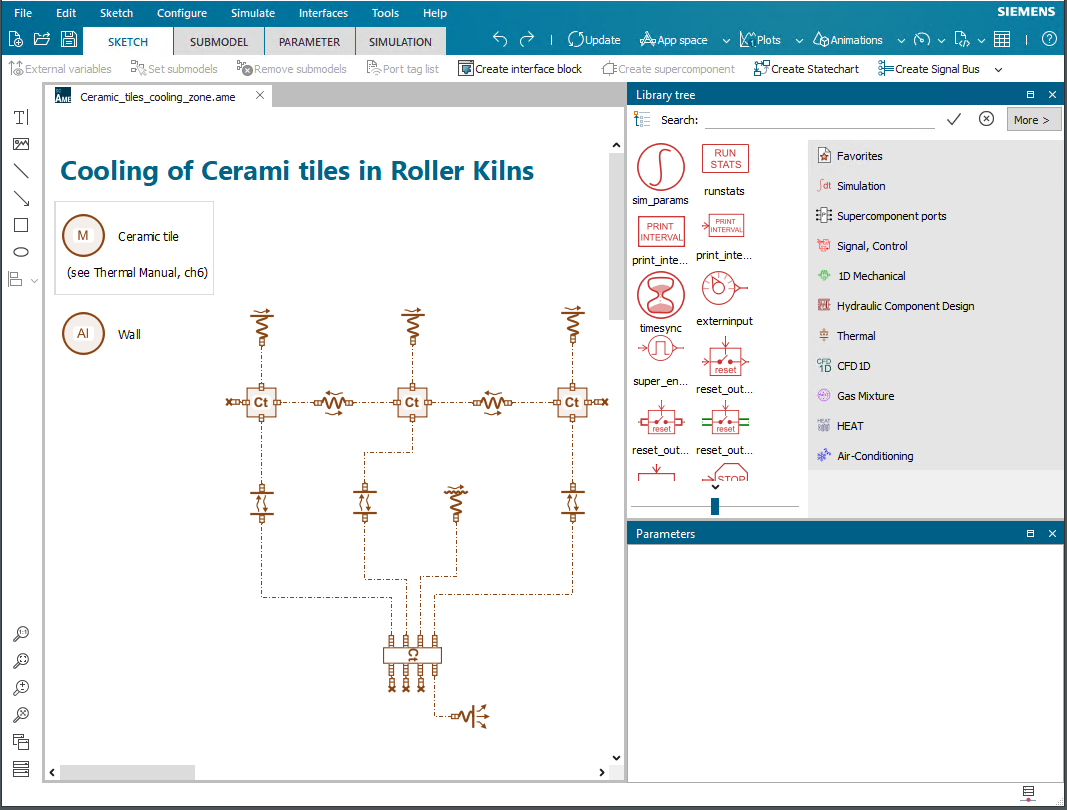
Ready-made hydraulic, pneumatic, thermal, electrical and mechanical blocks — you build the system by connecting blocks rather than writing equations.
Co-simulation: the critical equipment solved in 3D, the rest in 1D.
View details →An Amesim license comprises the platform and discipline libraries. The cost depends on the libraries selected, so CFDWAYS first establishes the type of system you need to model.
| Operating system | Windows 10/11 64-bit or Linux |
|---|---|
| CPU | No need for many cores — 1D models solve very fast |
| RAM | 8–16 GB is enough for most models |
No. The two tools address different questions: 1D describes how the system operates; CFD describes how the flow develops inside a single piece of equipment. Many projects need both.
Yes. A 1D model rests on component characteristics — pump curves, valve loss coefficients. Without them the results are only qualitative.
Describe the system and what you want to know — CFDWAYS will advise whether 1D, 3D or both is the right answer.

