IndustriesAdvanced technology
Group 4 · expanding

Advanced technology

CFDWAYS is expanding into thermal management for battery systems, electronics, data centers and next-generation industrial equipment.

Batteries & BESS
pack thermal management
Electronics
heat sinks & thermal paths
Data center
hot spots between rack rows
FloEFD
CFD inside the CAD environment

Common problems

  • Temperature spread between cells — pack life and safety margin drop because the heat generated is not dissipated evenly, and the sensors detect it only when it is too late
  • Higher power in the same space — the existing heat sink layout no longer suffices, but there is no prototype yet to measure
  • Hot spots between rack rows — the total cooling capacity is sufficient by calculation, yet some racks still overheat
  • Cold air bypass — cold air returns to the intake without passing the load, and cooling efficiency drops for no obvious reason
  • Long product development cycle — build a prototype, measure it, rebuild if it fails; each round costs months

Why simulate

The physics in this industry group — thermal management, multiphase flow, natural and forced convection — is the same class of problem CFDWAYS has worked on for years in heavy industry, differing only in length scale and in how sensitive the result is to temperature.

Precisely because the scale is small and the temperature margins are narrow, calibrating the model against measurements matters even more here.

A new industry group for CFDWAYS. Completed projects and validation data are currently concentrated in energy, process industry and HVAC. For this group, CFDWAYS transfers the method and the class of model validated in those industries, and assesses your problem before scoping.

Send your problem for a first assessment
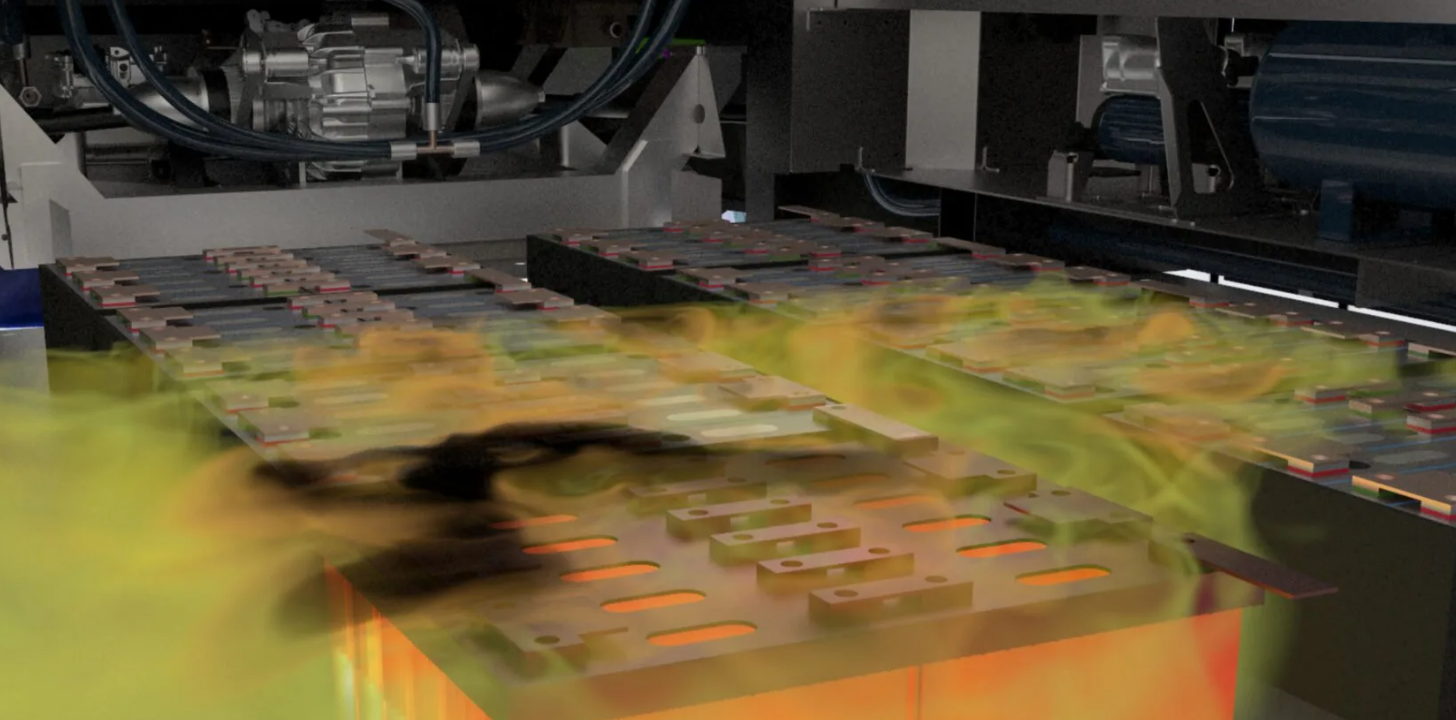
Temperature distribution in a battery pack — CFD simulation
/image/nganh-cong-nghe-tien-tien-pin.jpg2:1 ratio (landscape)
Cell-to-cell temperature spread — detected by simulation before any sensor reports it.
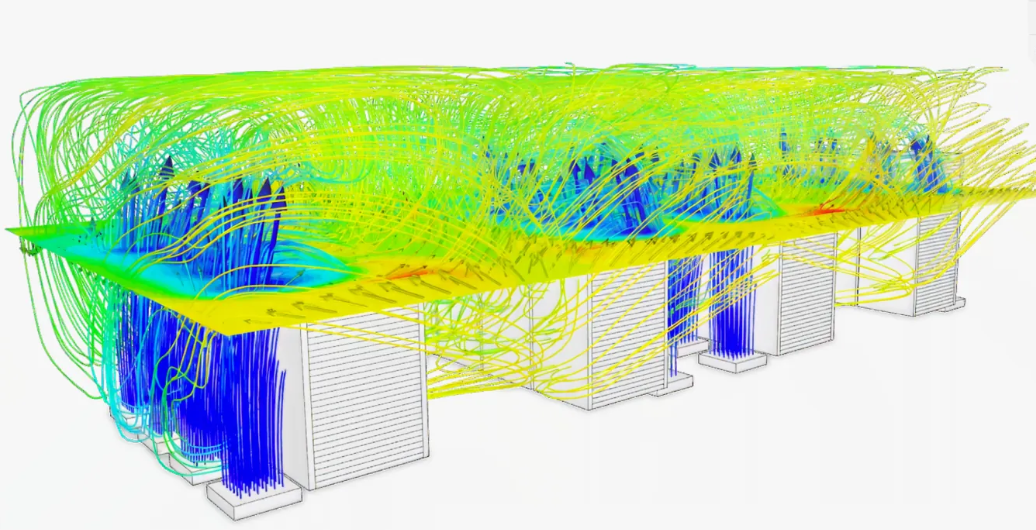
Cold air flow in a server room — CFD simulation
/image/nganh-cong-nghe-tien-tien-data-center.jpg2:1 ratio (landscape)
How cold air travels between rack rows, the basis for locating hot spots.

What we handle

Batteries & energy storage

The life and safety of a battery pack depend directly on whether the heat generated is dissipated evenly.

Electronics cooling

Try heat sink layouts and air paths inside the CAD environment, before a physical prototype exists.

Learn about FloEFD →

Data centers

Essentially an HVAC problem at high heat density — the same class of model used for industrial ventilation, at a different power scale.

See HVAC & building design →

Next-generation industrial equipment

Eliminate weak options at the design stage instead of building a prototype and measuring it.

Automated design optimization →

Simulation methods

  • Temperature distribution across the pack and the spread between cells
  • Cooling paths by air, by liquid or through conductive plates
  • Thermal runaway scenarios and how they propagate from cell to cell
  • Natural and forced convection, conduction through interface materials to the environment
  • Cold air bypass and hot air recirculating back to the intake in a server room
  • Automated optimization when the design variables outnumber what can be run by hand

Deliverables

  • Temperature maps and hot-spot locations for each layout option
  • Quantified trade-offs between energy density, cooling cost and safety margin
  • Failure scenarios: temperature evolution after the loss of one cooling unit
  • Comparison of design variants before a prototype, reducing build-and-test rounds
  • Engineering evidence for bidding — performance curves, operating range, safety margins

How we work

Receive the inputs

CAD model, heat dissipation, ambient conditions and the allowable temperature limits.

Build the model

Geometry simplified only as far as the thermal paths and air flow stay correct.

Compare options

The current state and the layout options are simulated and compared by hot-spot temperature.

Hand over

Report, visual results and specific layout recommendations.

Method foundation

CFD overview

What class of problem simulation solves and where its limits are — the common ground for every industry.

Read →

Verification & validation

Why a model must be calibrated against measurements before it can support decisions.

Read →

CFD in HVAC

The class of model reused for data center problems.

Read →

Does your problem belong to this group?

Send a description of the problem — CFDWAYS replies with the class of model that applies and the data needed to calibrate it.

Send project details

Other industries: Energy & oil and gas · Chemical engineering · Environmental engineering · HVAC & building design
