ProjectsAmmonia co-firing
Case study · Thermal power · Vietnam · 2025

A burner evaluation tool for ammonia co-firing

0.44
the swirl number usually taken as the flame-stability threshold
< 20%
NH₃ co-firing ratio that still keeps NOx under control while cutting CO₂
3 model levels
burner · combustion chamber · whole process
2 publications
one domestic, one in an international journal

Context & problem

Ammonia co-firing is one of the few decarbonization routes that reuses a pulverized-coal boiler already in service rather than replacing it. However, changing the fuel of a burner in operation involves three conflicting constraints.

Inefficient combustion: uneven fuel distribution increases energy consumption and operating cost. Emissions: improper NH₃ co-firing generates additional NOx, cancelling the environmental benefit the project aims for. Safety: flashback and blowout threaten continuous operation of the unit.

All three emerge only once the burner is installed and firing, while trials on real equipment are slow and risky; the problem therefore has to be solved by simulation first.

Approach

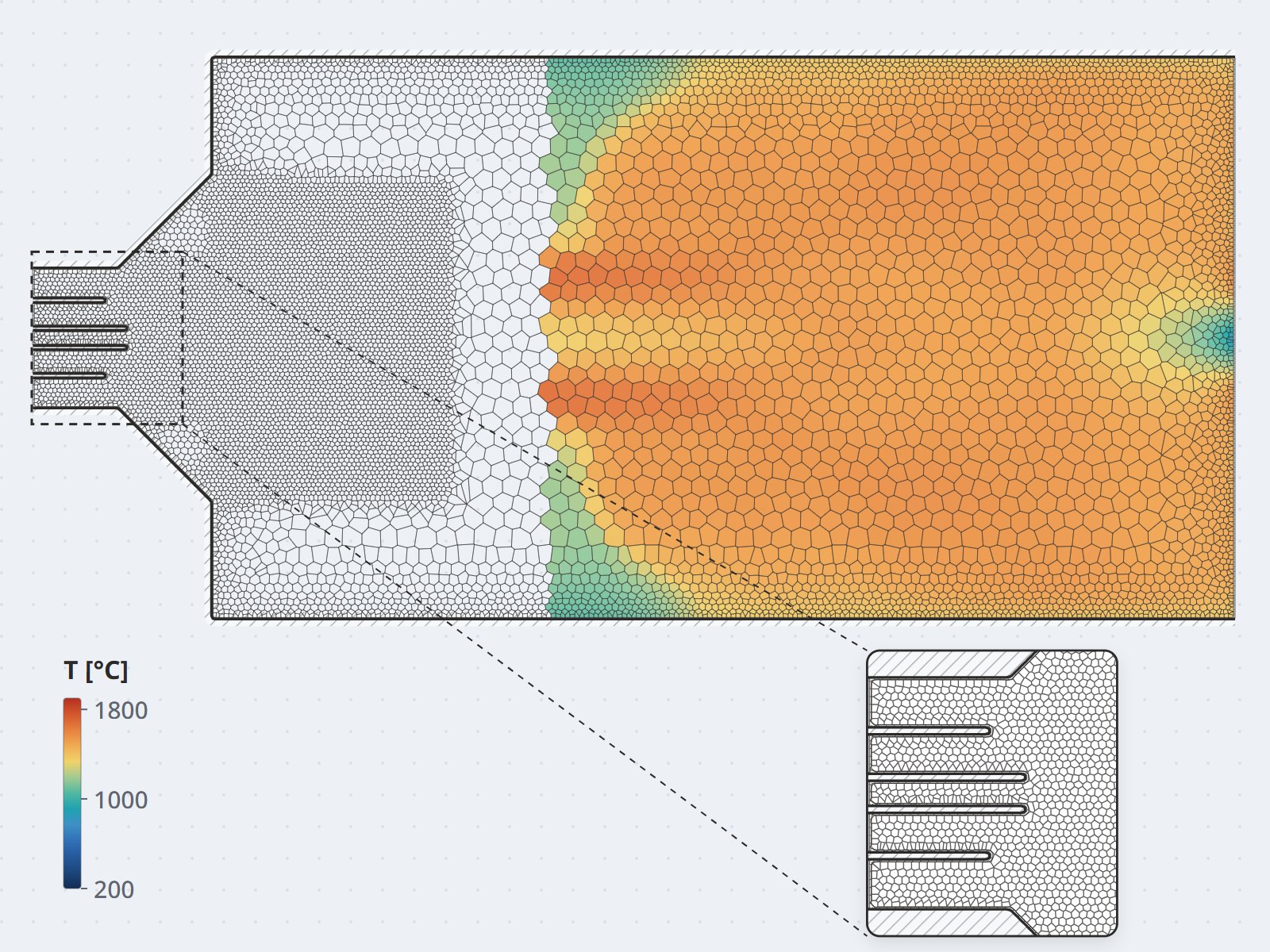
  • Three model levels, each question answered at the cheapest level that can answer it: reacting CFD for the burner and combustion chamber; a compartment model (CSTR network) at system level to sweep fuel scenarios quickly; a process model for the whole cycle.
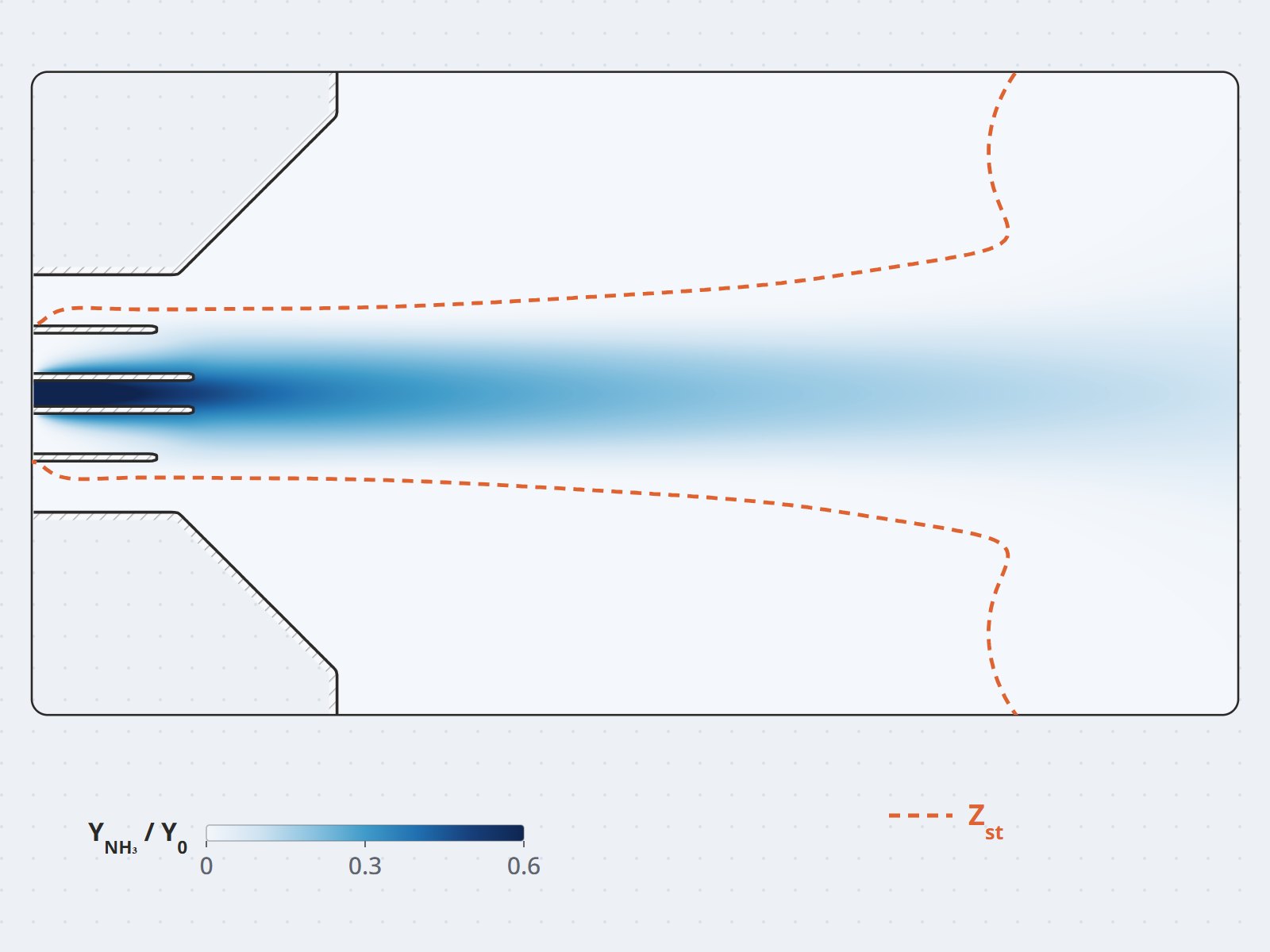
  • Criteria agreed before options are compared: a burner evaluation set — swirl number, central recirculation zone, volume of the high-NH₃ concentration region, and its overlap with oxygen-rich zones — so every option is ranked on the same measure.
  • Design automation: a Design Automation interface built in Python and Excel driving STAR-CCM+, sweeping injection positions and co-firing ratios in batches instead of building each case by hand — this tool is the main deliverable.

Results

  • Injection position does not trade off against swirl structure: the swirl number barely changes as the NH₃ injection position moves, so the injection point can be optimized without redesigning the swirl-generating part of the burner.
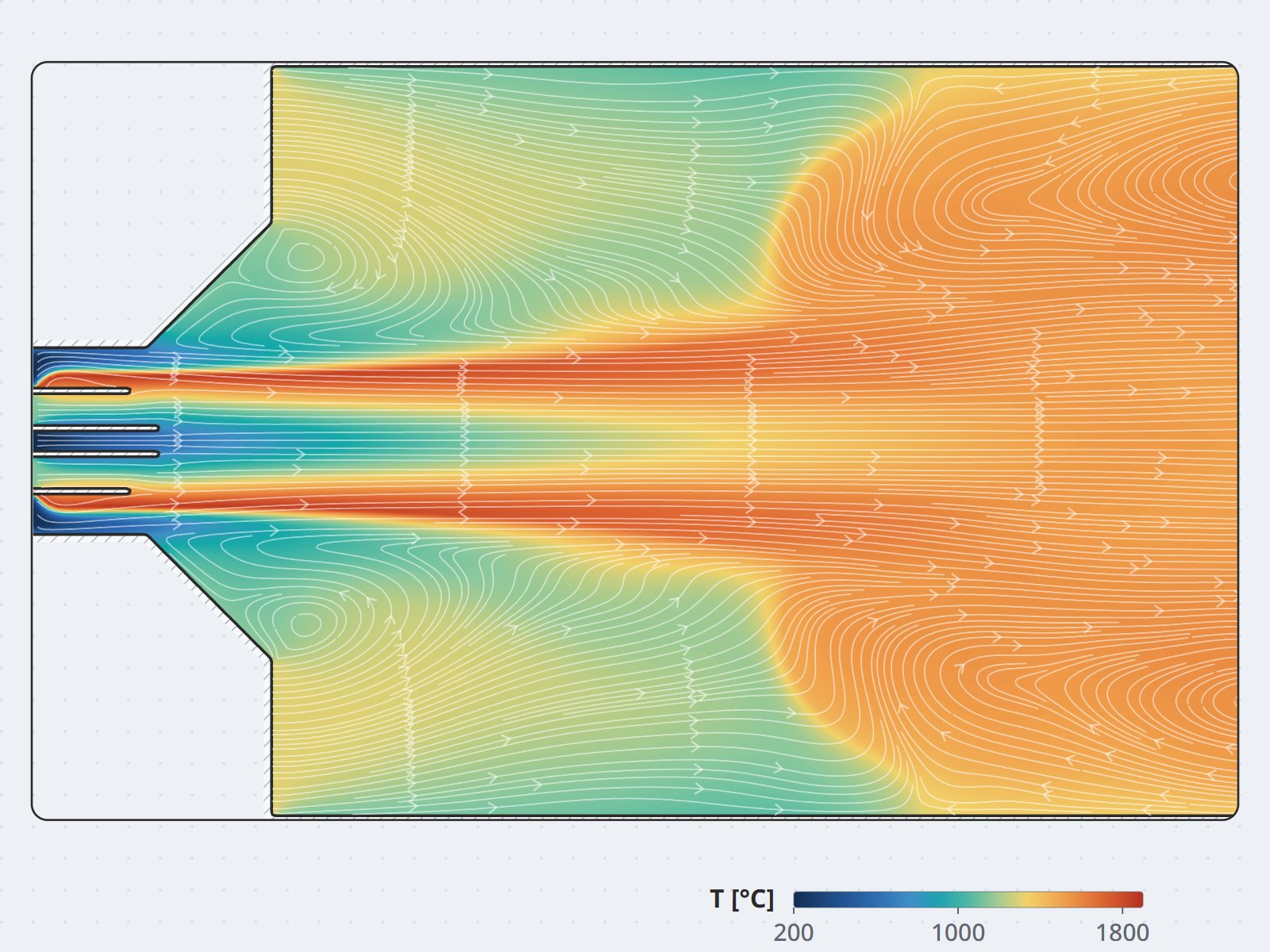
  • One swirl number is not enough to decide: the computed swirl number sits below the 0.44 threshold usually taken as the flame-stability condition, yet a central recirculation zone still forms — relying on that index alone would have wrongly rejected a feasible configuration.
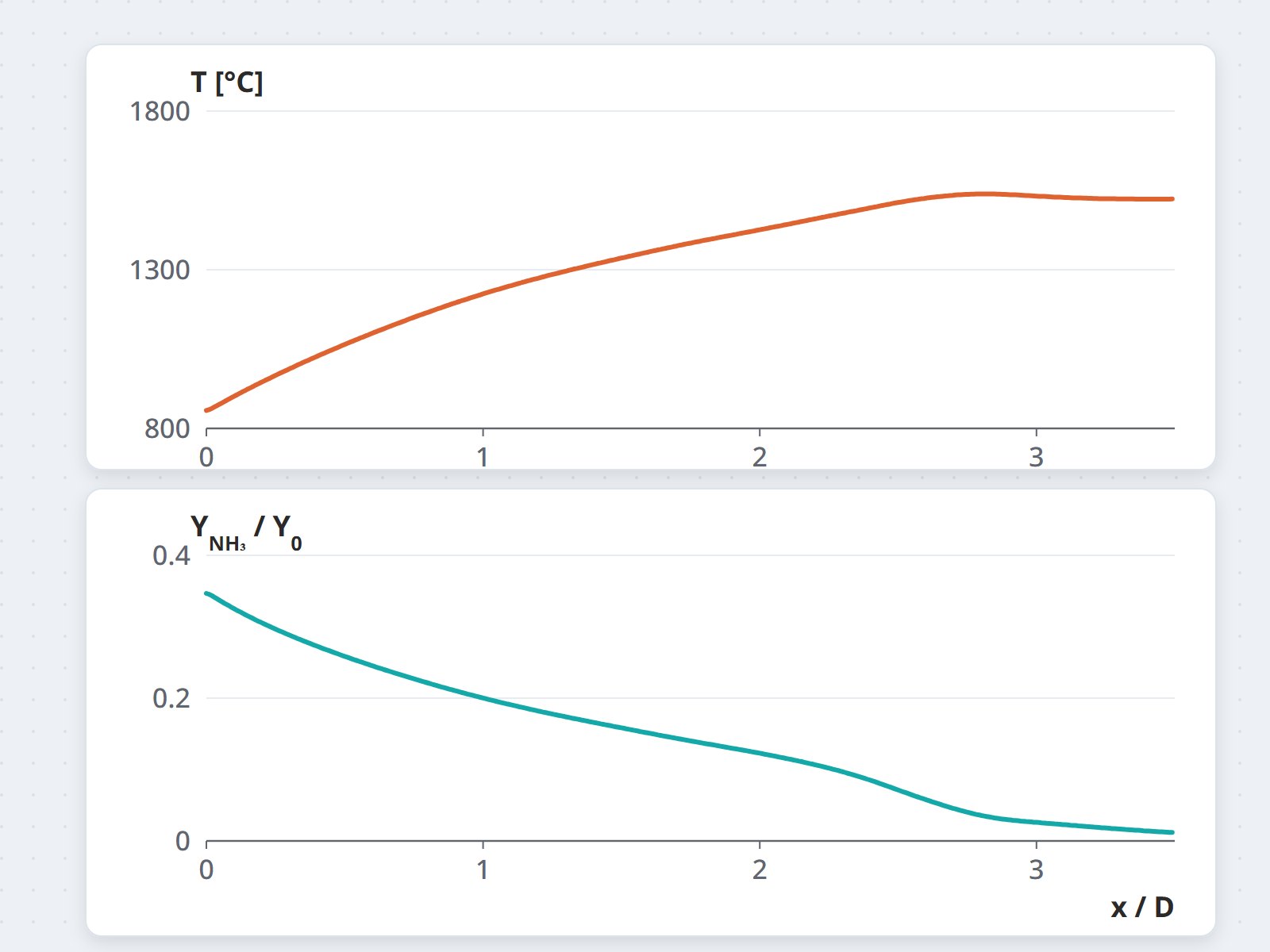
  • Moving the injection point away from the burner improves combustion: the high-NH₃ concentration region shrinks and less NH₃ sits in oxygen-rich zones, since coal burns first, right next to the burner.
  • At system level: a co-firing ratio below ~20% keeps NOx controllable while still cutting CO₂; above that, NOx rises sharply for both bituminous coal and anthracite.

Value

The deliverable is a criteria set plus a tool that sweeps options: the second and the tenth question about a different burner configuration are answered within the same framework. A plant weighing a decarbonization roadmap thus gains a long-term evaluation capability.
Project gallery

Ammonia co-firing project photo 1
/image/thiet-bi-buong-dot-02.jpg4:3 ratio (landscape)
Ammonia co-firing project photo 2
/image/thiet-bi-buong-dot-03.jpg4:3 ratio (landscape)
Ammonia co-firing project photo 3
/image/thiet-bi-buong-dot-04.jpg4:3 ratio (landscape)
Ammonia co-firing project photo 4
/image/thiet-bi-buong-dot-05.jpg4:3 ratio (landscape)

Is your plant weighing a co-firing roadmap?

Send the boiler and existing burner data — CFDWAYS will advise what simulation can establish about co-firing ratio, injection configuration and the effect on NOx before any intervention on the equipment.

Send project details

Related projects: Combustion & alternative fuels capability · Case study: finalizing an SNCR nozzle configuration · Publication list · Simcenter STAR-CCM+