ProjectsWind Tunnel & Wind Ring
Case study · Test equipment · 2019–2020

CFD analysis and design optimization of a Wind Tunnel and a Wind Ring

2019–2020
two consecutive projects on the same class of problem
Government program
the Wind Ring work was part of a Korean government research program
Flow quality
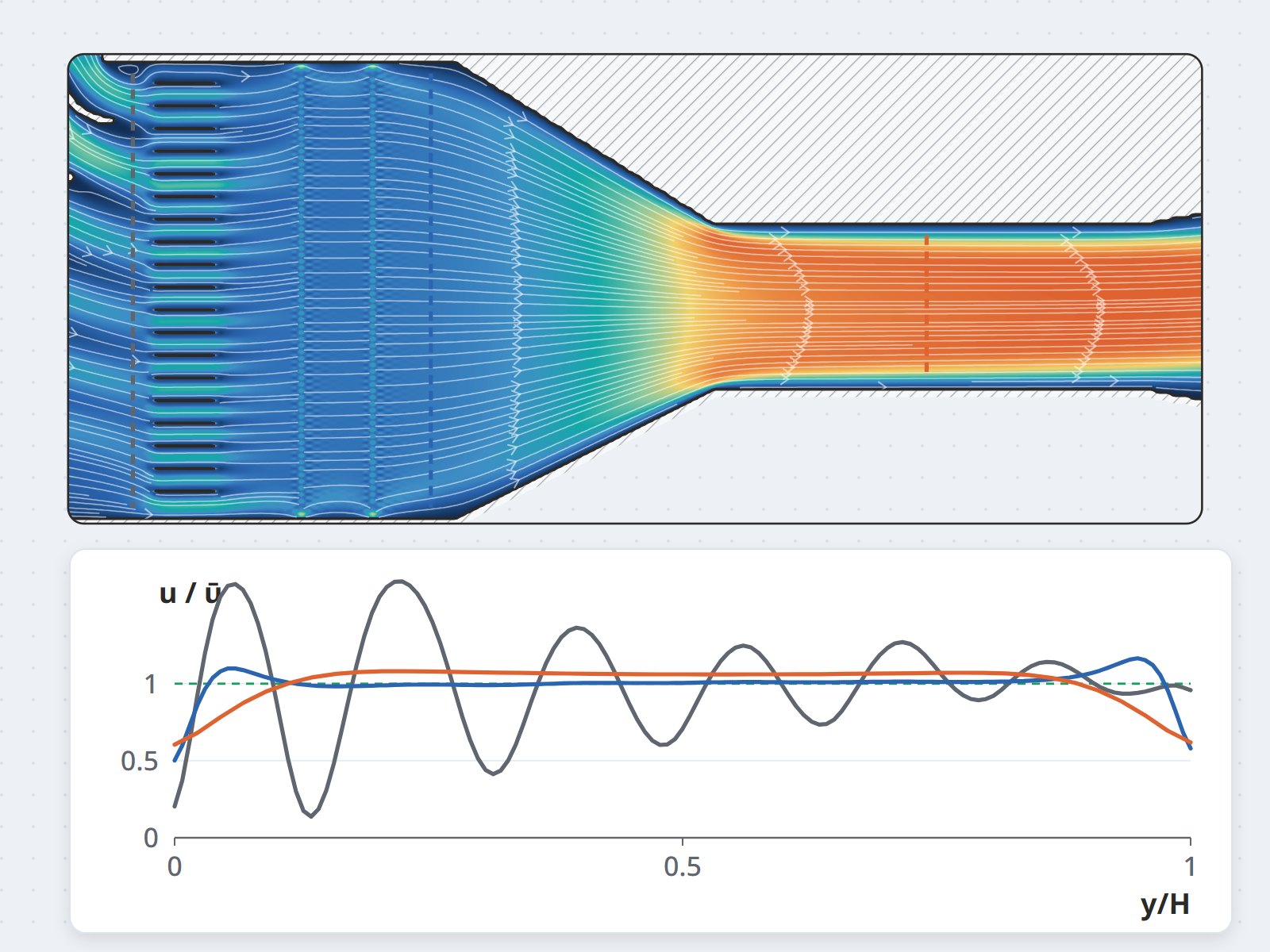
uniformity and turbulence in the test section as the main criteria
Full circuit
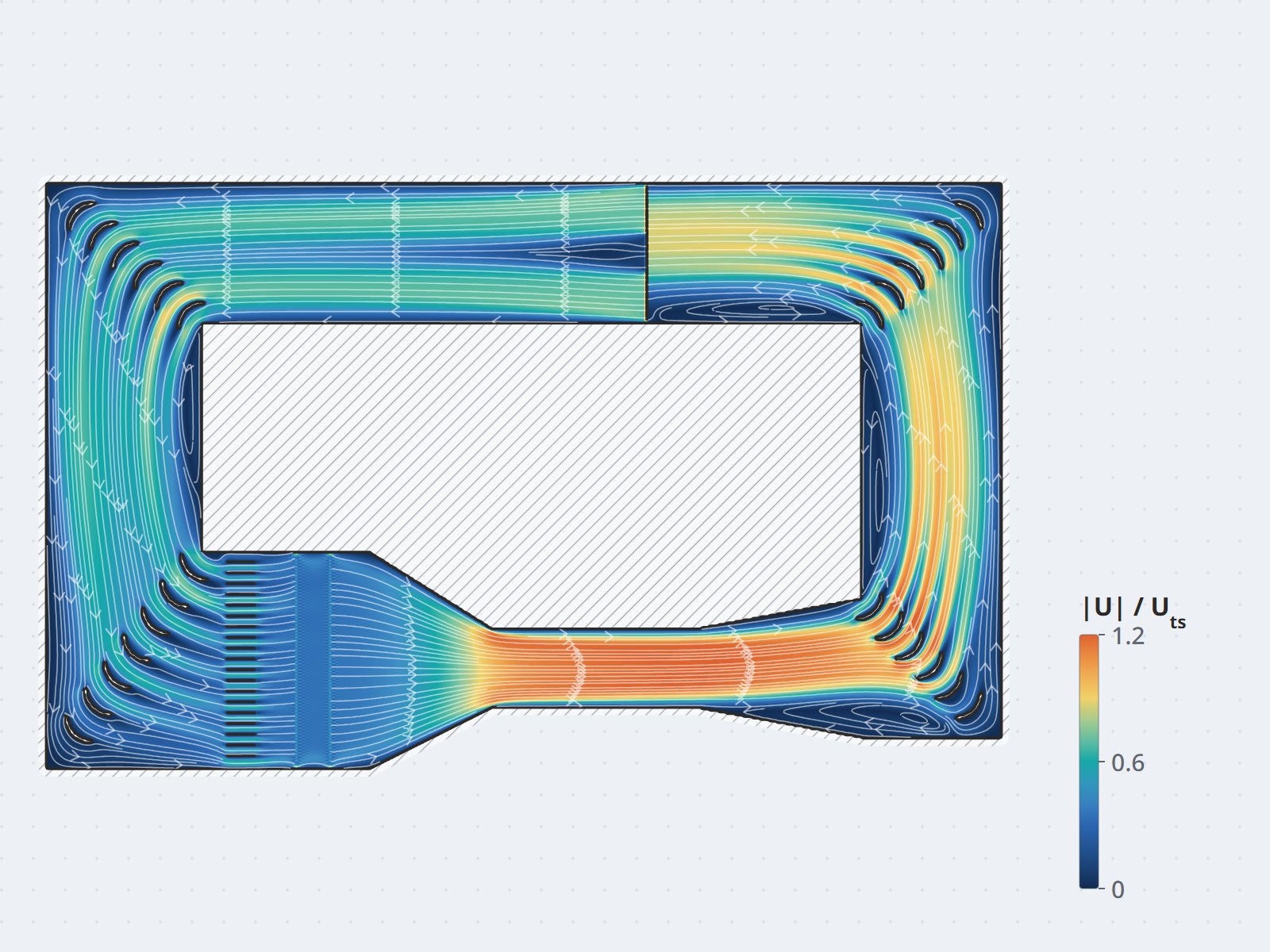
fan through settling chamber to test section in one model

Context & problem

The primary criterion for a wind tunnel is flow quality: measurements in the test section are reliable only when the velocity is uniform and the turbulence stays below a threshold. Deviations originate upstream of the test section — the fan, the diffuser, the settling chamber, the flow straighteners and the contraction.

The paradox of this kind of equipment: flow quality can only be measured once it has been built, yet the causes lie in dimensions that must be fixed at the start. Correcting it afterwards means cutting and re-welding the tunnel body.

Approach

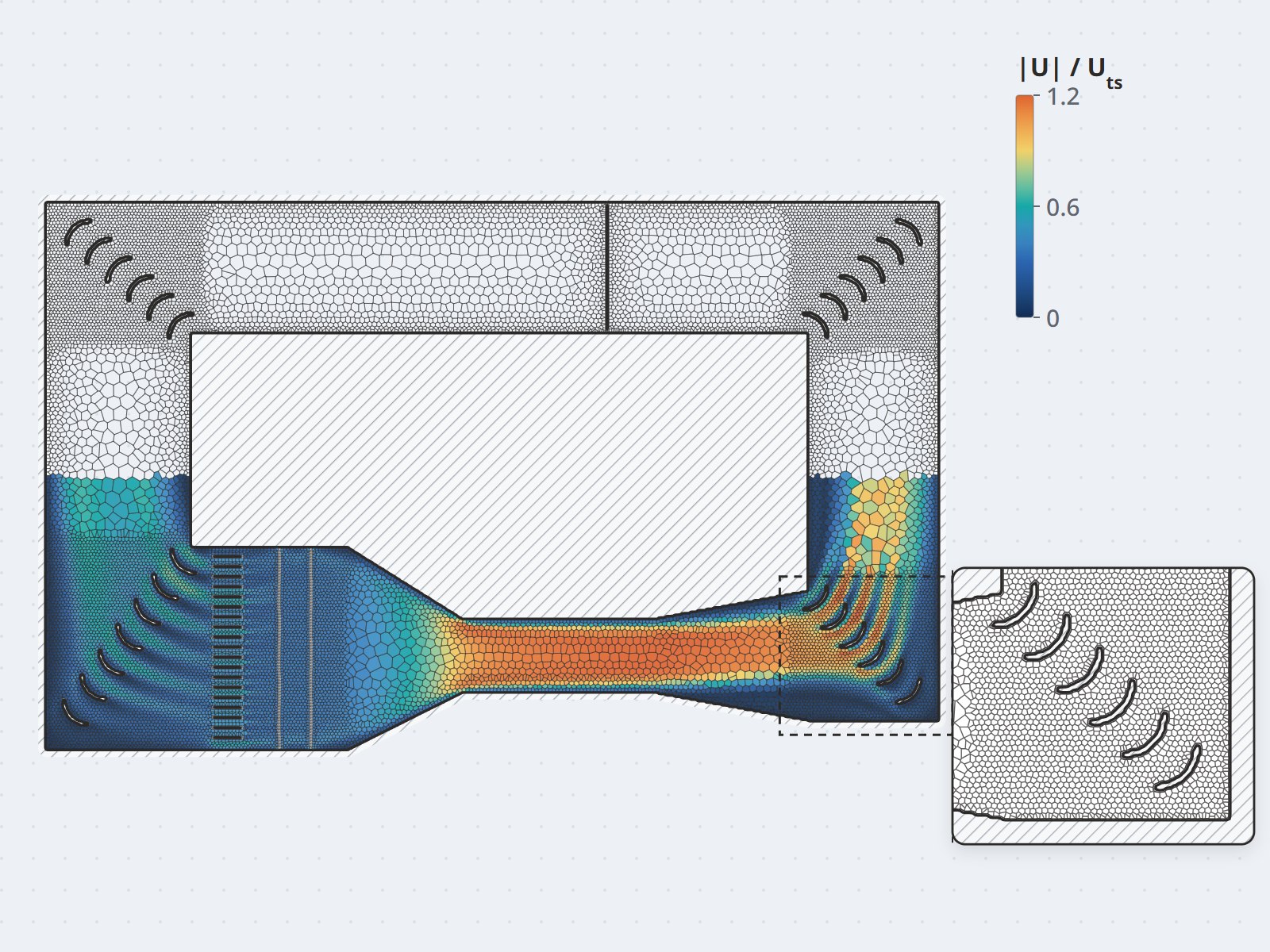
  • A full-circuit model: fan, diffuser, settling chamber, flow straighteners and contraction sit in the same model as the test section — because every defect in the test section is created upstream.
  • Criteria first, options second: velocity uniformity, turbulence and circuit pressure loss were defined as indices on the base design, so every option could be compared against every other.
  • A design optimization loop: contraction ratio, settling chamber length, straightener configuration and diffuser shape were studied on the same validated model.
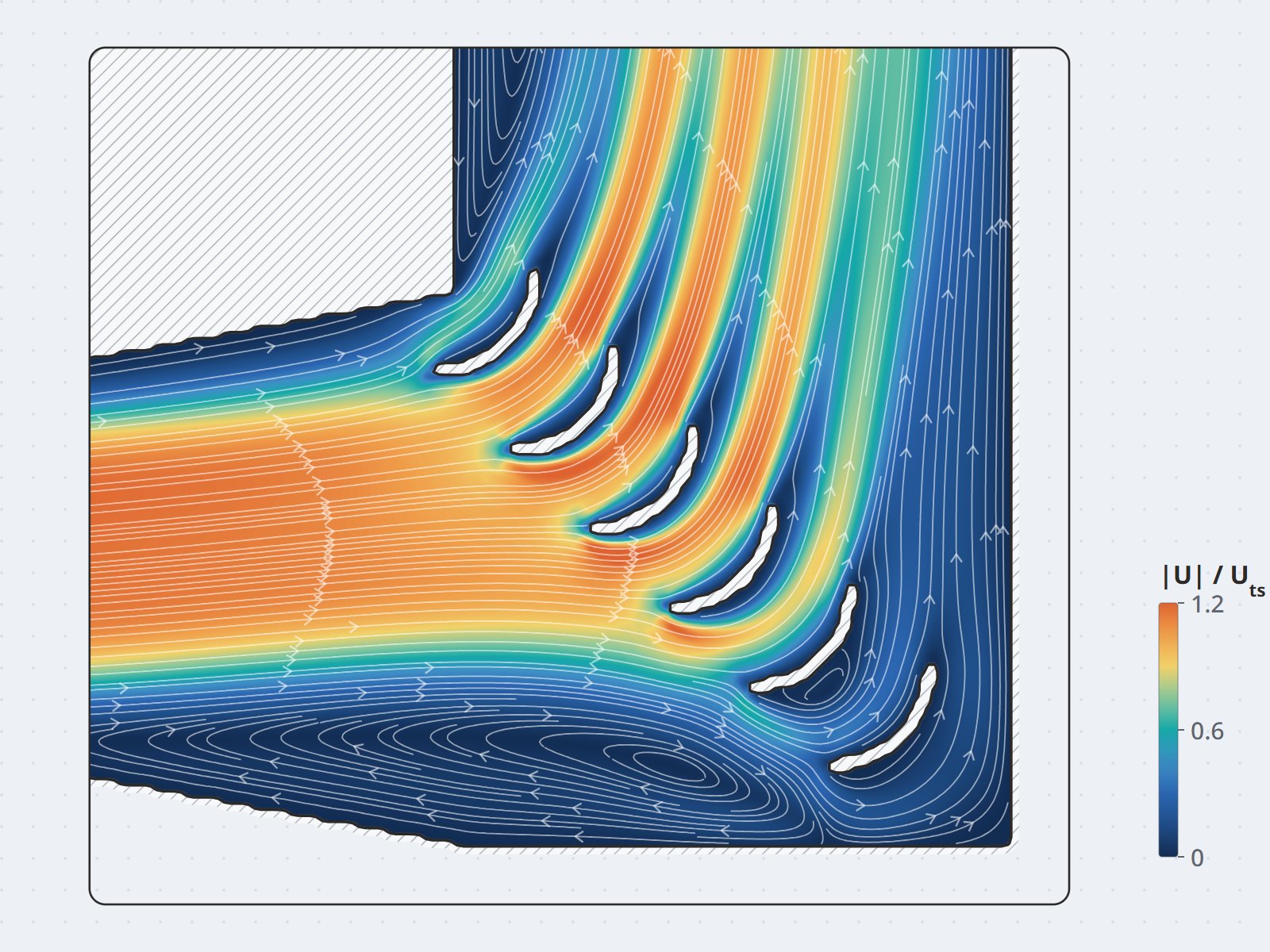
  • Wind Ring: the same approach applied to the performance assessment and design optimization of a ring-type device, within a Korean government research program.

Results

  • The geometry was settled before fabrication, on the basis of flow uniformity and turbulence indices in the test section rather than rule-of-thumb proportions.
  • The relationship between each design dimension and the resulting flow quality was made explicit — the basis for the owner to balance equipment length, fan power and the required flow quality.
  • Two consecutive projects showed the same methodological template is reusable across test equipment in general.

Value

These are the earliest projects in the CFDWAYS record and also where the later way of working took shape: define measurable criteria first, simulate the whole circuit instead of truncating the scope, and settle the geometry while the drawing can still be changed — before any steel is cut.
Project gallery

Wind Tunnel & Wind Ring project photo 1
/image/thiet-bi-wind-tunnel-02.jpg4:3 ratio (landscape)
Wind Tunnel & Wind Ring project photo 2
/image/thiet-bi-wind-tunnel-03.jpg4:3 ratio (landscape)
Wind Tunnel & Wind Ring project photo 3
/image/thiet-bi-wind-tunnel-04.jpg4:3 ratio (landscape)
Wind Tunnel & Wind Ring project photo 4
/image/thiet-bi-wind-tunnel-05.jpg4:3 ratio (landscape)

Designing equipment where flow quality is an acceptance criterion?

Wind tunnels, test chambers, calibration towers — flow quality should be settled on the model before the fabrication drawing is frozen.

Discuss your equipment

Related projects: HVAC & building environment · HVAC & building design industry · Automated design optimization