This opens a series of articles on “verification and validation of CFD models”, giving CFD engineers a deeper view of how simulation quality is assured. This article covers two main points:
- What are model verification and validation (V&V)?
- What does the CFD verification and validation process look like?
What are model verification and validation?
In CFD simulation, two steps are mandatory if the results are to be trusted: (1) model verification and (2) model validation [source]. A third step, uncertainty quantification, can be added to assess the stability of the model.
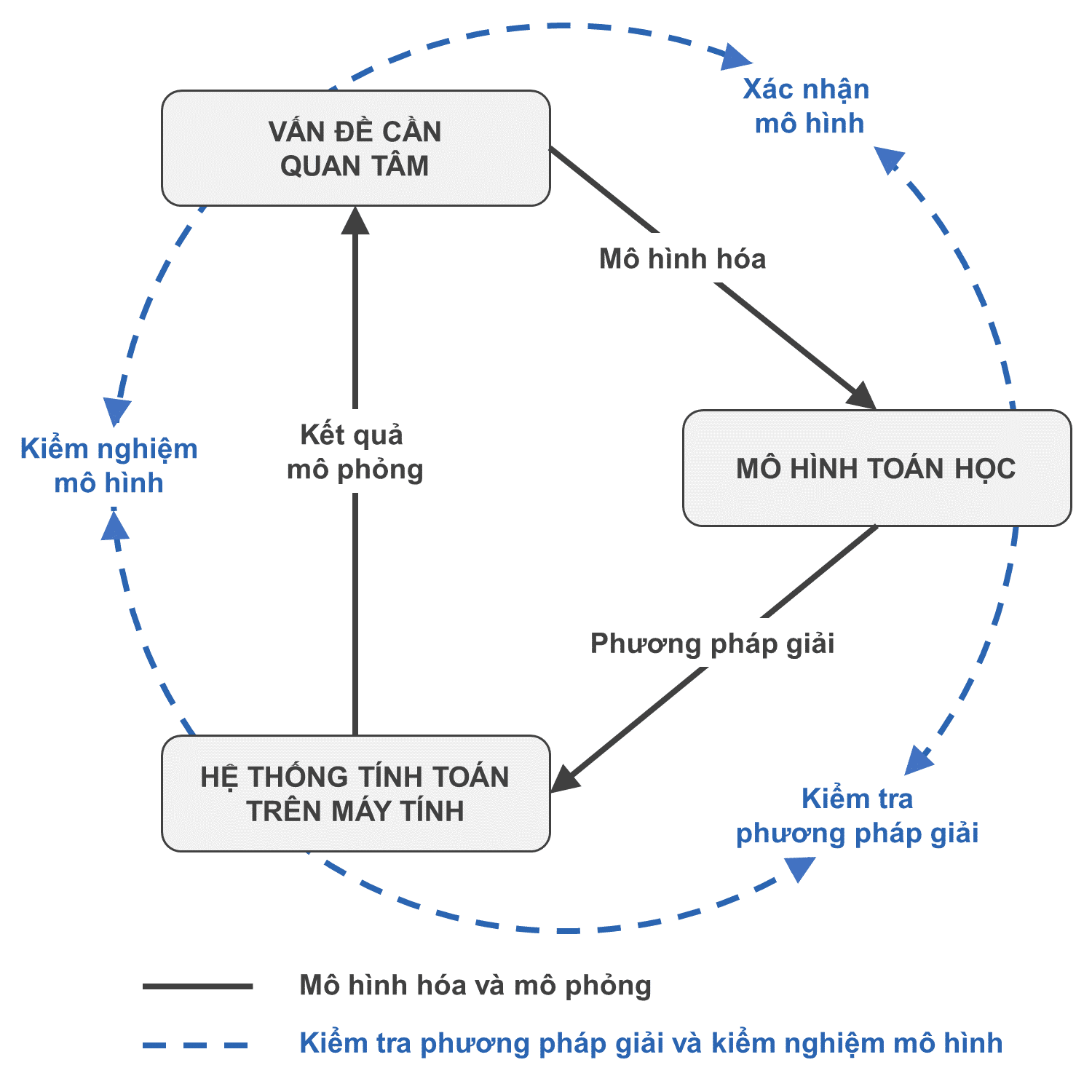
Verification and validation of a CFD model [source]
A CFD model* consists of three components: (1) a set of mathematical equations, (2) a discretization method, and (3) a numerical solution method.
- The set of mathematical equations describes the laws of nature: the conservation equations (mass, momentum and energy) and the constitutive equations (drag, lift, shear, buoyancy and so on).
- The discretization method divides space and time — continuous by nature — into discrete representative elements (the mesh). Discretization can be by finite element (FEM), finite difference (FDM) or finite volume (FVM). Each has advantages and drawbacks and is applied in different fields**. All discretization methods introduce a discretization error because the number of elements is finite (for example, computing the circumference of a circle by dividing it into short straight segments).
- The numerical solution method covers approximation and algorithms. Approximation reduces both the numerical error and the computing load — simplifying the space (for example reducing a 3D problem to 2D), the geometry, and the flow properties. The algorithms set the order in which the equations and elements are solved.
*Other CFD methods such as the spectral element method or Lattice Boltzmann are not covered in this article.
**FDM, for example, is often used in weather prediction; FEM in structural stress simulation (steel, concrete and so on); and FVM in flow simulation generally.
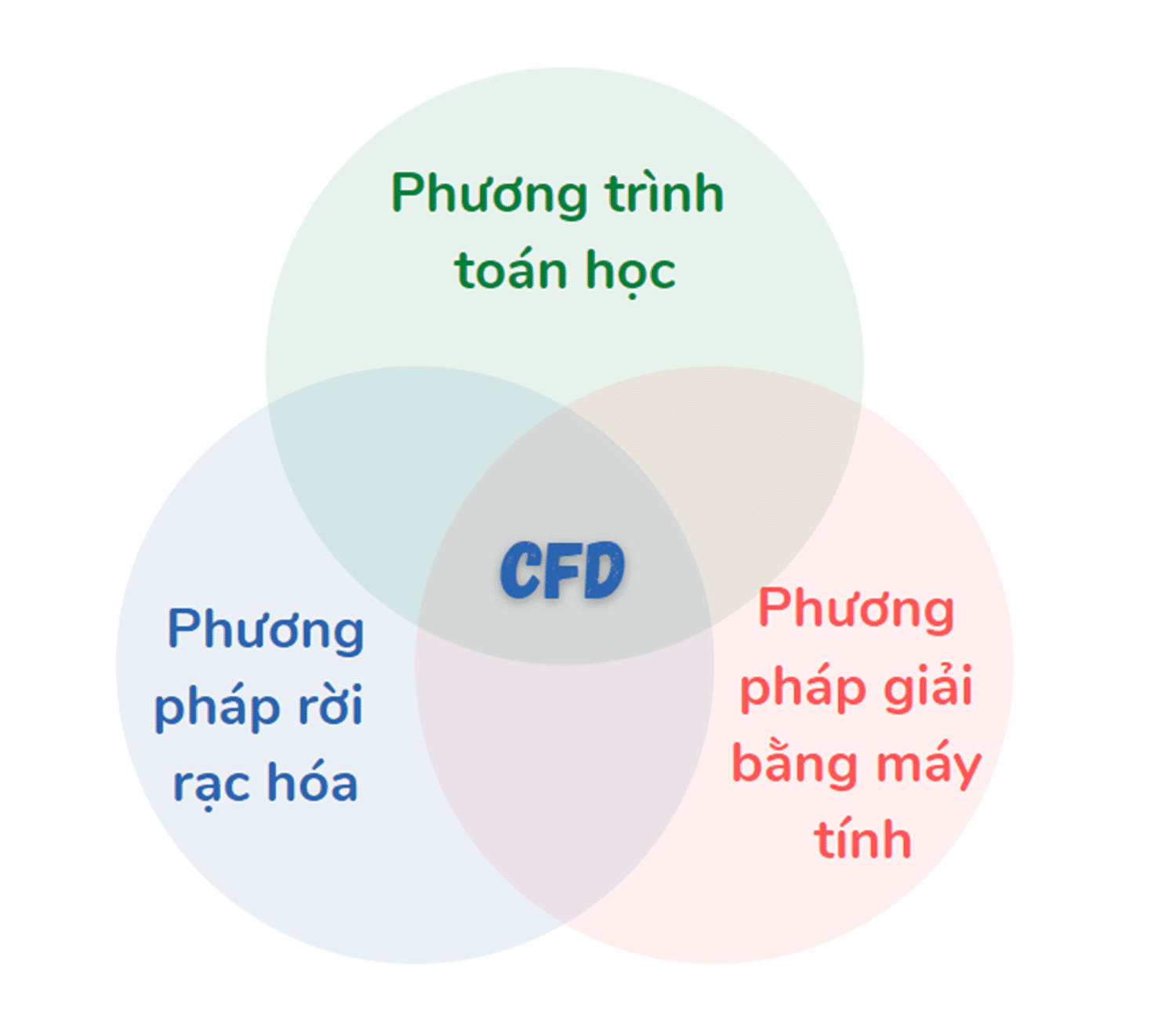
The elements that make up a CFD simulation
Verification means checking the errors introduced by the discretization and solution methods. Validation, carried out after verification, compares the CFD results as a whole against reality (experiment). Put simply:
Verification = are we solving the equations right?
Validation = are we solving the right equations?
For example, in turbulent flow simulation, verification may cover the choice of mesh density and mesh structure, while validation covers comparing different turbulence models (LES, k-epsilon, k-omega) against experiment.

Illustrating the concepts of verification and validation [source]
Verifying a CFD model
Verification is mandatory and is the first step in making sure a CFD model is correct. Without it, even the right mathematical equations can still produce wrong numerical results.
To our knowledge, there is no specific standard for verification. In CFD, however, it can cover the following tasks:
- Are the mesh count and mesh quality sufficient?
- Is the mesh structure (for example the near-wall boundary layer) enough to capture the physics?
- Are there coding errors in the program?
- Checking the errors of the discretization method (mesh type, mesh quality, mesh structure and so on) and the solution scheme (1st-order upwind, 2nd-order upwind, W-cycle and so on).
- Is the residual per iteration too large?
- Are there mistakes in reporting the results (wrong variable, wrong location and so on)?
- Where possible, compare the numerical solution (approximate) with the analytical solution (exact).
Checking mesh count and mesh quality will be covered in detail in the following articles.
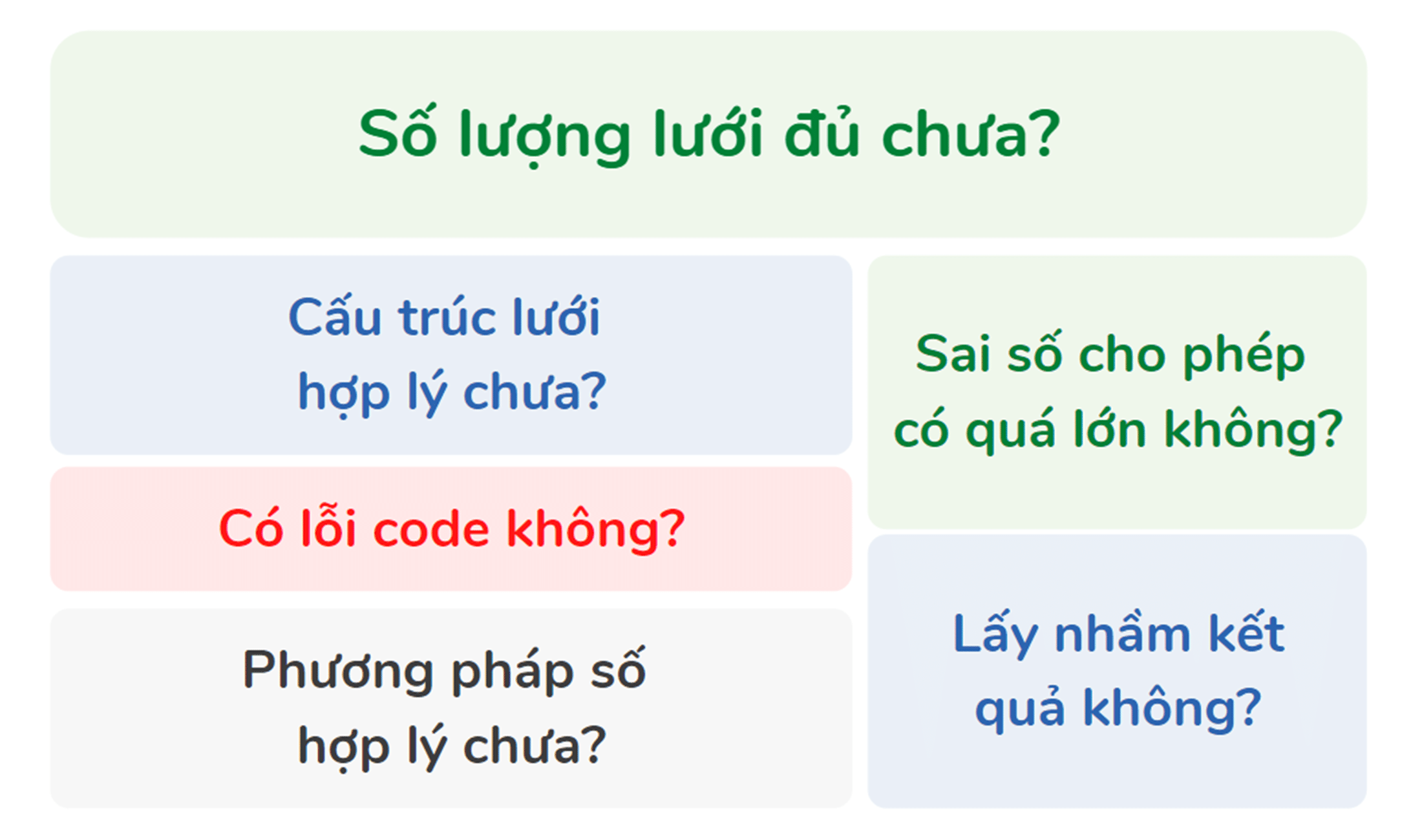
Verification tasks in CFD simulation
Validating a CFD model
A model is at heart a set of mathematical equations describing and simplifying what happens in nature. Developing those equations always rests on a range of assumptions (compressible or incompressible flow, for instance). Putting too many equations into one model can make the system hard to solve, because the assumptions themselves are not fully understood (a turbulence model, for example, has no meaning for flow through a porous medium). Each CFD model is therefore valid only within a defined range of application, and when a model is developed for a particular problem, validation follows verification.
In principle, the more parameters validated and the wider the range of operating conditions covered, the better. In practice the validation process has to fit the budget and the purpose of the project. Like verification, validation has no established standard. Some points worth noting:
- Validate the important and easily measured parameters first (pressure, velocity, temperature, phase fraction, species composition). The more parameters validated, the more trustworthy the model.
- The scale of validation:
- fundamental (for example the drag on a single solid particle under ideal conditions),
- simulated (for example the lift on an isolated aerofoil in a wind tunnel), and
- real (for example the lift on a whole aircraft in real conditions).
- How the validation is assessed:
-
- averaged over volume and time,
- averaged over time but resolved along one particular direction,
- by oscillation frequency for a dynamically balanced system, and
- in real time at every point in space.
Validation for a specific example will be covered in detail in the following articles.
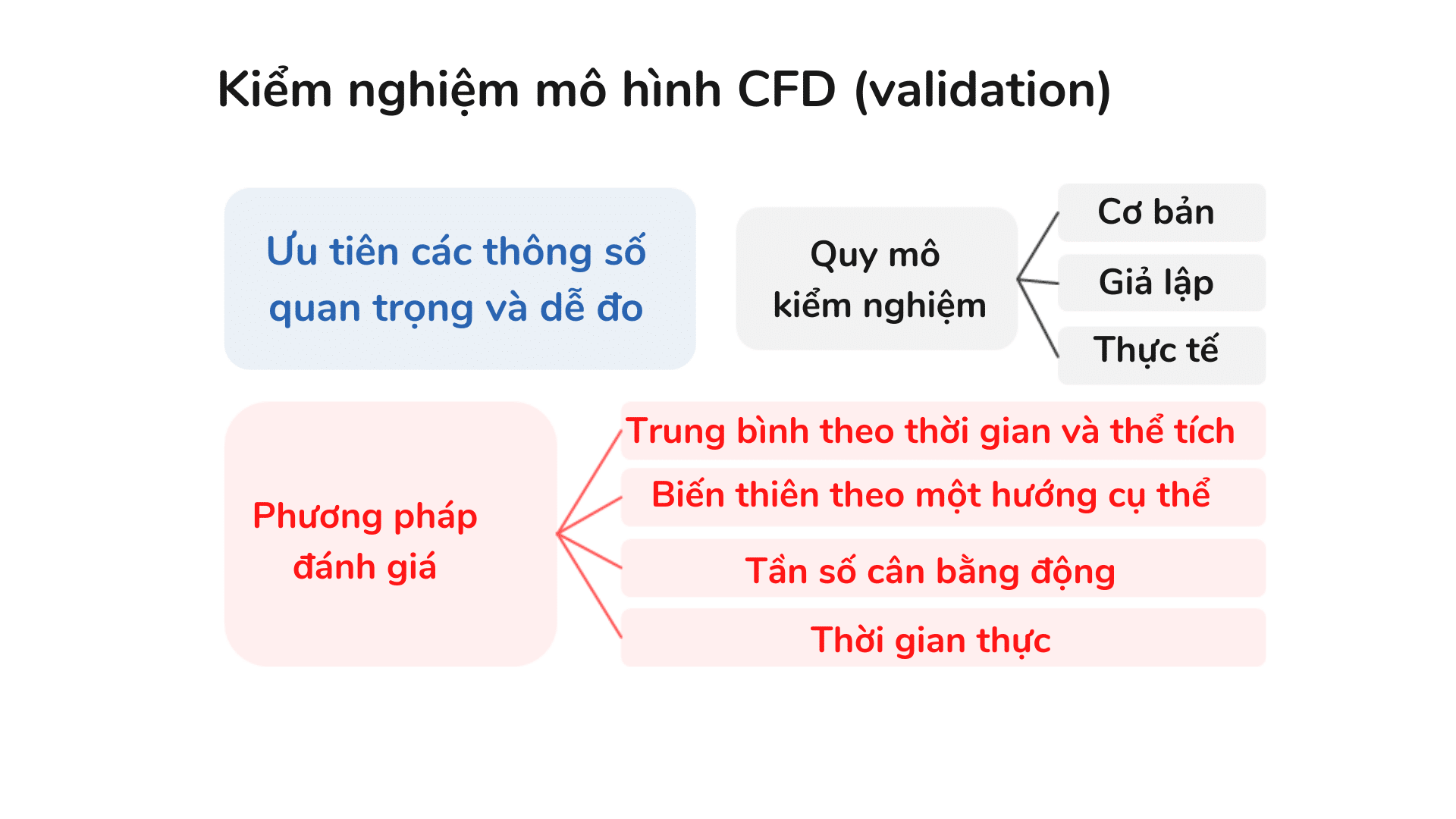
The elements of CFD model validation.
Conclusion: verification and validation help ensure a CFD simulation is correct
This article has set out the purpose and definitions of CFD model verification and validation, and shown that both steps are necessary to ensure a CFD simulation is correct. Although there is still no specific standard for either process, we have tried to gather our own experience so readers get a clearer overall view of the subject.