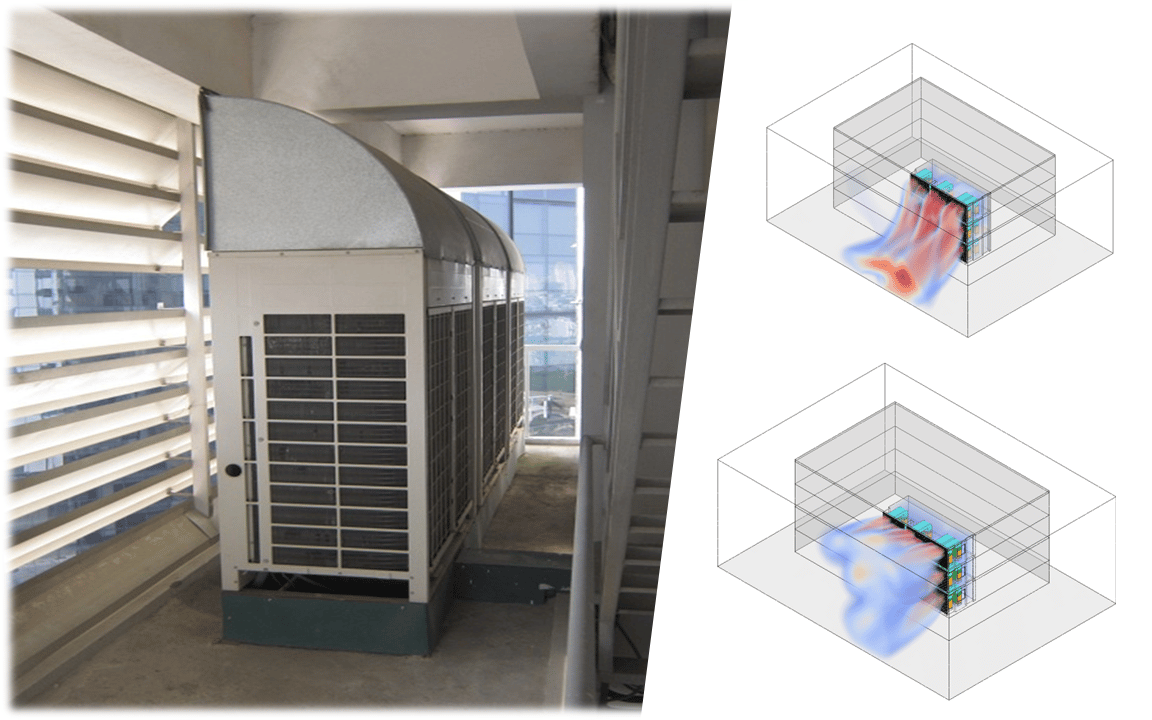
This is the first post on the CFDWAYS blog. It gives an overview of CFD simulation — also called flow simulation — and its common applications across different fields.
Why is CFD simulation needed?
Before answering “what is CFD simulation?”, it helps to answer what is probably the more important question first: “why is CFD simulation needed?”. Estimation formulas and empirical handbooks normally make it easy for engineers to arrive at the basic dimensions of industrial equipment. But as technology demands rise, basic handbook calculations alone are no longer enough to improve the performance and safety of equipment and processes. New supporting tools have emerged, and CFD (short for Computational Fluid Dynamics) is one of them. The figure below gathers the main reasons CFD has been so widely used in recent years.
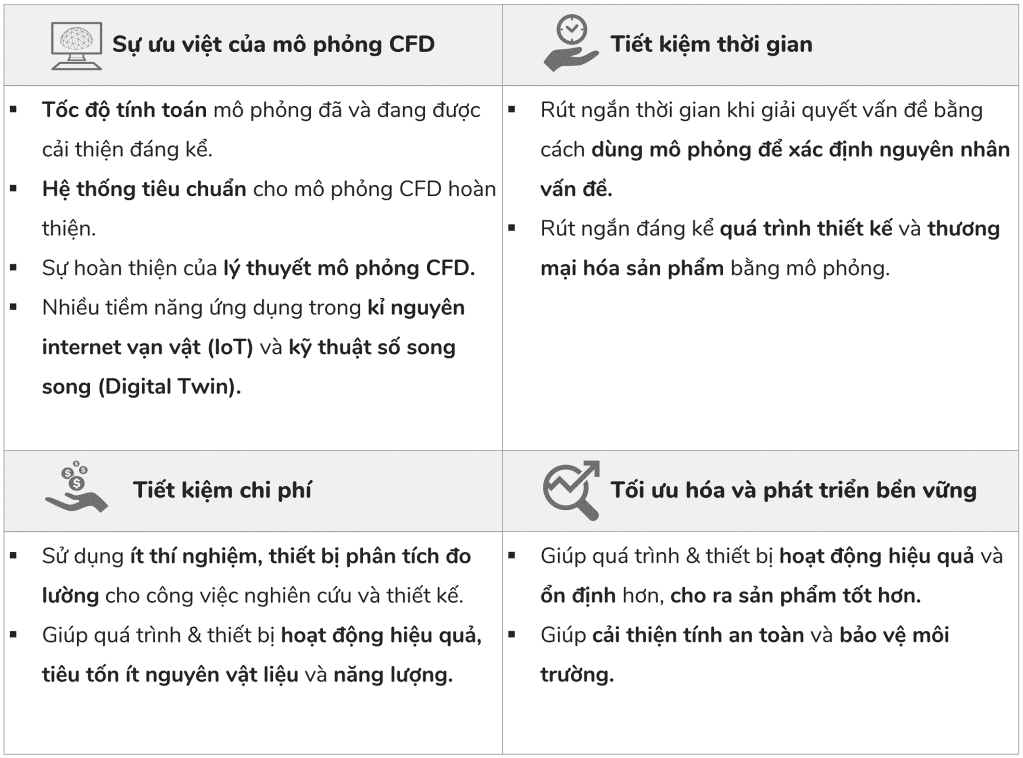
The main reasons CFD has become so widely used recently
In the IoT field, many large organizations and corporations — NASA, General Electric, Azure, Siemens, IBM, Cisco, Oracle, QiO Technologies, Dassault Systèmes, ANSYS and Bosch — now combine CFD with IoT to generate the large volumes of data (big data) that machine learning models need, driving the development of the digital twin field.
In this article we look at:
– What is CFD simulation?
– How is the CFD workflow carried out?
– What are the major applications of CFD in industry and everyday life?
What is CFD simulation?
CFD simulation (also called fluid dynamics simulation*) is a branch of fluid mechanics that uses numerical analysis to solve — describe, analyze and predict — problems involving the motion of fluids, gas or liquid [source]. The equations describing that motion are usually very hard to solve by hand, so they are solved on a computer. The results give a deep understanding of the nature of the flow and its effect on the process being studied. CFD simulations can be run with commercial codes such as FLUENT and CFX from Ansys, STAR-CCM+ from Siemens, or with open-source codes such as OpenFOAM. The figure below illustrates CFD used to assess the air velocity distribution in an underground car park.
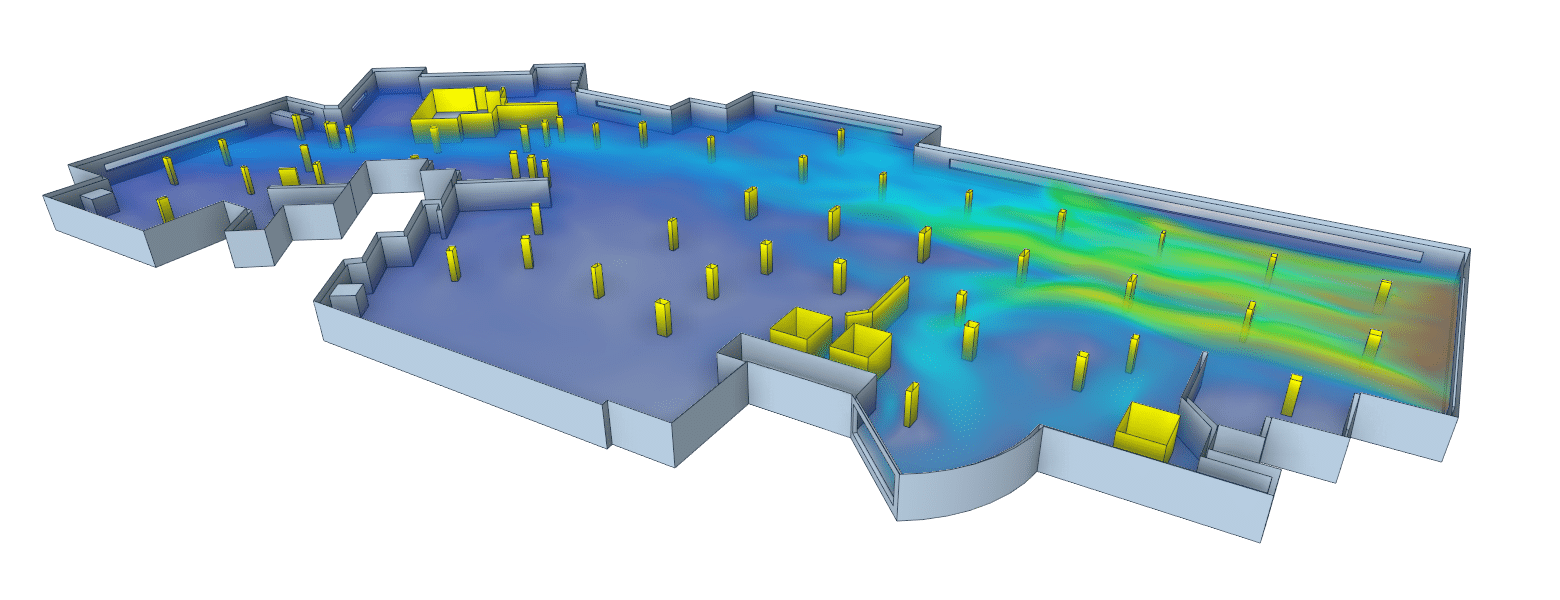
Air velocity distribution in an underground car park (red marks the highest velocities)
In 1922 Lewis Fry Richardson (1881–1953) laid the conceptual foundation for CFD with his book “Weather Prediction by Numerical Process”. It was not until 1967, however, that the first three-dimensional CFD models of an aircraft wing were published. CFD has been used widely in NASA and Boeing research ever since. The foundation of most CFD problems is the Navier–Stokes equation, which defines single-phase flow (gas or liquid, but not both at once). Simplifying assumptions applied to its terms give other equations: the Euler equations, Stokes flow, Fanno flow, Rayleigh flow and so on. Conversely, adding concepts such as granular temperature — the fluctuating energy of solid particles — allows gas–solid multiphase systems to be solved much like a continuous flow.
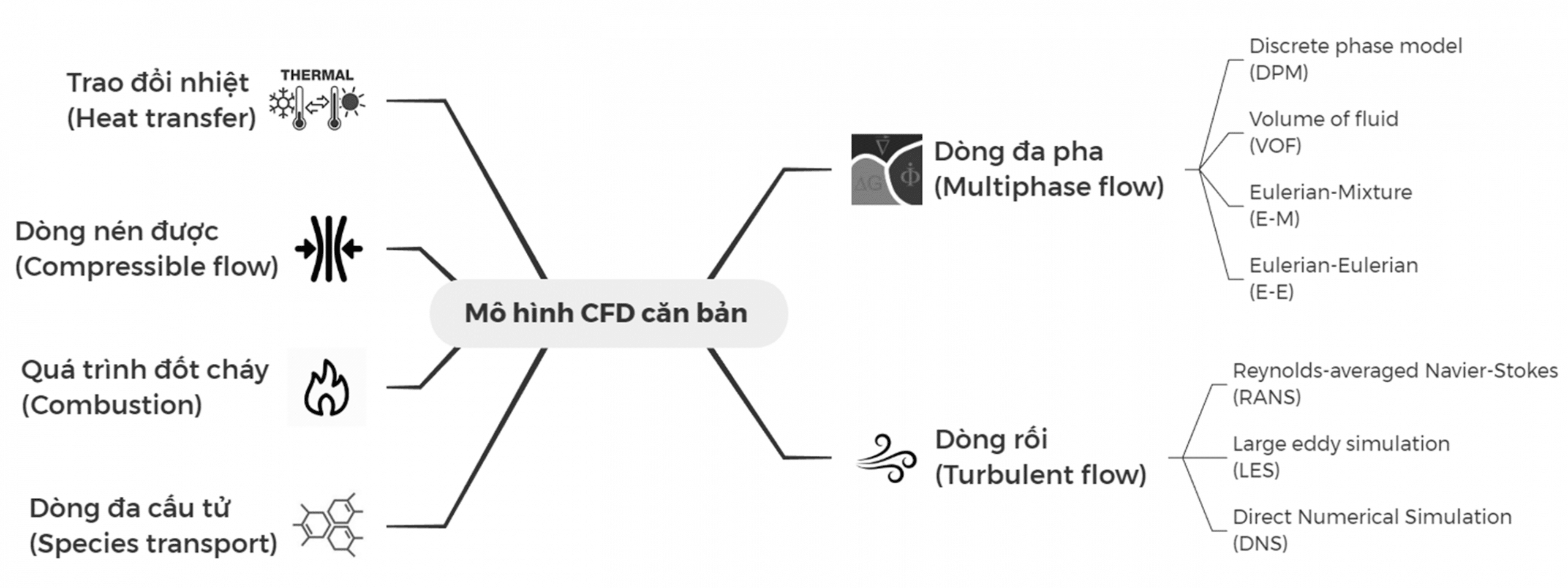
Classified by the type of mathematical model, the fundamental problems of CFD today comprise: (1) basic and turbulent flows inside and around bodies, (2) reacting combustion flow, (3) compressible flow, (4) heat transfer, (5) multiphase flow with particles dispersed in a continuous phase, (6) multiphase flow with continuous phases and interfaces, (7) interaction between the flow and the body it acts on, (8) multi-species flow, and (9) interaction between fluid dynamics and molecular motion or magnetic fields.
The fundamental models in CFD simulation
The CFD simulation workflow
There is no clear standard for the CFD workflow, but based on experience and the internal documents of Los Alamos National Laboratory (USA) [source], it can be divided into two main forms:
+ The basic workflow for users:
To make the tasks easy to follow, the basic CFD workflow splits into: (1) creating the geometry, (2) simplifying it, (3) discretizing the computational domain — meshing, (4) setting up the model parameters, (5) running the simulation, (6) checking numerical convergence, (7) simulating the different cases, (8) analyzing the results, and (9) reporting.
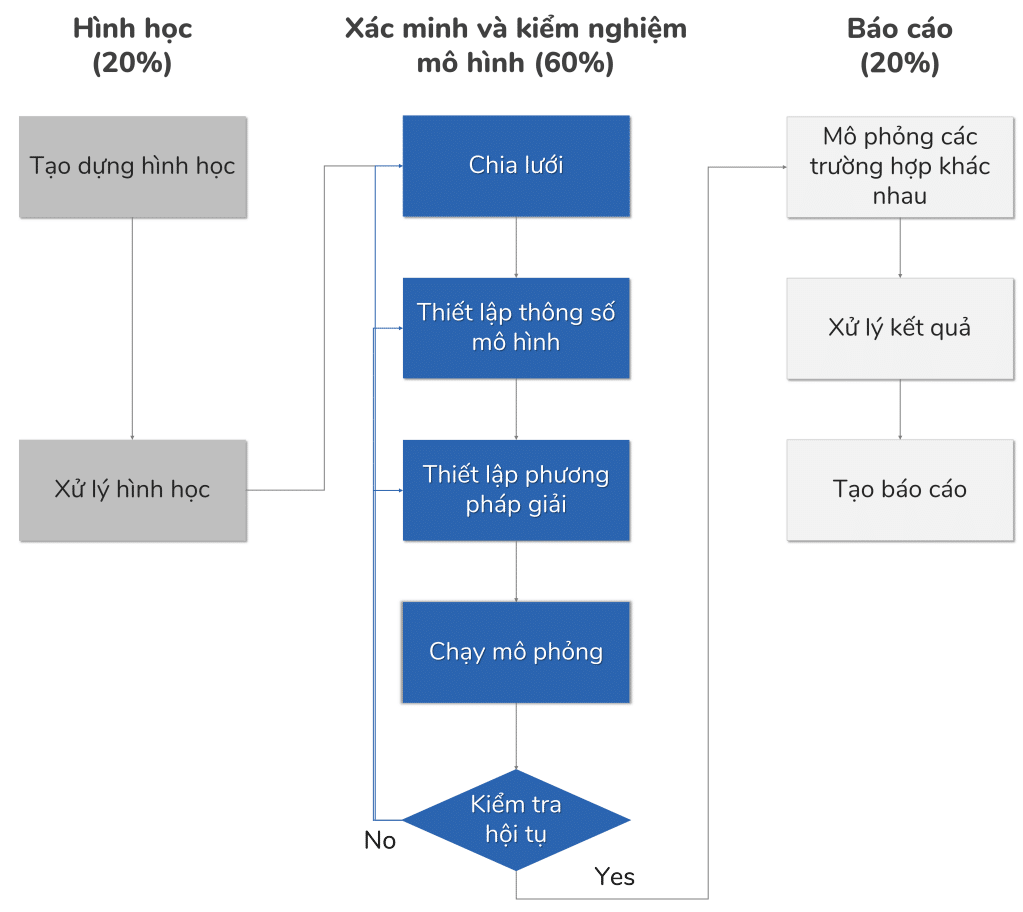
The basic workflow for a CFD user
+ The advanced workflow for engineers:
This combines the basic workflow with a model assessment process: verification and validation.
-
Verifying a CFD model:
Models rest on mathematical equations, but solving them on a computer relies on numerical methods. The purpose of verification is to minimize the errors those numerical methods introduce. In CFD it covers: (1) the mesh-independence test, (2) screening for algorithm bugs, and (3) the numerical scheme. The verification process is described in detail in a later article.
-
Validating a CFD model:
Validation compares the CFD results against real measurements and is used at almost every step of model development. Its scale can be: (1) validating part of the system under limited laboratory conditions, (2) validating the whole system under real conditions, (3) validating several parameters across different operating ranges, or (4) validating in real time. The more comprehensive the scale and the more parameters validated, the more the model can be trusted.
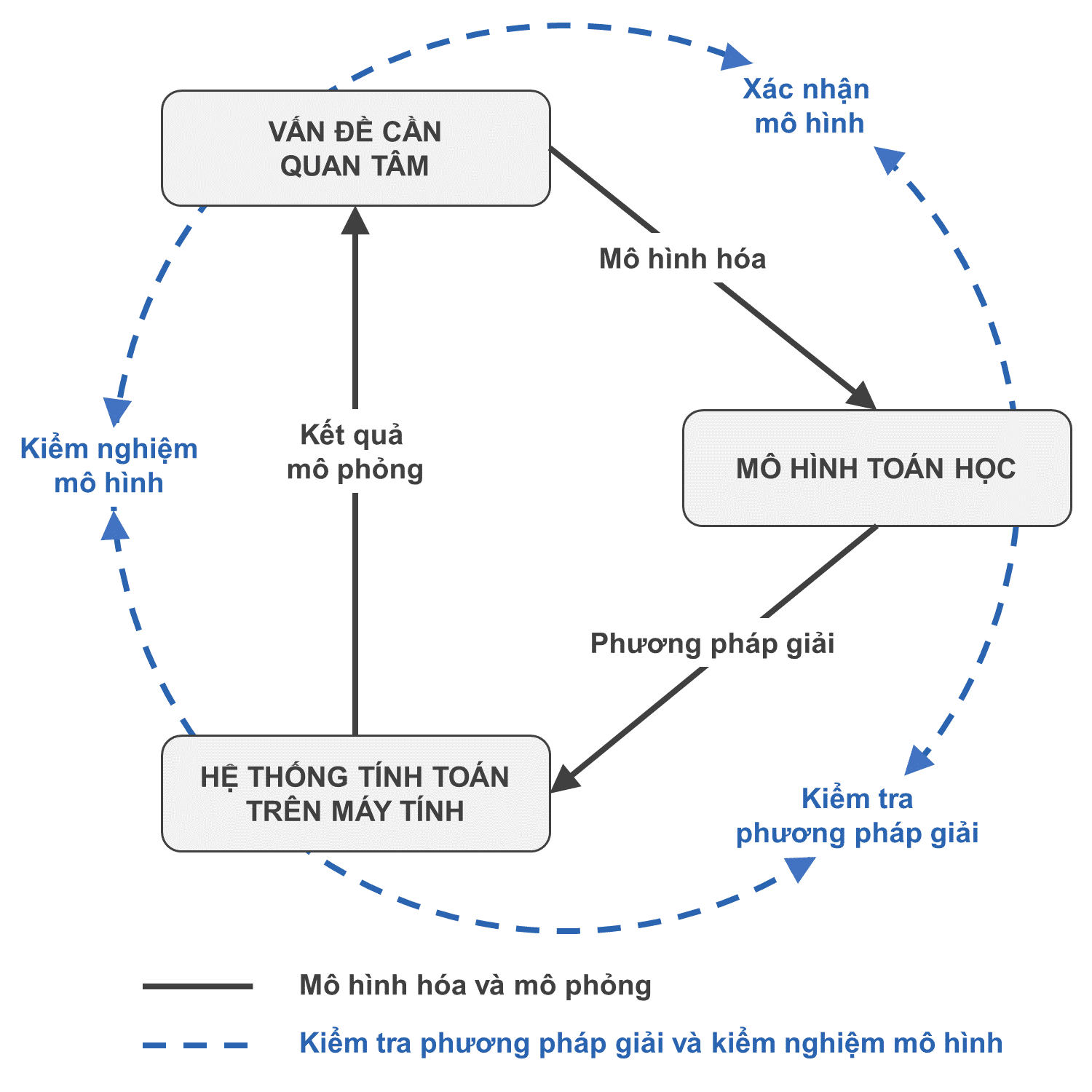
A summary of CFD verification and validation
Practical applications of CFD simulation
It is hard today to find an industry where CFD plays no part. Its most common industrial applications fall into these groups:
-
Aerospace:
One of the first industries to apply CFD. A prominent example is optimizing the airfoil profile of a wing.
-
Automotive:
From simulating combustion inside the engine to computing the drag on the body shell, CFD contributes a great deal to the R&D of manufacturers such as Mercedes, Tesla and BMW.
-
Construction:
Assessing comfort indices inside and around buildings. Simulating and optimizing heating, ventilation and air conditioning — HVAC — and refrigeration systems.
-
Chemical and oil & gas systems:
Simulating reactors (CSTR mixing, fluidized beds, bubble columns and so on), distillation columns, absorption columns, piping systems and waste-heat boilers.
Pumps, fans, compressors, turbines, centrifugal separators (cyclones), phase separators and heat exchangers.
-
Biomedical and pharmaceutical technology:
Designing microfluidic and micromixing devices, and simulating blood flow in vessels.
-
Weather and climate:
Models predicting weather and natural disasters.
-
Marine and shipbuilding:
Models of wave interaction and hull stress, and models predicting hull resistance.
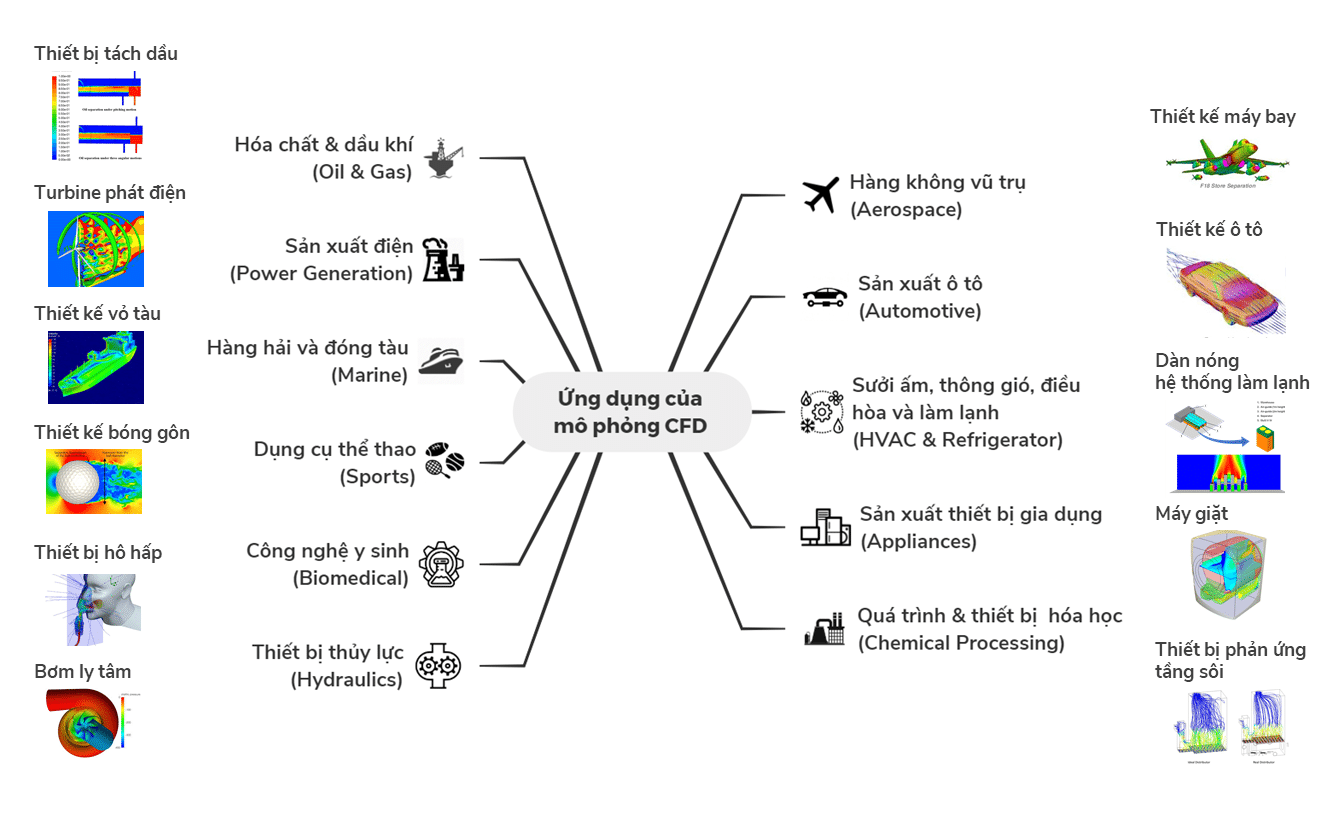
Practical applications of CFD simulation
Conclusion: CFD simulation is the direction of travel
In the fourth industrial revolution, CFD is one of the trends steadily changing both the classical design process engineers follow and the way clients look at it, in the direction of sustainable development. CFD is developing at breathtaking speed in the advanced economies — the question is whether Vietnam will keep up with what is being achieved.
Follow the CFDWAYS Blog for further articles on CFD and its specific applications in industry, research and everyday life.
* Some sources use the phrase “computational liquid dynamics”, which is not quite right: the field covers the motion of gases too, and even of solids in granular or powder form — all of which we can call fluids. Talking about CFD generally means talking about flow simulation, because CFD problems can only be solved when the material in question is in motion (which is exactly why we call it a fluid — something that can flow). CFD is therefore best called “computational fluid dynamics”, “flow dynamics simulation”, or, in full, “predicting the motion of a fluid and the forces acting on it through calculations using numerical methods (mostly programmed and solved on computers and supercomputers)”.