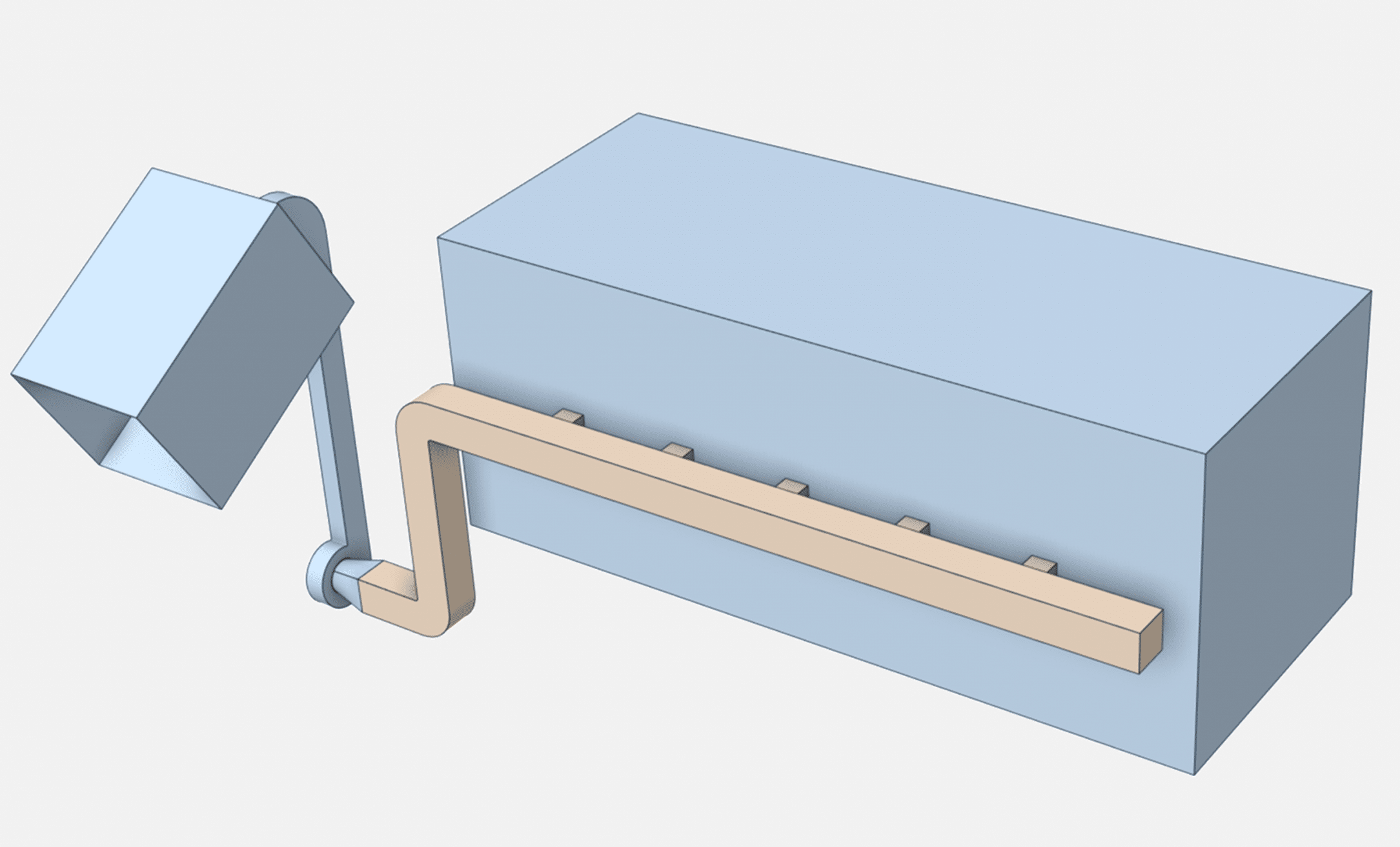
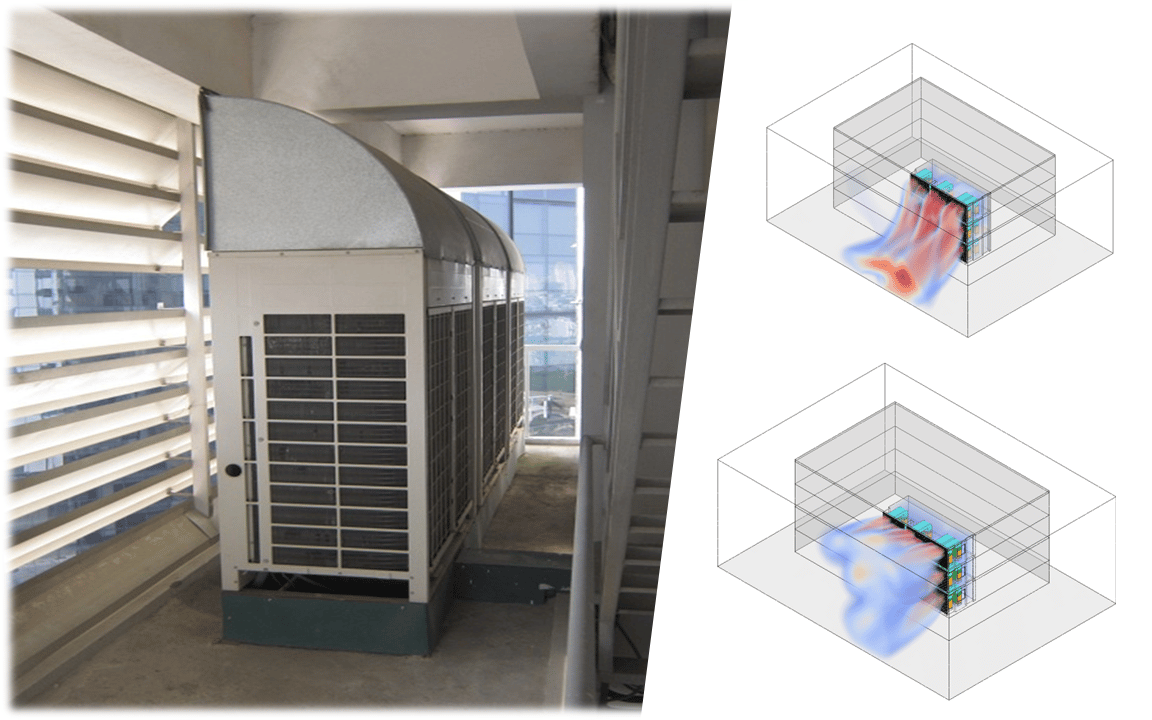
In tropical countries such as Vietnam and in subtropical regions, temperature and humidity that run too high or too low are a challenge for raising livestock and poultry. Changes in the barn microclimate can cost the farmer money. Controlling that microclimate is therefore an important factor in raising productivity.
Today, CFD simulation is used in the design calculations of ventilation systems that control the microclimate inside livestock barns (source). This article focuses on applying CFD to assess ventilation effectiveness in a commercial poultry house.
How environmental conditions affect livestock
Every species has an optimal temperature range for living comfortably (for chickens, 16–25 ºC). When the temperature is too high or too low the animals suffer heat stress. Heat stress lowers their resistance to disease, reduces fertility, meat yield and milk output, lowers conception rates, raises the risk of miscarriage, and can kill the animals — all of which costs the farmer money (source).
Heat stress is the state in which the ambient temperature differs greatly from the animal's thermoneutral temperature, disturbing its physiology. Externally, heat stress is driven simultaneously by air temperature, air humidity and air velocity. Those three are the basic components of the barn microclimate, which is why controlling that microclimate matters so much in preventing heat stress. Controlling it also reduces the risk of disease outbreaks and removes odors and noxious gases generated inside the barn.
Applying CFD to barn ventilation system design
The engineering solution for controlling the barn microclimate is a negative-pressure ventilation system (extract fans) together with adiabatic evaporative cooling (cooling pads), plus auxiliary systems for dust, odor and heat removal. Many studies have assessed how barn ventilation systems perform in order to judge whether the microclimate is suitable. The calculation methods commonly used are:
- Fuzzy logic.
- Data mining.
- Geostatistics.
- Computational Fluid Dynamics (CFD) simulation.
CFD has been applied across many different fields. Today it also plays an important role in designing barn ventilation. The benefits it brings include:
- Analyzing the air flow (temperature, humidity and velocity) inside the barn for each type of animal.
- Testing barn design options and extract fan placement.
- Assessing how the barn microclimate changes as the outdoor environment changes with the seasons.
- Optimizing the barn ventilation system.
- And so on.
CFD assessment of ventilation effectiveness in a commercial poultry house
To illustrate these benefits, consider a simulation of a commercial poultry house (source). The house (40 m long, 9.2 m wide, 2.5 m high) is in operation and contains 4 rows of cages, each row 4 tiers high, with 3 negative-pressure extract fans and 12 cooling pads (see the figure below). Two cases were simulated: (1) only the central extract fan running, and (2) all three extract fans running together. The simulation conditions were:
- The outdoor temperature, and the initial temperature inside the house, were 30 ºC.
- The outdoor humidity, and the initial humidity inside the house, were 60%.
- The air inlet vanes were fixed at 30º to the vertical.
- All windows were closed.
- The envelope was well insulated (no solar radiation effect).
- Heat and moisture released by the birds were taken from experimental statistics (source).
- The resistance of each cage was taken from a CFD simulation of the cage itself (source).
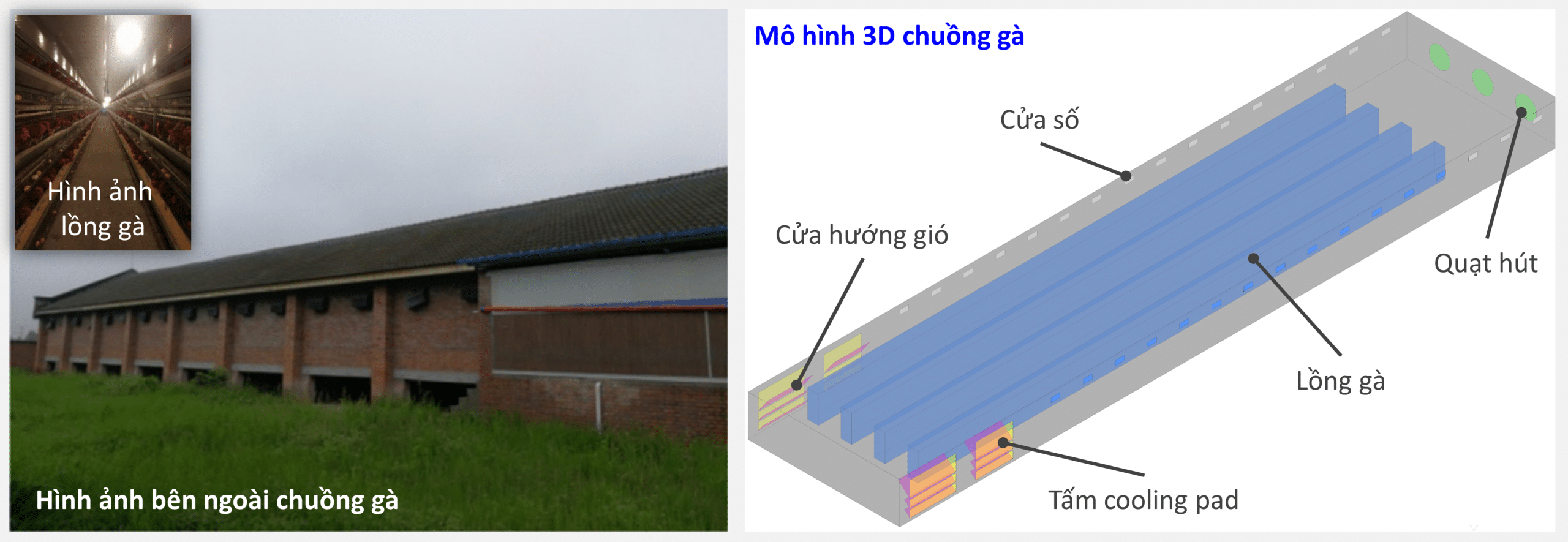
A photograph and the 3D geometry of the commercial poultry house (source)
For poultry, the optimal barn temperature range is 16–25 ºC, with 24 ºC the best value (ASABE standards). The CFD results for this house show temperatures above 26 ºC near the far end (close to the extract fans) in both cases. The temperature distribution inside the house was roughly 20–28 ºC in case 1 and 20–26 ºC in case 2. Case 2 therefore gives a better temperature distribution (closer to the ASABE standard) than case 1. Even so, both cases give an uneven temperature distribution, with a 5–10 ºC spread.
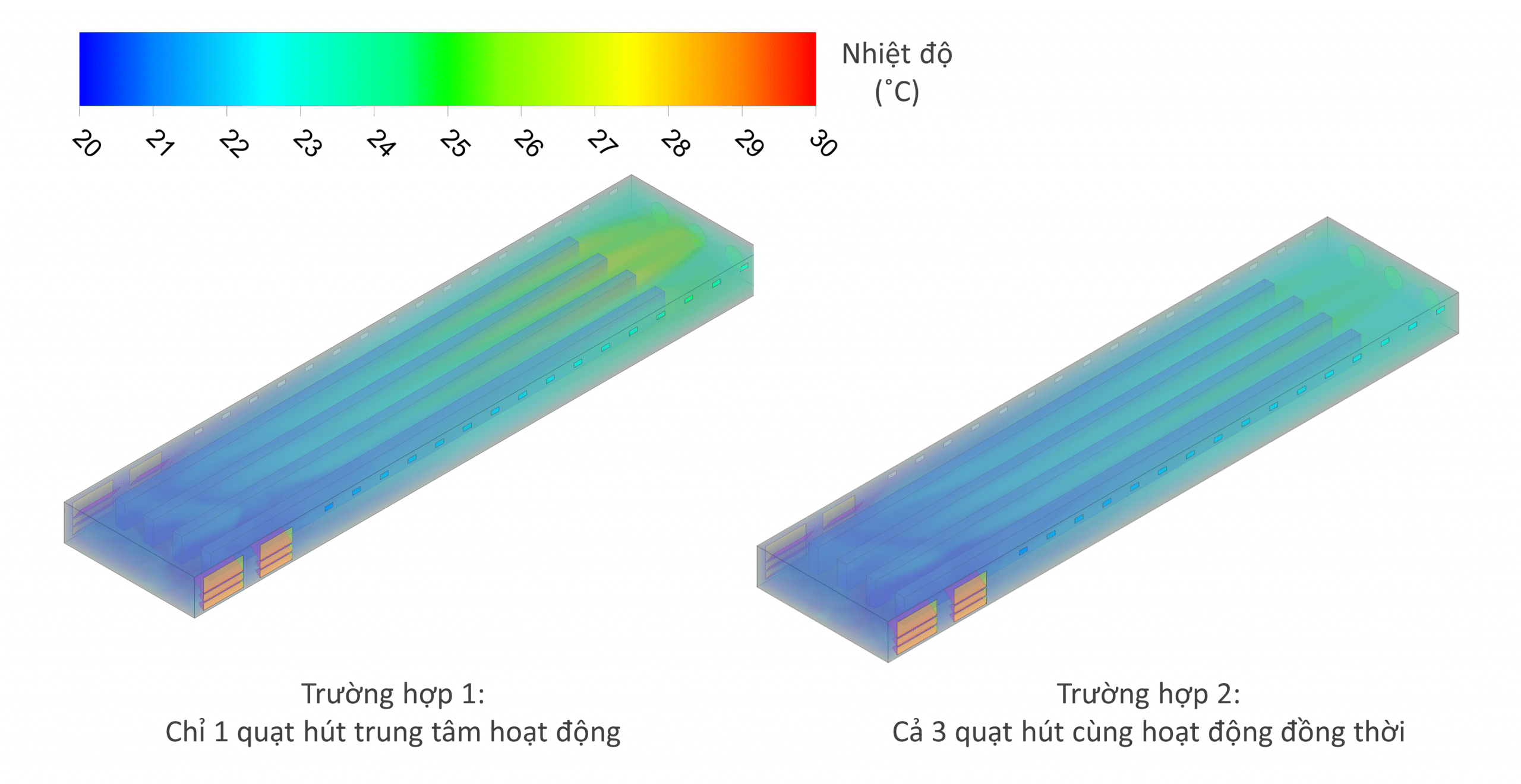
Temperature distribution inside the poultry house in the two cases
Under the ASABE standards, humidity above 60% has an adverse effect on the birds' growth. The CFD results show humidity inside the house is fairly high (> 75%) in both cases, with a spread of about 30% and an uneven distribution. This result agrees with field measurements.
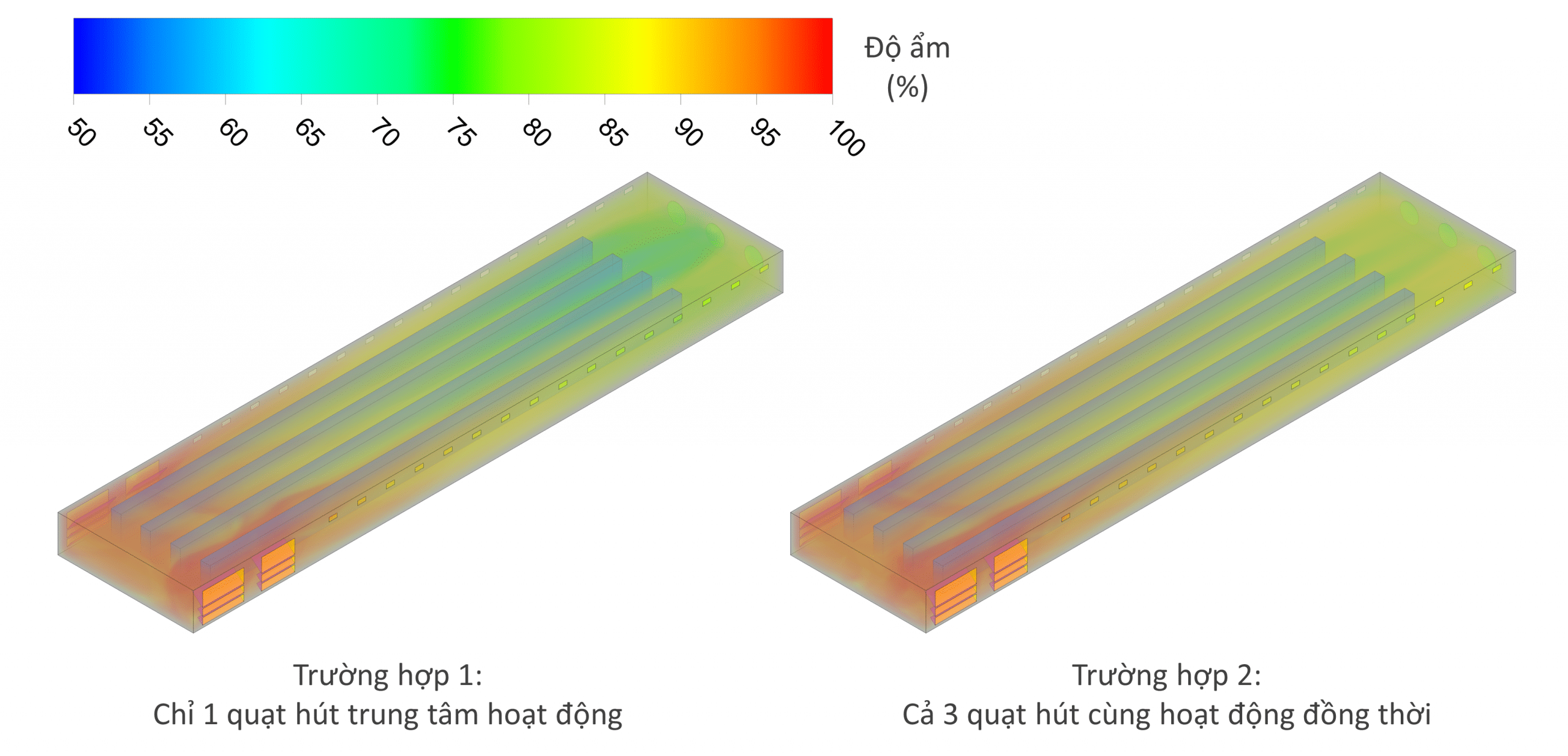
Humidity distribution inside the poultry house in the two cases
Beyond temperature and humidity, other factors such as air velocity and the distribution of dust, odor and noxious gases can also be analyzed by CFD. Overall, with the current design the microclimate inside the house is not optimal for the birds' growth. Running all three extract fans not only fails to secure an optimal microclimate but also raises material, installation and operating energy costs. By changing the position of the cooling pads, the opening of the inlet vanes and the placement of the extract fan, the microclimate can be optimized using only one extract fan (see here). All of those design options can be tested at the design stage with CFD.
Conclusion
CFD is an effective and reliable way to predict air flow properties (temperature, humidity, velocity, dust, odor and noxious gas concentrations) under different operating conditions (extract fans, cooling systems) and for different weather and seasons. It therefore helps optimize the barn ventilation system so the internal microclimate stays in the best condition for each type of animal.