Context & problem
For a CNG-fired roller kiln in the ceramic tile industry, the burner determines the operating cost for years: an unsuitable burner keeps fuel consumption high for the life of the kiln.
Two more risks come with it. Incompatibility: a burner that does not match the kiln causes
inefficiency and forces costly modifications after installation. Safety: flashback and blowout in
operation are both a safety issue and a source of line interruptions.
A manufacturer's catalog does not show which burner suits a specific kiln, and trialing every burner on an operating kiln is not feasible.
Approach
- Criteria first, scoring second: compile the burner data, analyze the bottlenecks, then agree on an evaluation set, so that all five burners are compared on a common basis.
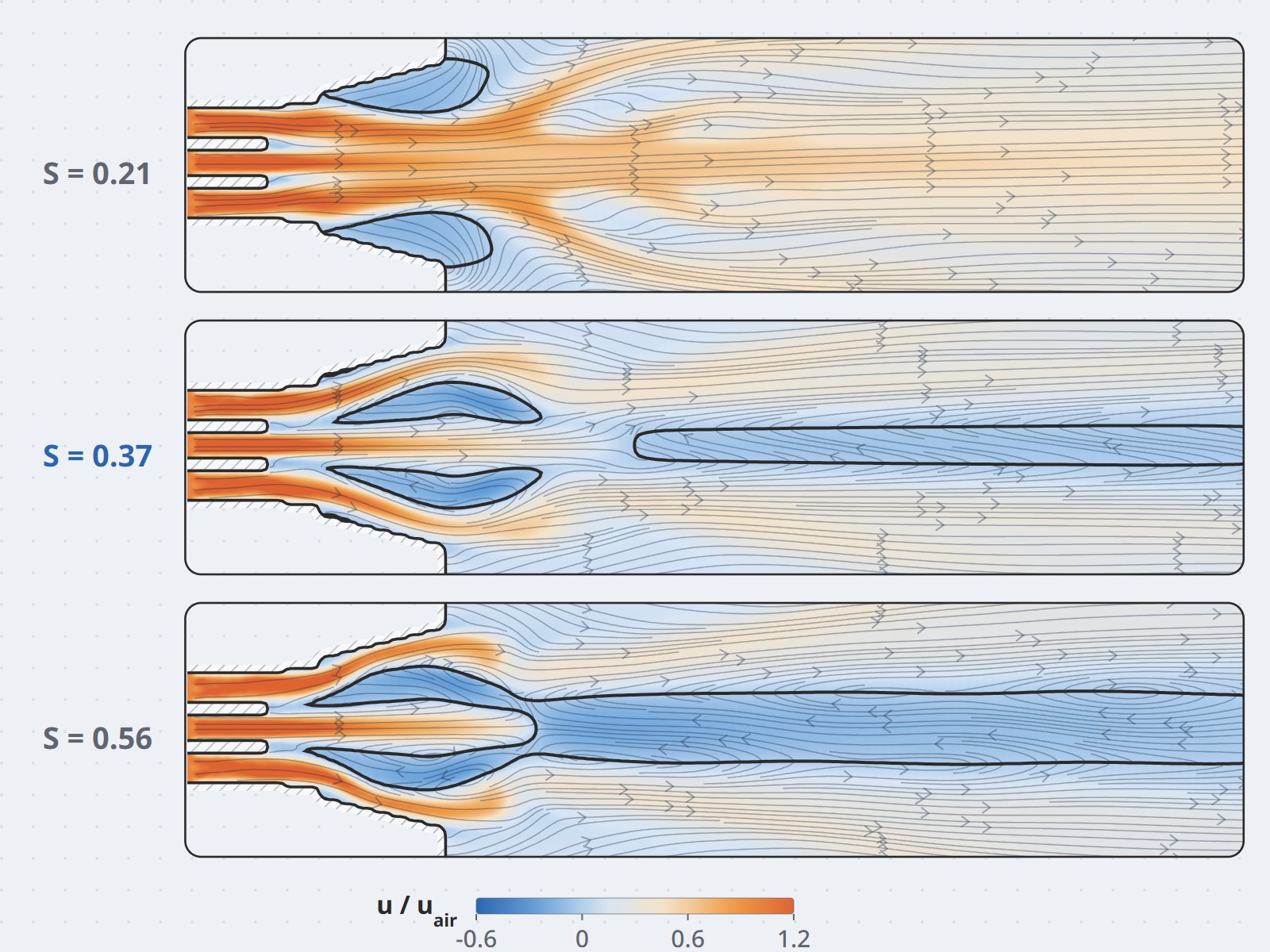
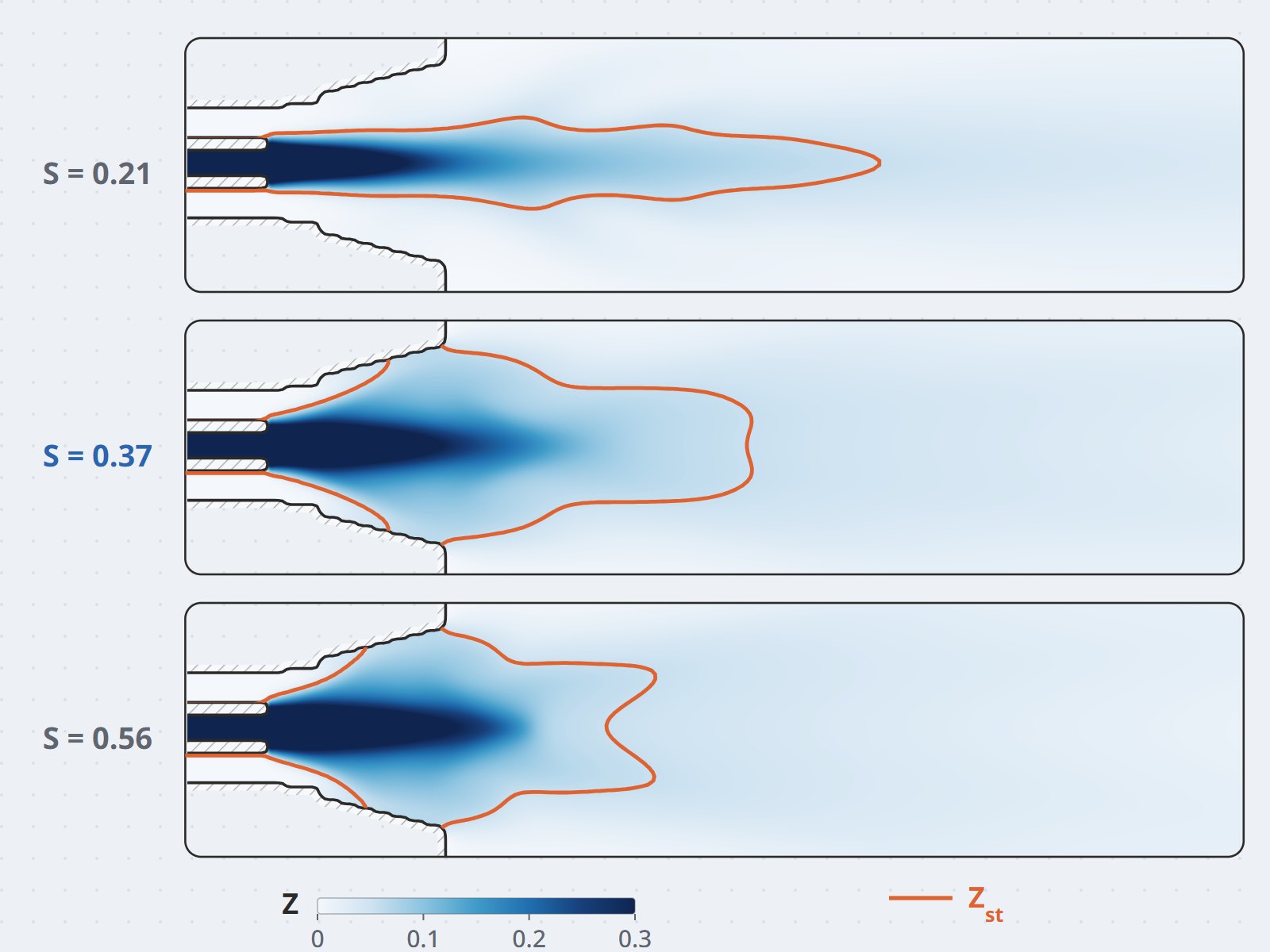
- All three criteria are quantitative: a reaction ratio greater than 1 located in the conical
tube together with a central recirculation zone; a central recirculation zone directed at the center,
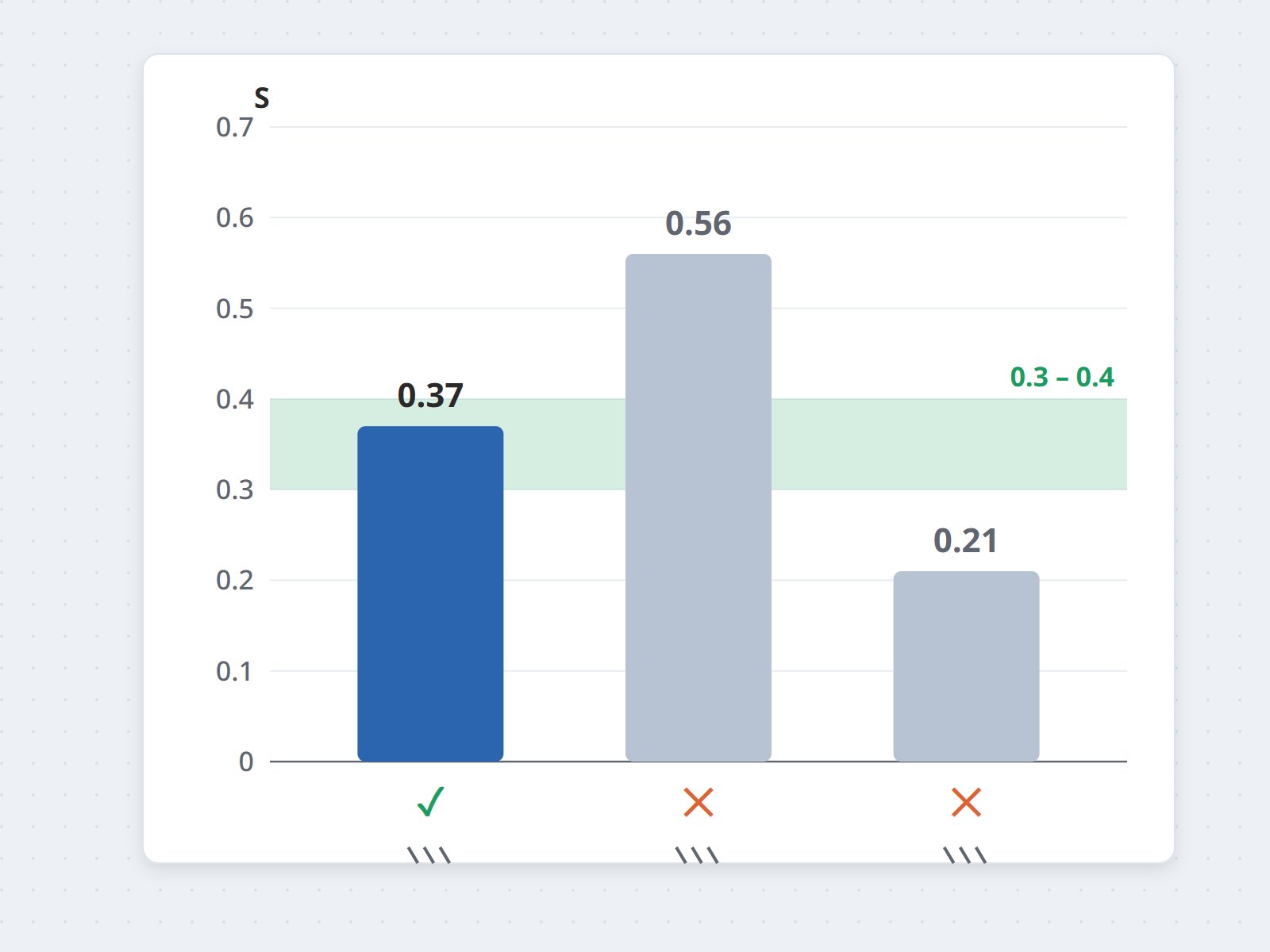
near the tip of the CNG nozzle; and a spiral swirl with a swirl number in the 0.3–0.4 band for CNG
combustion.
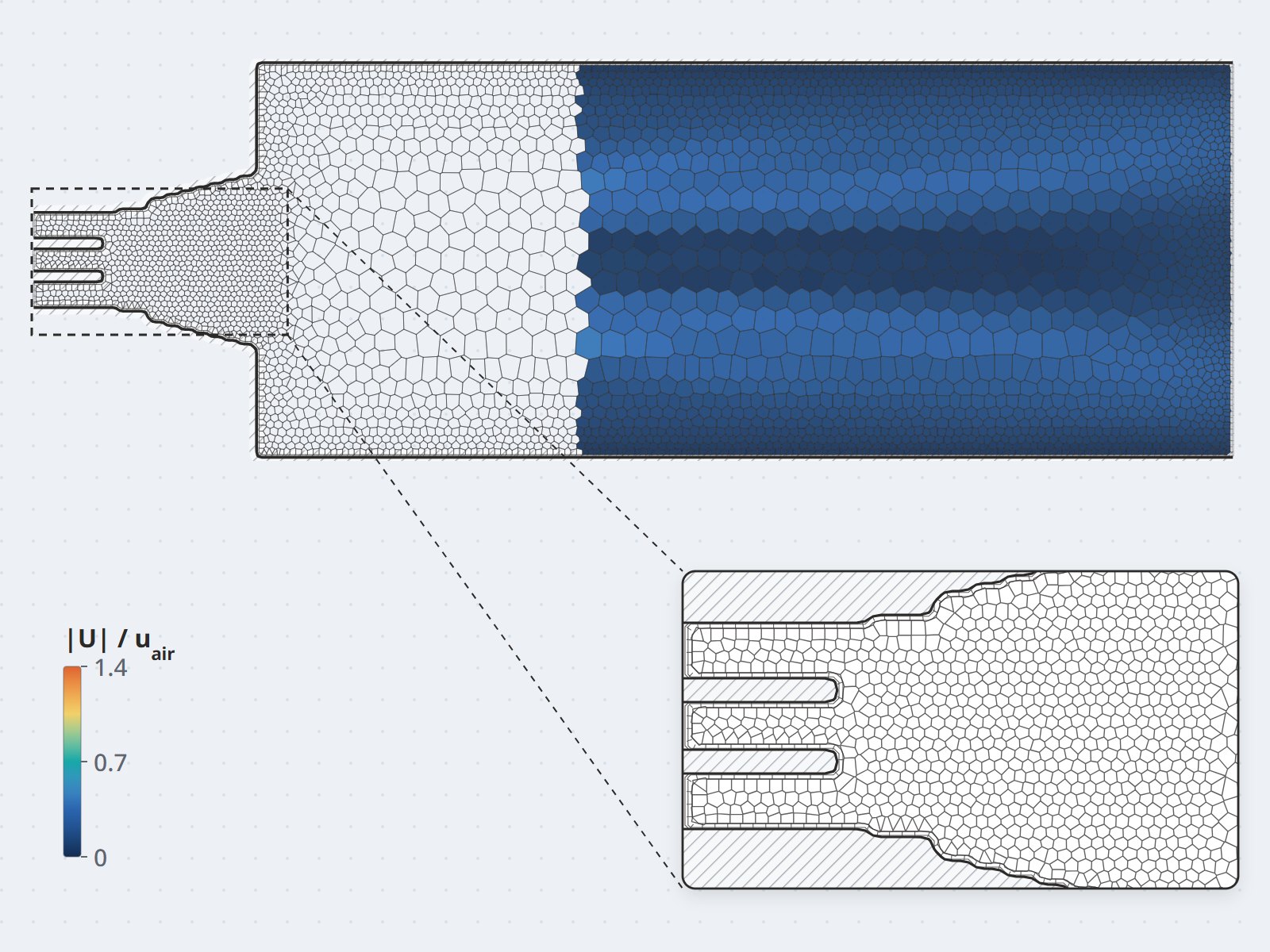
- A reusable evaluation tool: a CFD-based burner scoring tool (Python + Excel driving
STAR-CCM+), so the next burner selection follows the same procedure.
Results
- Only one burner met all three criteria. Burner A (S = 0.37) passed all of them; burner B
(S = 0.56) met two but its swirl number sits above the required band; burner C (S = 0.21) met only the
center-directed recirculation criterion.
- Swirl is judged against a band: burner B, the strongest swirler of the three,
failed the swirl criterion, because the swirl number must fall within the 0.3–0.4
band.
- The three criteria separate the field at three different levels — on the recirculation
criterion alone all three burners "pass", which could have led to the wrong choice.
Value
The plant received a criteria set plus a scoring tool.
When the fuel or supplier changes or another kiln is added, the plant selects the burner with the same procedure, before the order is placed.