Two tools at opposite ends of the workflow: Solid Edge builds the design at moderate cost; HEEDS automatically runs hundreds of options to find the best configuration.
Capable enough for most mechanical equipment at a lower cost than NX. It suits a medium-sized design team, or an organization beginning to standardize its 3D workflow.
It plugs into any simulation package, changes the parameters, runs, reads the results and decides where to go next. The engineer sets up the problem once, and the runs proceed unattended.
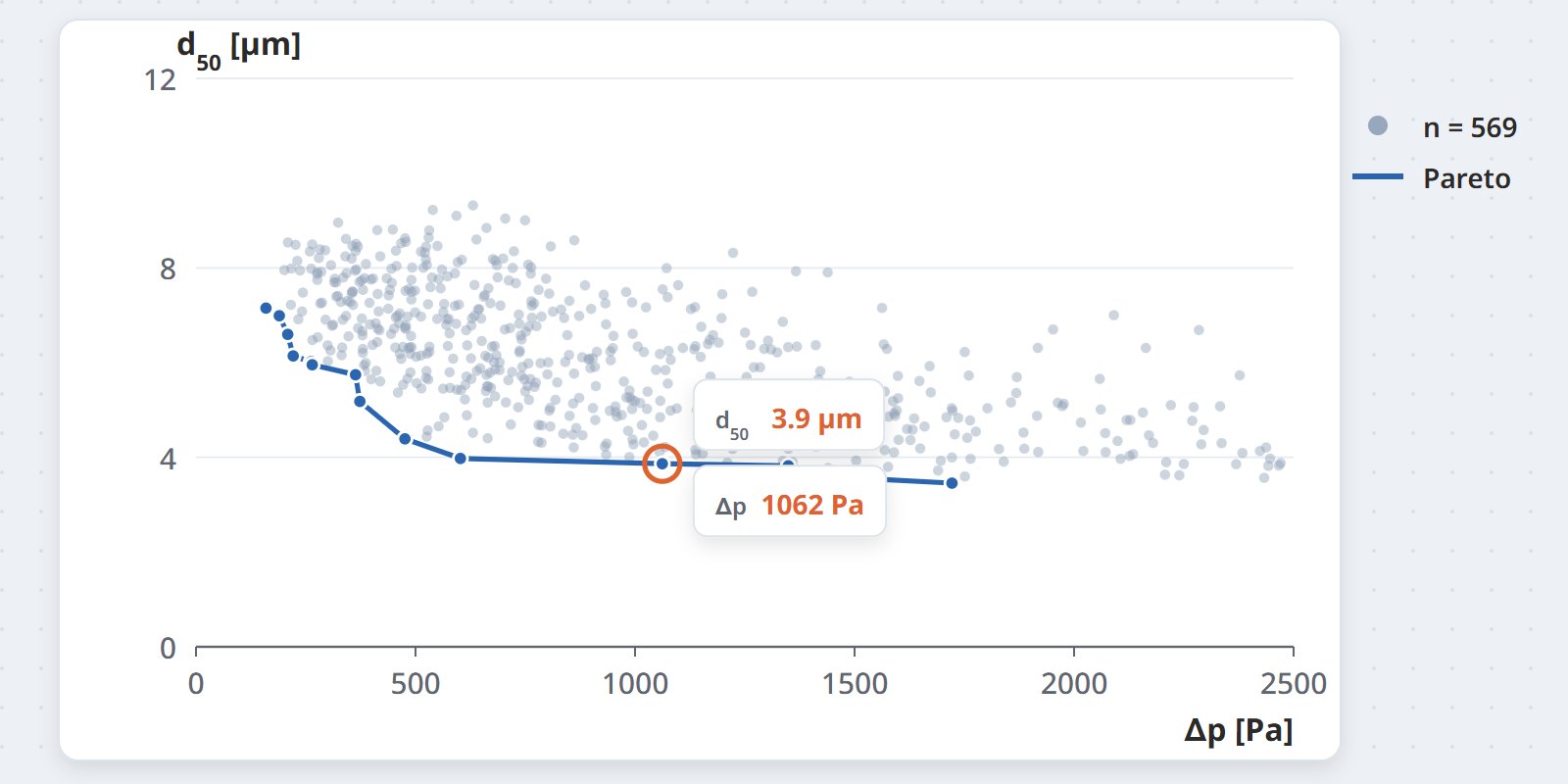
A real design rarely has a single criterion — usually efficiency, pressure loss, mass and cost have to be balanced. HEEDS returns a set of optimal options for you to choose from.
The parametric geometry platform HEEDS drives to change dimensions automatically.
View details →Solid Edge is sold by configuration like NX, but at a lower price point. HEEDS is licensed by the number of parallel processes: the more options run simultaneously, the more licenses are needed.
Optimization is meaningful only when the base model is reliable; the model must be calibrated before HEEDS is run.
Talk to us before investingFor most mechanical equipment, Solid Edge is sufficient. NX has the advantage on very large assemblies and in its integration with Simcenter, which makes it the better choice when design and simulation are iterated continuously.
It depends on how long each simulation run takes. A 2-hour case swept over 200 options needs an HPC cluster running in parallel — CFDWAYS estimates the required configuration before you invest.
No. Many problems need only a few dozen options swept with a macro. HEEDS is worth the investment when the parameter space is large and you do this kind of work regularly.
Describe the parameters you want to sweep — CFDWAYS will estimate the number of runs and the time required.

