Context & problem
TP1 is a multi-unit process train: a cyclone, a condenser, the desorbers, a thermal oxidizer and the connecting ductwork. The whole plant runs on several fans in series across branching
ducts — so pressure in each branch depends on the others, the operating point tends to drift away from design, and flow easily goes out of balance between branches.
In addition, temperature, steam and air leakage change the gas density with operating conditions, and the pressure drop changes with it. Adjusting one cluster without considering the whole plant shifts the problem to another.
Approach
- A whole-plant model, not just equipment models: CFD for the entire TP1 as well as for each
main equipment cluster, so the pressure interaction between branches shows up instead of being assumed
away.
- Evaluate before modifying: every cluster — cyclone, condenser, desorbers, thermal oxidizer,
ductwork — was reviewed first, then ranked by modification priority.
- Options compared on one measure: for the thermal oxidizer, several design options were built
and scored rather than picked by judgement.
- A KPI set that outlives the study: the indices drawn from the analysis stay in use as the
measure for tracking each unit's performance afterwards.
Results
- Cyclone: keep as is. 562 Pa pressure drop, 40% separation efficiency; the alternatives
brought no significant overall improvement — the recommendation is to keep the baseline configuration
for large-particle separation. A "no change needed" conclusion also has value: the plant avoids an unnecessary expense.
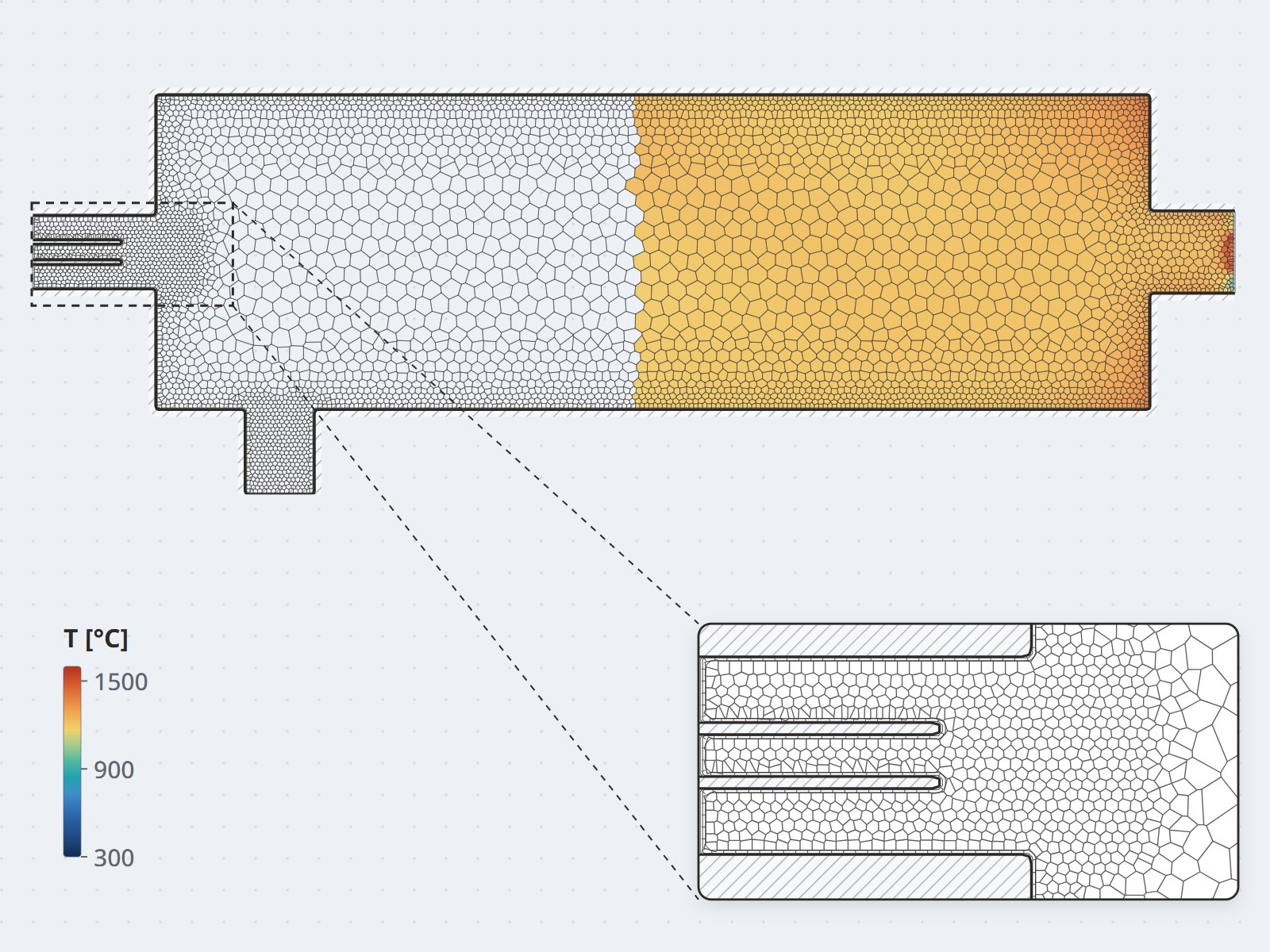
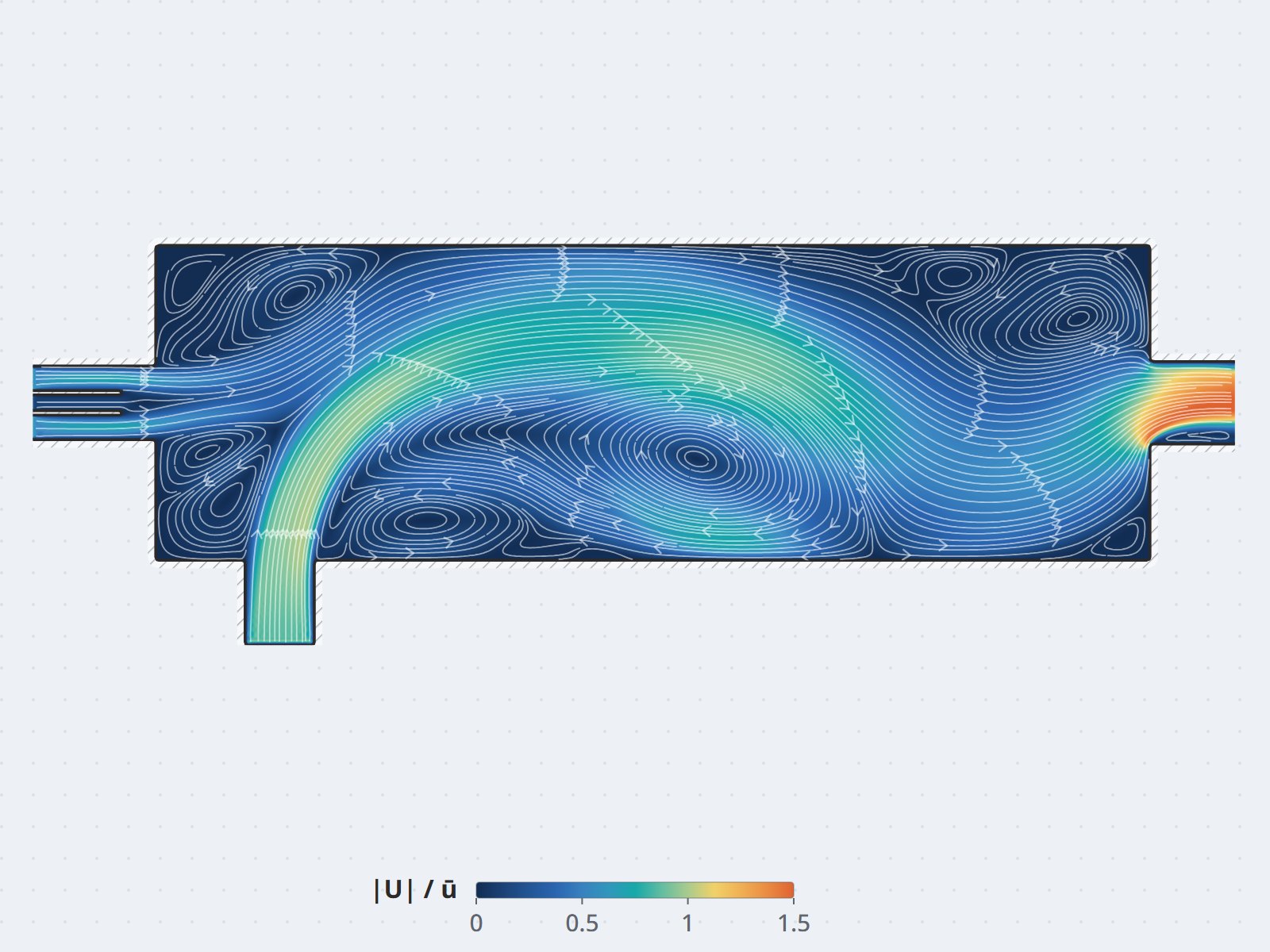
- Thermal oxidizer: Design 7 performs best, Design 6 second; and if modifying the inlet turns
out to be difficult, the current design still meets specification — so the two best options are
a priority, not an obligation.
- Condenser & desorbers: small, local fixes. The condenser has dead zones and recirculation
with a condensation rate around 80%; the DTD sensor needs adjustment at blades 9–10, and the ITD
sensor should sit on the opposite side from the burner.
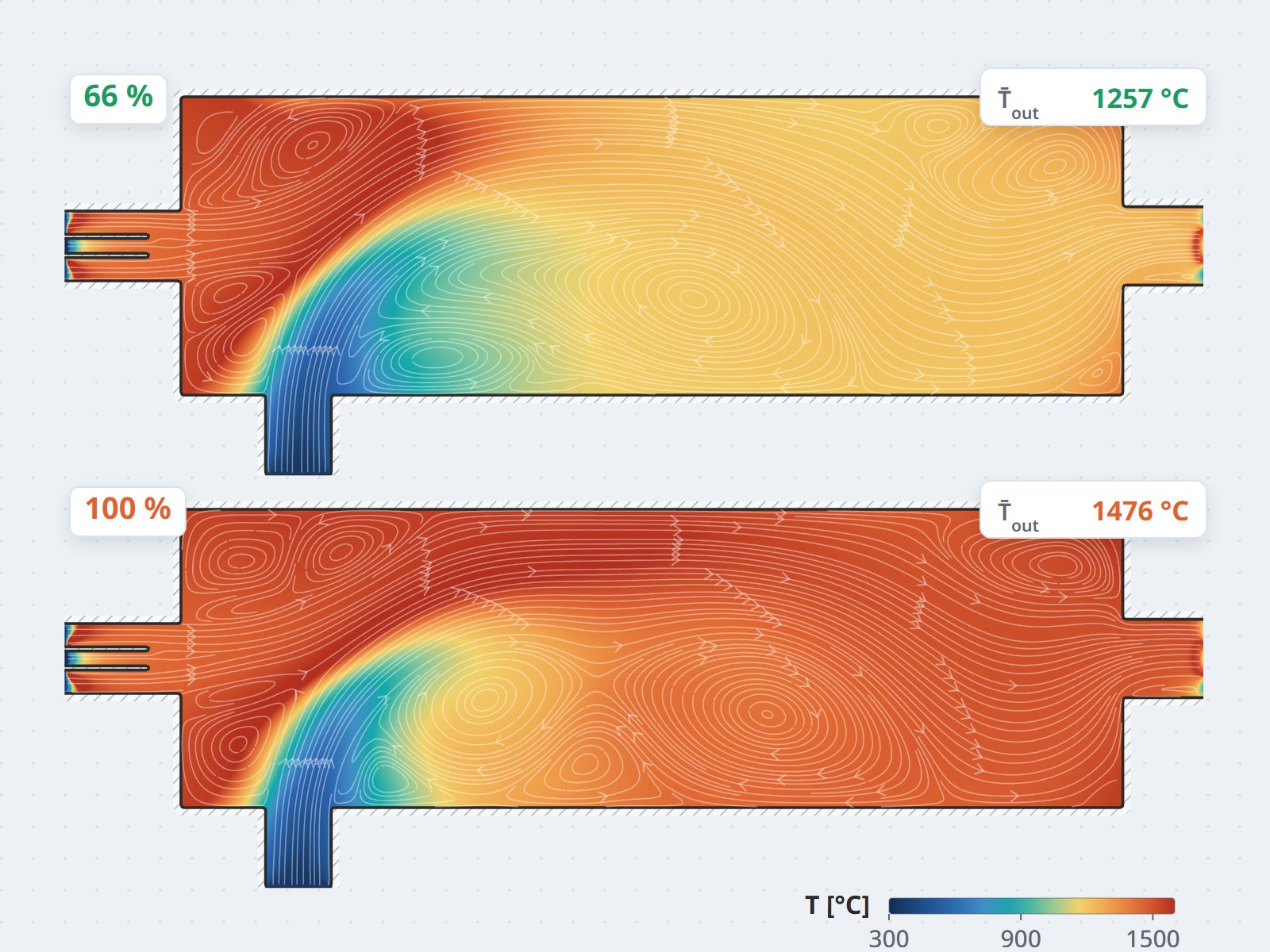
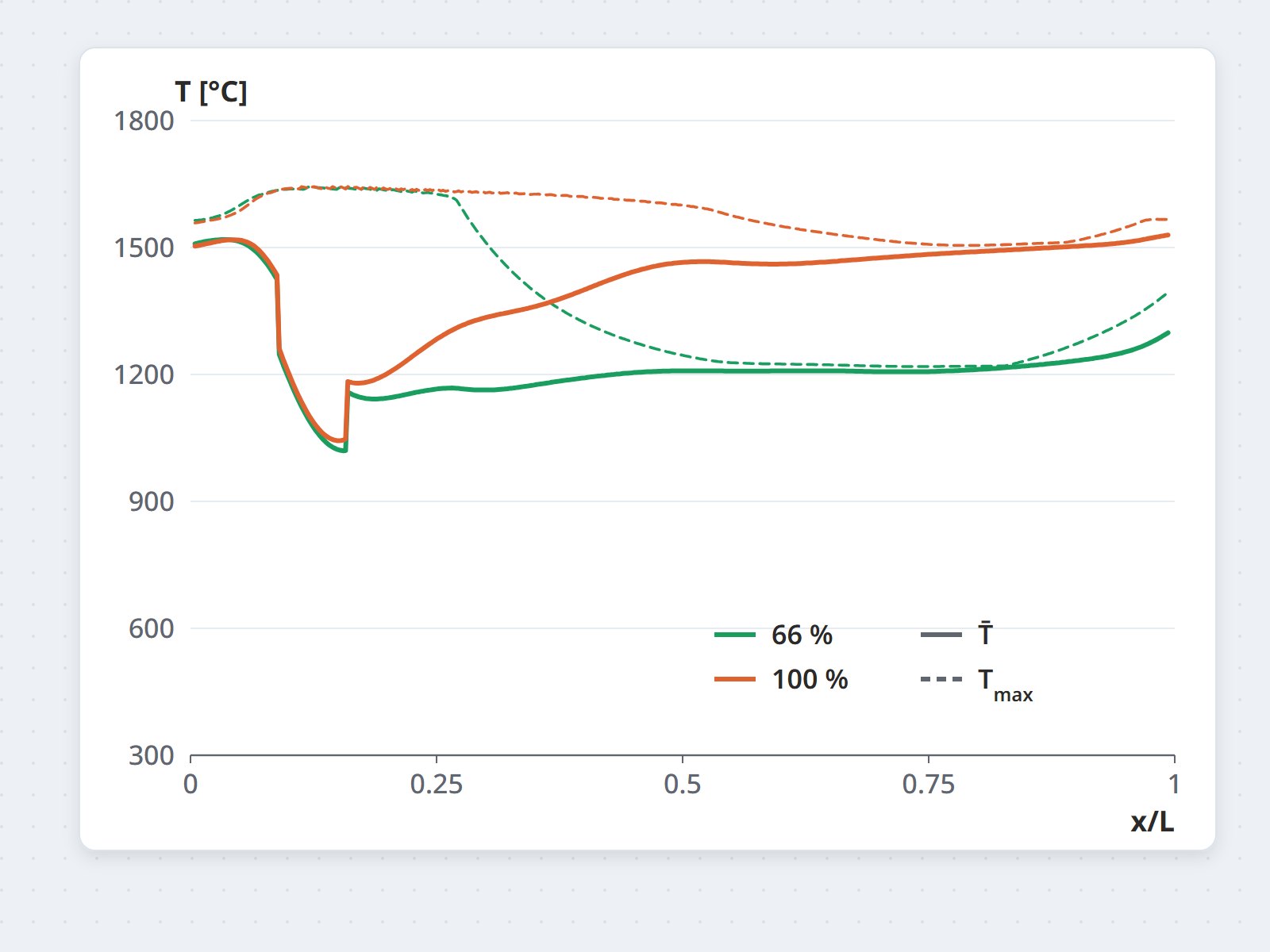
- Ductwork & fans: operating points settled. Total system pressure drop of about 17,000 Pa
fixed the operating points for the three ID fans; operation at 66% burner load is recommended,
100% load is not recommended.
Value
For a train with several fans in series, the key question is which change improves the whole plant. A whole-plant model answers it: three keep-as-is recommendations, two priority options, a few minor corrections and one operating load — enough to decide without trials on an operating hazardous-waste treatment plant.